
Mystic Caviar and the Art of Actually Talking to Strangers
Mystic Caviar turned a gallery into the kind of New York night people swear no longer exists.
Mystic Caviar began because Dry January ended, champagne felt necessary, and if there was going to be champagne, there obviously had to be caviar. Now add a dash of tarot, some new-to-the-scene paintings, and a room full of strangers, and suddenly you have one of the better arguments for leaving your apartment. Netflix and DoorDash will keep, I swear.
Kate Lee’s origin story for Mystic Caviar was, to be honest, very relatable. “It started in my house because it was Dry January and I wanted it to end,” she said. She and a friend decided to get champagne. Then the friend said, “But then you need caviar as well.” Of course. Because it was the new year, they added tarot. New beginnings, new direction, something to point the night forward while they looked over new works. A night of Mystic Caviar. Eventually, the little group grew until her apartment could no longer hold them all, so the whole thing moved into galleries.
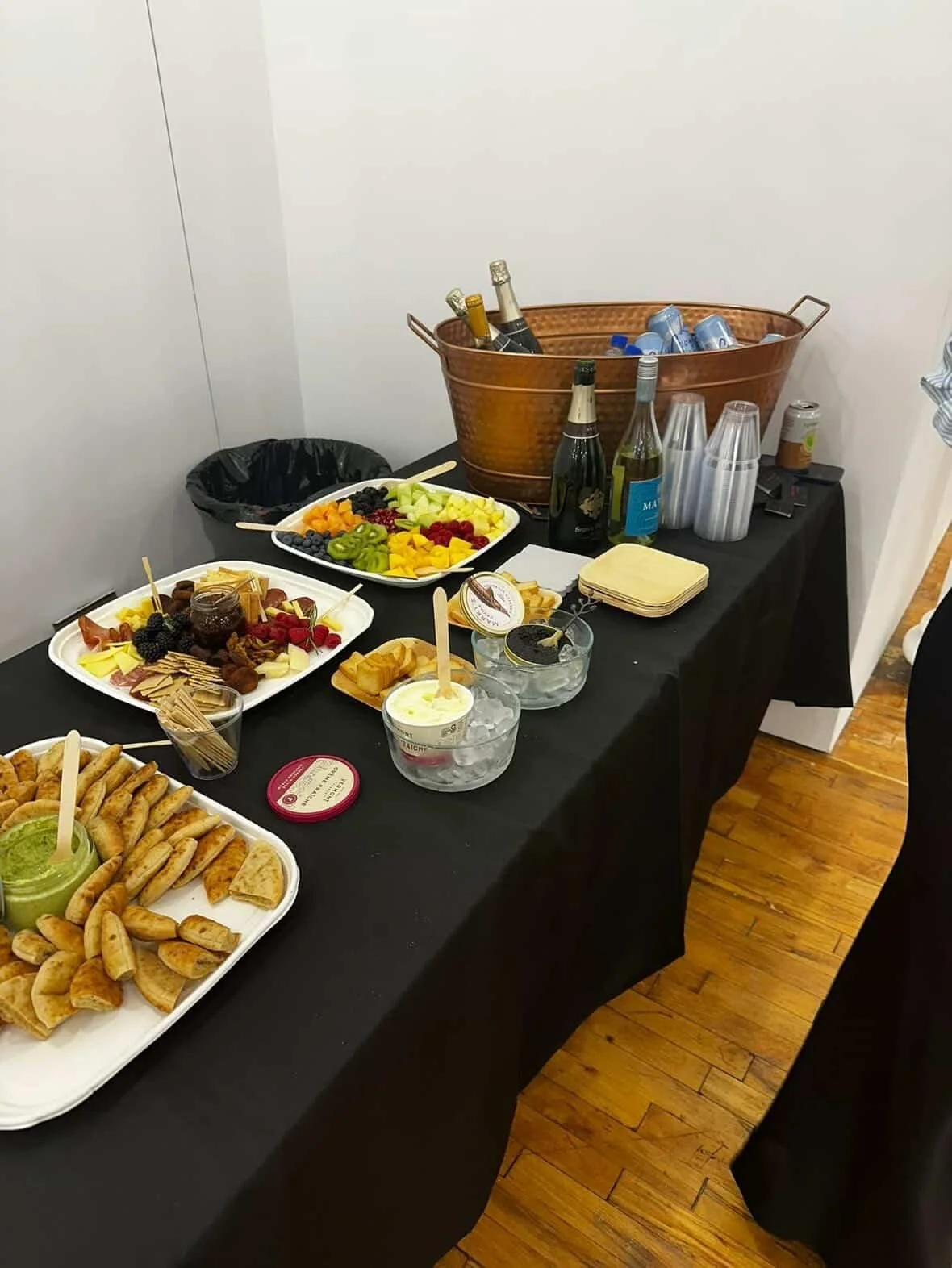
The May 6 event at Tara Downs Gallery brought together Kate Lee’s Mystic Caviar and Anne Parke Art Salon, with champagne, wine, light apps, tarot readings, and previews for upcoming New York art fairs. Maybe a little out of the norm for galleries, but not entirely left field. All of those details together created enough structure for people to actually talk to strangers without feeling silly about it. After all, part of the point was that you probably didn’t know anyone there, and they probably didn’t either. Even footing. A good place to start.
Anne Parke described her salons as a place for “gallerist friends to introduce artists from their roster and programs to a new audience,” where people can ask questions and “talk directly.” The goal is practical, but also social: to make art collecting feel less sealed off and to give curious people a room where they do not have to pretend they already know how to do this.
“No one here knows anyone. So be very friendly and nice,” Parke said at the beginning of the evening. If anyone got too comfortable with one person, she warned, she would intervene. “I will relocate a social cue.”
When I asked Lee what the goal of these continued events was, she said, “No goal. I feel like, just meet everyone.” She described Mystic Caviar as a crossover between “all the woo-woo shit that I like” and art. Honestly, that is the best combination. A little woo-woo with the tarot, a little caviar with the champagne, a little looking around with new people and new works. Fab.
The tarot readings were the perfect amount of woo-woo. One was more intuitive, focused on aura, energy, and how your body reacts to the cards before your brain starts explaining them. The other was more practical: pick three things, pull cards, and talk through whether each path goes A or B. Not science, obviously. But interesting. Useful. A little personal permission slip.
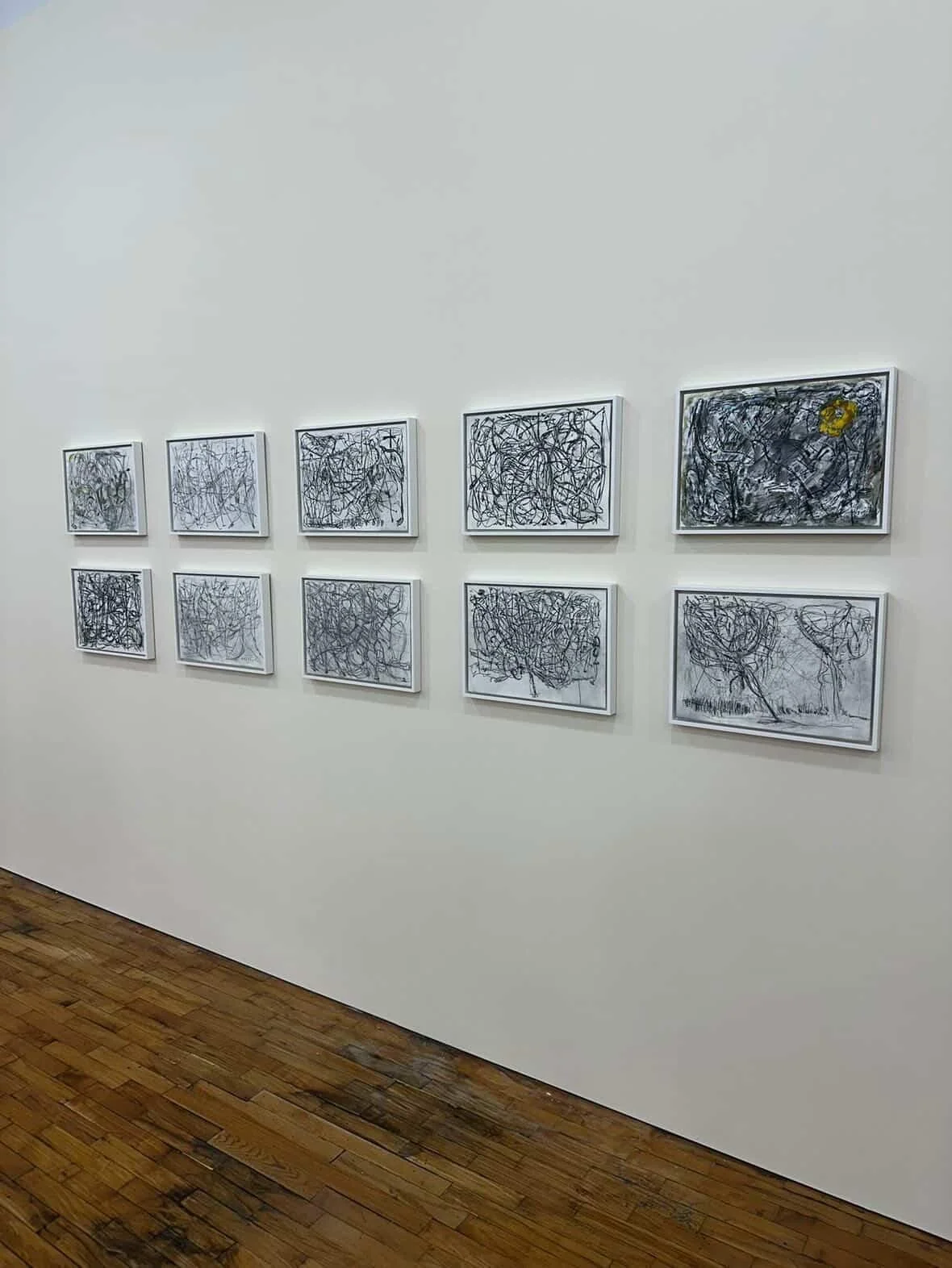
The art itself was a triumph. In the main room, Tara Downs presented Brazilian artist Lu Ferreira, whose exhibition Estranhas luzes no bosque was on view at the gallery. She described his paintings as both “additive and subtractive,” made by applying oil paint and then washing it away repetitively, “almost religiously,” with tools like air filtration systems and metal toothbrushes. What remains, she said, is a “muscular abstract painting,” with “a real sense of Tropicalia” and place.
That led into one of the best conversations I had all night: Brazil as a tough nut to crack, because its art is brilliant and they know it. It does not need to pander to or reference other countries. It looks to itself for direction and does not find itself wanting. If you want something Brazilian, you have to go to the source. Thankfully, the source came to NYC.
Jessica Fredericks spoke about championing “idiosyncratic artists” and “young talent.” Julia Willett described Danielle Roberts’ work as holding “a tension between stillness and movement.” Damian Ding talked about young artists, abstraction, identity, egg tempera, reflection, and cyanotype blue. No one was talking about art as decoration. They were talking about what artists need, how work gets made, and what kind of city can still hold it.
Scale, for one, massively affects art. Later, with a gallerist, a former gallerist turned fine art insurer, and a collector, we talked about how LA galleries can feel like private museums because there is room: massive walls, massive works, massive houses to hold them. New York art often feels made for apartment walls, small spaces, and smaller galleries. That’s because the city shapes what artists can physically make. Tiny apartment. Expensive studio. Expensive rent. Smaller art. Then comes the idea that if it isn’t huge, it isn’t great.
That is the part that frustrates me. New York wants the mythology of being an art mecca, but it keeps handing the actual city over to corporations, landlords, and half-empty buildings no one seems especially eager to make useful. Artists are supposed to keep making the place interesting while being priced out of the rooms and studios they need to make anything at all. At some point, the city is not preserving value. It is hoarding space and calling vacancy profitable.
That tension made the rest of the night feel more necessary, not less.
That is what made Mystic Caviar work. It was elegant, but not stiff. Mystical, but not self-serious. Collector-focused, but not closed off. It gave people wine, caviar, tarot, paintings, QR codes, and art fair previews. Then it got out of the way and let art be viewed and enjoyed by all, while we still have the spaces to do it.
Strangers talked. People disagreed. Someone pulled a card. Someone looked at a painting longer than they meant to. We all left feeling a little more like we hoped to: part of a community, part of New York City.
I’m looking forward to the next event, and I hope to see you there too.