At THE Fire This Time Festival, Theatre Becomes Community
I’m a little embarrassed. I thought I knew every—or at least most—theatre festival in New York City, and yet I had never heard of the Fire This Time Festival before. Presented by FRIGID (them I know) and staged at the beautiful Apollo Theatre in Harlem—or rather, the equally beautiful Victoria next door while the Apollo is under renovation—this festival is now in its 17th season. How had I missed it?
The festival is composed of six short plays, all performed by the same five actors. I’ll break it down play by play, but before I do, I want to emphasize just how good a time this was.
Artistic Director Cezar Williams and Founder/Executive Director Kelley Nicole Girod welcomed us warmly into the space and encouraged the audience to “lean in”—to the pieces, to one another, and to the theme that emerged organically across the plays, even though they were all quite different. That overarching theme was kindness and acceptance. It came through in a variety of ways, and honestly, it was a gift. It set the tone beautifully and put me in exactly the right head space for the evening.
Cezar also encouraged us to be reactive—to comment, to respond. That invitation was incredibly freeing. While it occasionally defused moments of high intensity, more often it deepened them, creating a palpable sense of community. Emotional beats were shared, amplified, and sometimes softened by the presence of anonymous, unseen fellow audience members. It made for a genuinely joyful and communal theatre experience.
Before I get into the individual plays (I promise), I want to pause on the cultural significance here. This is a Black festival for Black theatre—and it is incredible to see. To my shame, in realizing I’d never heard of this festival, I also realized I had never seen Black theatre at this level in this context. Most of the Black theatre I’ve encountered has been on Broadway or Off-Broadway stages. Seeing so many artists of color making the same kind of theatre I make—intimate, playful, messy, emotionally honest—was deeply moving. It created a feeling of discovery and belonging that I can’t quite do justice to.
Much like Cezar advised, I leaned in and let myself become part of the theatrical community in the room. Audience members commented freely, reacting to characters’ choices and lines in no uncertain terms: “Oh, don’t do it!” laughter at corny jokes, shouted “Shut up!”s, full-bodied laughter. And make no mistake—I joined in. There is something electric about watching live theatre where the entire room reacts together, as if you’re all in the same living room, yelling at the TV, except everyone is invited.
That said, there were moments where the casualness tipped a bit too far. At times, people loudly shared unrelated anecdotes—dating stories mid-scene—which visibly annoyed those around them. And of course, there was the classic offender: the person with an endless plastic bag of snacks, each crinkle and crunch echoing through every scene. Still, these moments were exceptions. Overall, the experience was overwhelmingly positive—an unapologetically Black festival of Black stories—and I couldn’t be happier to have discovered it. I will absolutely be back.
This feels like the right moment to give flowers where they are due. First, Nikya Mathis, who plays the most characters in the festival. Every actor here was fantastic—truly. With only about two weeks of rehearsal, they all delivered remarkable performances. But Mathis stands out not only because she is excellent, but because she appears in most of the shows, playing a wide range of characters with clarity and ease. It’s an impressive feat.
Another major shoutout goes to director Ken-Matt Martin. Staging six plays in succession without drastically changing the set is no small task, and he handled it beautifully. Each show flowed seamlessly into the next. Watching the set gradually strip down—from cluttered in the first play to completely bare in the final one—was a subtle but effective throughline. Excellent work all around. I would wholeheartedly recommend supporting this vibrant, joyful festival.
Now—if you’re still with me—let’s talk about the plays.
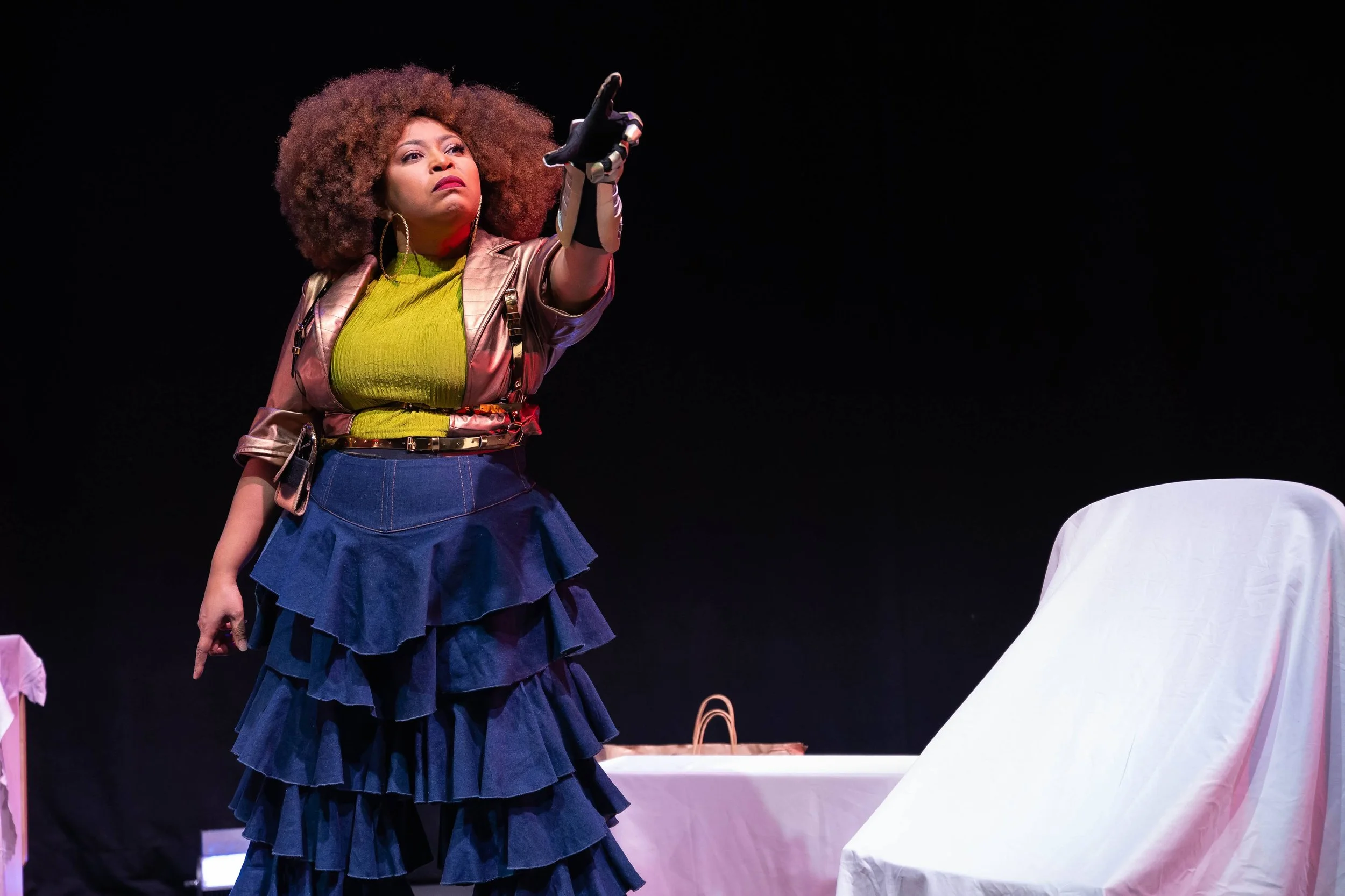
“Black to Save the Day” by Preston Crowder opens the festival with a bang. SistA Steele (Nikya Mathis), a Black superhero, protects her neighborhood from a gentrifier—but her underfunded, chronically late team is struggling. Enter Fire Blade (Kareem Lucas), a Black superhero who’s made it to the big leagues, complete with a theme song and what I can only assume is a personal hair-care sponsorship to keep his curls flawless.
What plays as a goofy superhero spoof—almost Black Dynamite levels of absurd—reveals surprising depth. At its core, the play asks: do you stay and serve your community, or do you “sell out” for comfort and prestige? SistA Steele ultimately refuses the perks of success and stays with the B team, choosing impact over status. It’s funny, sharp, and grounded in real stakes.
Courtesy: Maya Jackson
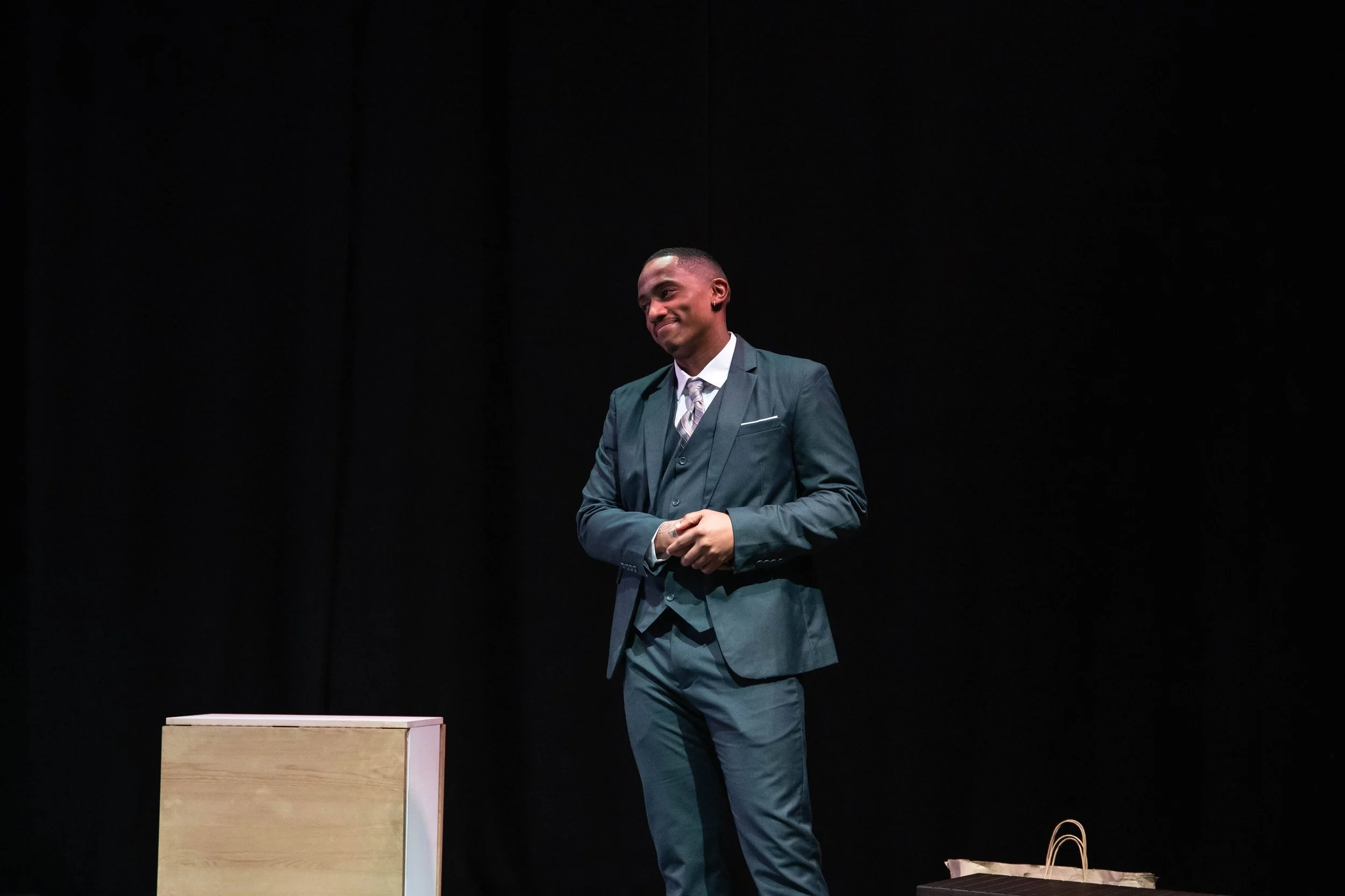
The tonal shift in “White Diamond” by Donathan Walters is immediate and devastating. A grieving mother, Andrea (Mathis—yes, again), and her son Hakeem (Victor Musoni) search for the late matriarch’s brooch so Andrea can present herself properly at the funeral. Hakeem, meanwhile, wants to live openly as a gay man in the community—despite his mother still referring to his boyfriend of three years as his “good friend.”
This piece hits hard. It’s about family, grief, legacy, and the limits of acceptance. There are no neat resolutions—just a gray ending that feels painfully honest. Something is achieved, but not everything. The audience sat quietly, collectively holding its breath. Easily the most emotionally charged play of the night.
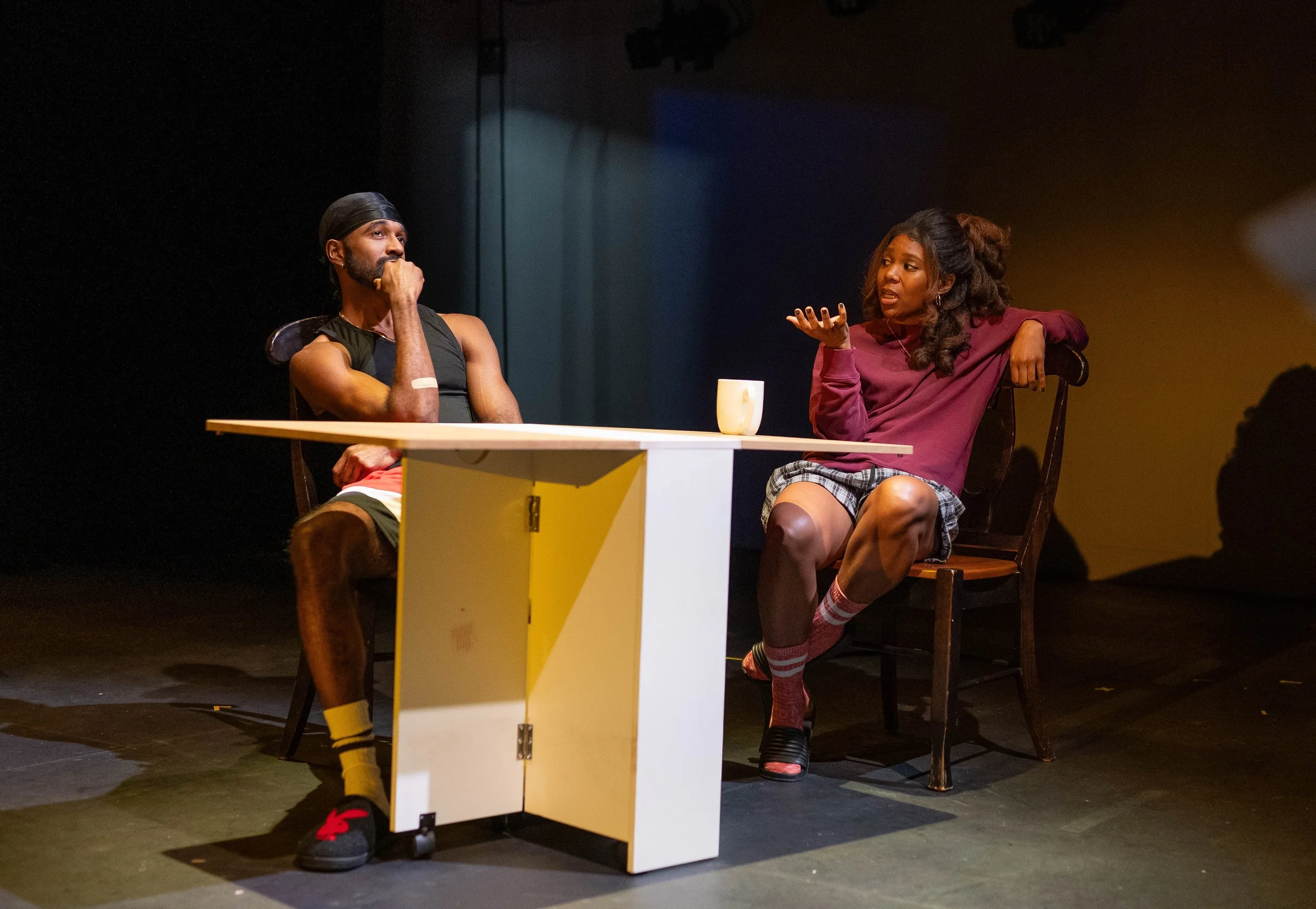
“Everything But—” by Teniia Micazia Brown keeps the momentum going. Set the morning after a night together, the play follows Ezra (Malik Childs) and Naomi (Naomi Lorrain) as breakfast quickly turns into a reckoning. What initially seems like a casual conversation reveals the all-too-familiar modern dating purgatory: undefined relationships, emotional labor, and mismatched expectations.
Brown’s writing shines here. Both characters feel real, articulate, and distinct. The audience lost it—shouting “Don’t listen to him!” and “Noooo!”—and yet the actors never broke, staying fully grounded in the reality of the moment. The play ultimately centers Naomi claiming her power and boundaries—not by destroying Ezra, but by choosing herself. Leaving, because staying offers no real choice at all. It’s a beautiful piece and a perfect bridge to the next installment.
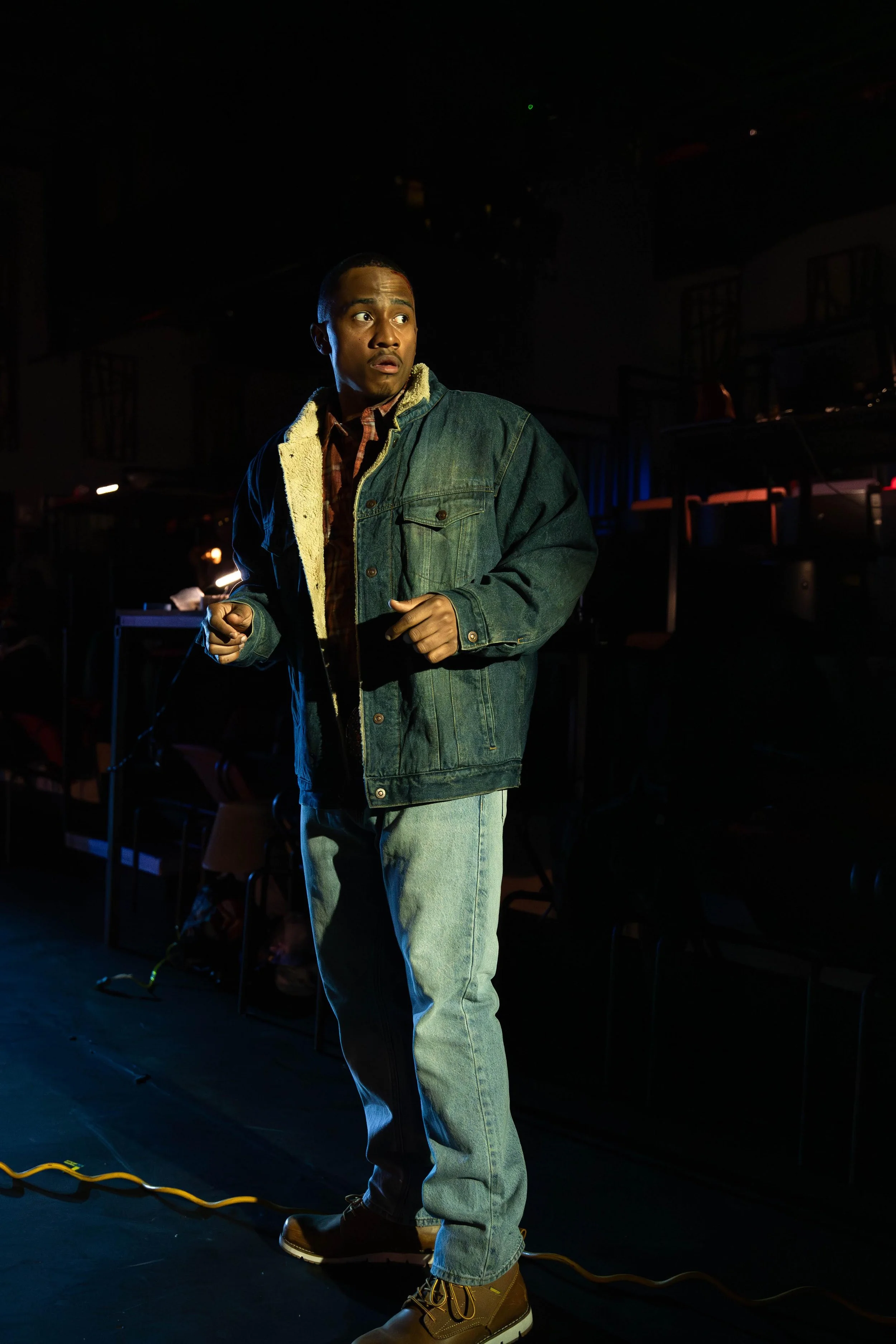
“Clumsy” by Mo Holmes was the one piece I didn’t connect with as strongly. A young man (Musoni) crashes into a woman’s kitchen (Mathis, again), and she makes him grits. The play feels metaphorical—about masculinity, mistakes, family, and emotional vulnerability—but it remains too vague for my taste. It also ends abruptly, and I found myself wishing it had five more minutes to flesh out the characters. That said, the performances were solid, and the dialogue had some great punchlines. I wasn’t alone in my confusion; audible “huh?”s rippled through the audience. Not bad—just less satisfying.
We’re back in top form with “DNR,” written and performed by Naomi Lorrain. Nicole, a successful writer, returns to her small town to convince her cousin Solomon (Kareem Lucas) to sign a DNR for his comatose mother, whose medical bills are bankrupting the family. What begins as a familiar city-vs-hometown argument deepens into something far more nuanced.
The writing is clean, sharp, and emotionally intelligent. You find yourself siding with each character at different moments, until their core values become clear. My only issue—and this is subjective—is the ending. After committing fully to a morally gray conclusion, the play introduces a last-minute implication of a miracle. I would have preferred to sit with the unresolved tension. Still, this is a beautifully crafted piece.
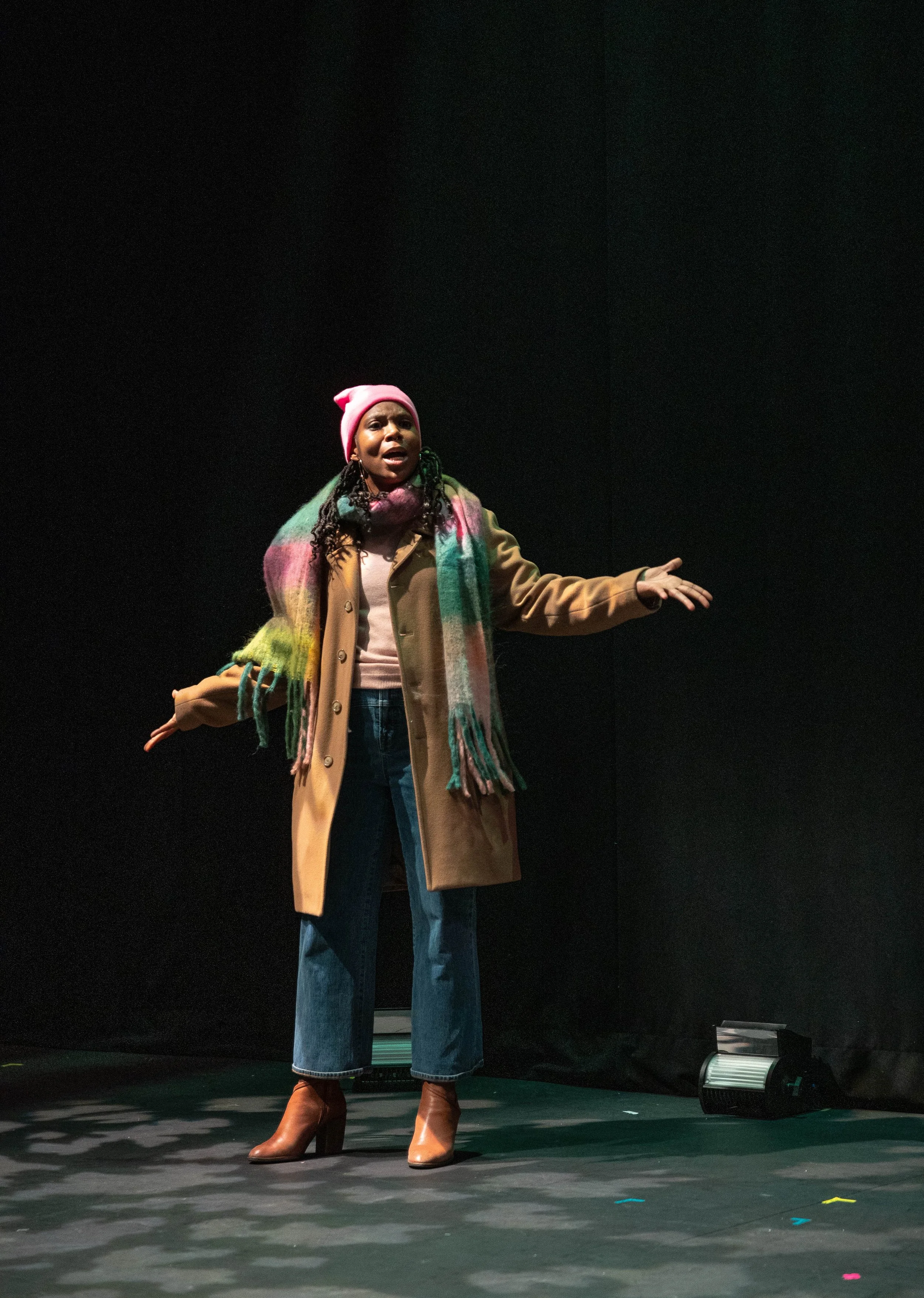
Finally, “Goose” by Delane McDuffie closes the festival on a high. Crackerjack (Lucas) joins a group resembling Black Panthers, led by the Captain (Mathis), as they prepare for a protest. It’s sharp, satirical, and wildly funny. Everyone is on stage together, and the energy is infectious. Ending the night with a Boondocks-esque parody was the perfect choice—unapologetic, hilarious, and crowd-pleasing.
As promised, the theme of kindness and acceptance emerged clearly across the evening. Fire This Time was a genuine joy—a discovery of a whole world of New York theatre I hadn’t yet known. I’ll be back next year, and I hope you give it a shot too. If this was any indication, it’s absolutely worth your time.

All photo credit goes to MAYA JACKSON