REVIEW: John of John by Douglas Stuart
You can leave an island. You can spend your whole life trying to escape it. But John of John is interested in the harder question: how much of the place that raised you ever really leaves you?
John of John is one of those books where I admired the writing more than I loved the plot. The writing craft is genuinely incredible, even on a granular level, and the Scottish island is so immersive I felt like I was living there, or at least hovering somewhere above it watching these eerily believable people go about their lives.
The sensory details give the place so much texture: the smell of peat, the gruesome details of lamb and ewe births, lobster boats clanging around on the sea. The island feels part endearing hometown and part wasteland that no one can escape.
And the people feel just as real. Cal’s grandmother, Ella, lives with him and John, and she’s hilarious, a woman who has managed to survive living in this community despite not being raised there herself, and who keeps a sun bed in her room. I especially loved Isla, Cal’s childhood friend, who leaves the island for college but winds up getting knocked up right before she goes. There’s something about her story that captures the island perfectly: you can leave, you can want to leave, you can even make plans to leave, and somehow the place still has its hooks in you.
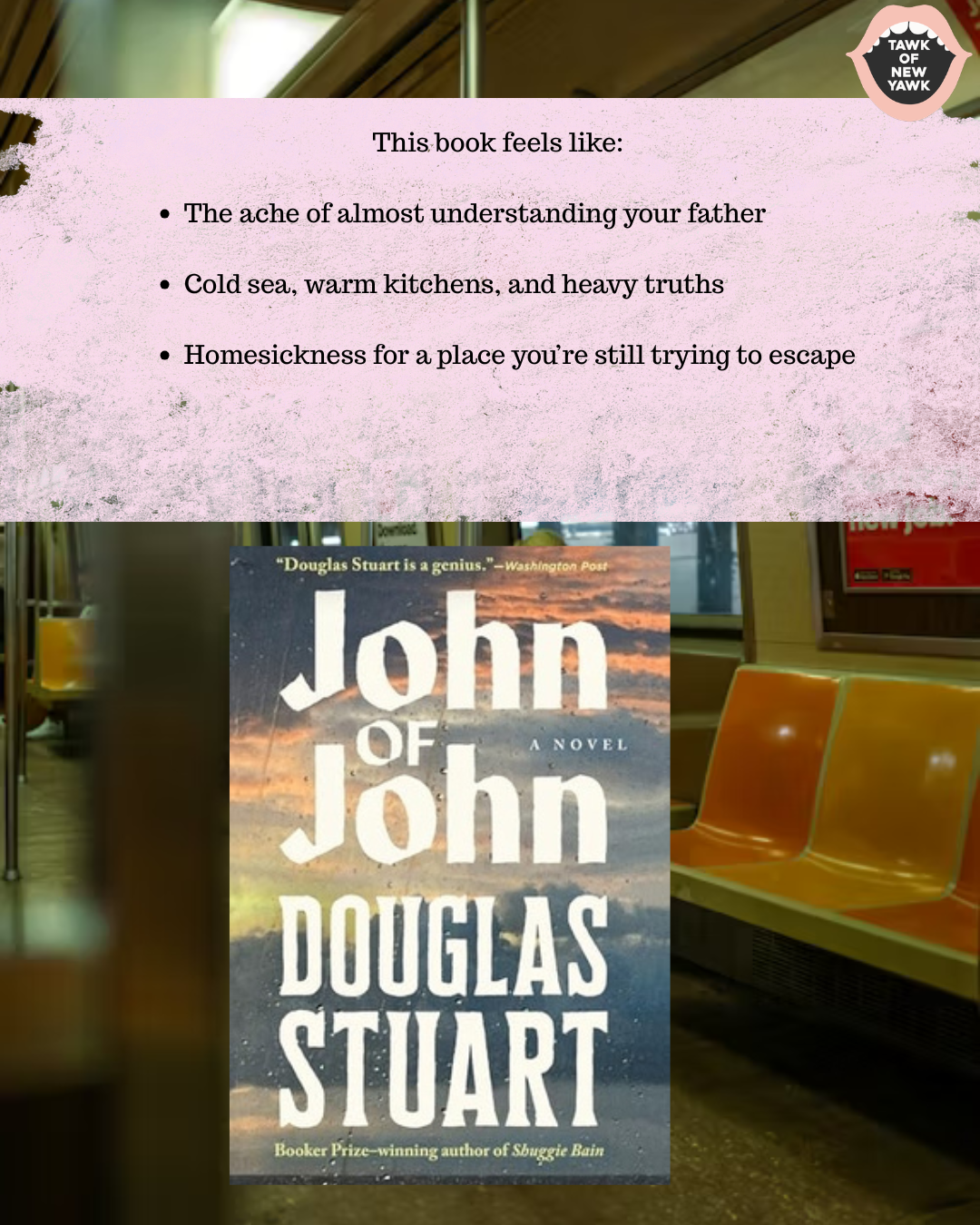
The most compelling part for me was the relationship between Cal and his father, John. They are painfully close to connecting but just…can’t. Both men are gay, neither knows this about the other, and I loved that dynamic. I don’t think I’ve ever encountered it before. John’s religion, upbringing, and stoicism make his worldview completely believable, and the novel is especially good at showing just how profoundly where and how we are raised shapes who we become.
But about three-quarters of the way through, I got antsy. Cal mostly exists rather than actively wanting or pursuing anything, and for a book this beautifully written, I’m not sure we needed quite so much of it. My bigger issue was the ending. After spending almost the entire novel establishing John as an immovable, religious boulder of a human being, suddenly, in the eleventh hour, he seems capable of changing. I wanted more groundwork to make that softening feel earned.
Still, I think the book understands something complicated about family: we can’t expect people to become who we want them to be, but maybe they can change a little. Gorgeous, immersive, brilliantly crafted, but probably not for you if you need a clean, propulsive plot.
The novel is especially good at showing just how profoundly where and how we are raised shapes who we become, something that also runs through Cynthia D’Aprix Sweeney’s Lake Effect.