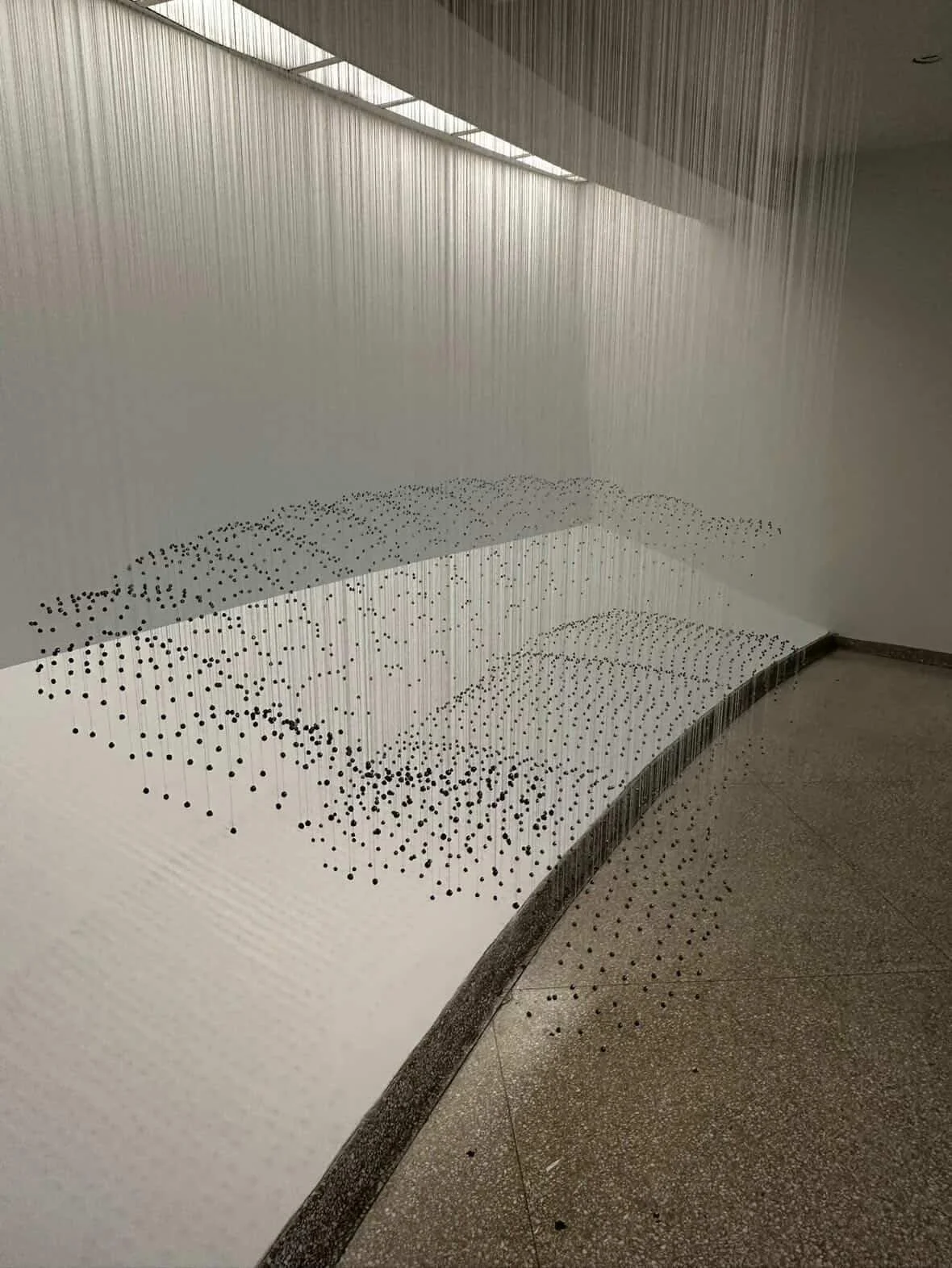
Steel and Silence at the Guggenheim
I love an exhibit opening. I show up bright-eyed and ready to see the work, meet everyone in the room, and get a feel for the writers, artists, curators, marketers, and other cultural figures orbiting the thing we are gathered for. I usually go in, grab a coffee, maybe a pastry if the museum is on its game, and settle in. It was one of those freezing New York mornings, so I was more than ready to get inside.
Instead, I was stopped by protesters.
They were not there for us. They were there because a board meeting was happening right after the press viewing. What they shared was disappointing.
In a 2019 Guggenheim essay, Toni L. Griffin wrote about inviting “a greater diversity of patron neighbors into a space that many view as reserved only for the privileged.” I love that idea. I really do. I want museums to be more open, more porous, more human. I want them to make room for people who have historically been treated like culture was happening somewhere above their heads, or behind a door they were never meant to walk through. But there is a difference between wanting to sound like change and actually being it.
Outside that opening, I was handed flyers from the Guggenheim Museum Union telling a more troubling story. Entry-level staff, according to the union, make $24 an hour. At full-time hours, that comes out to about $49,920 a year before taxes. According to MIT’s living wage data, a single adult in Manhattan needs $38.21 an hour to meet basic needs. That puts the museum’s wage about $14.21 an hour short, or roughly 37 percent below a living wage. Half the staff earns less than $71,000 a year. The union says last year’s layoffs were last-minute, chaotic, and brutal, and that the people who stayed were forced to absorb the extra work. According to the same flyer, even workers making under $75,000 pay about $133 a month for single health coverage or nearly $400 a month for family coverage, before co-pays and deductibles.
The most damning claim was that senior leadership held onto every dollar of their salaries while the workers who keep the museum running took hit after hit.
Guggenheim, my sweet summer child, we cannot take a museum’s language about empathy, inclusion, and public belonging seriously when the people making the place run are asked to accept low wages, job instability, expensive healthcare, and diminished dignity so the institution can keep performing virtue at the top.
That contradiction followed me inside. It made the Carol Bove survey feel even more strained in its attempt to be about access, rest, play, and touch. The show wants the museum to feel less stiff and less precious, less like a place where you need the right education and vocabulary to understand what you are seeing.
But walking through it, that was not what I felt.
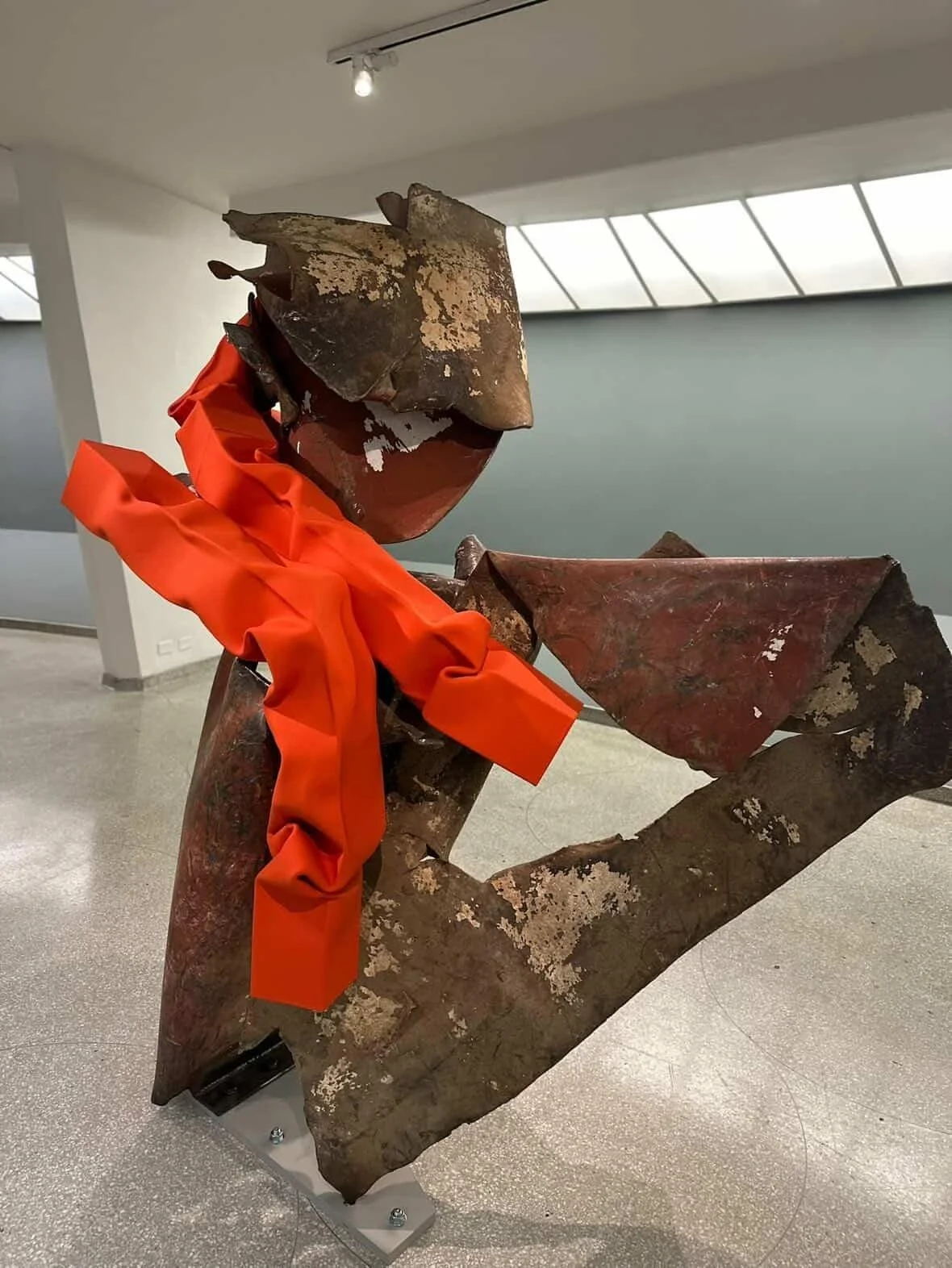
What I felt, first and most insistently, was steel.
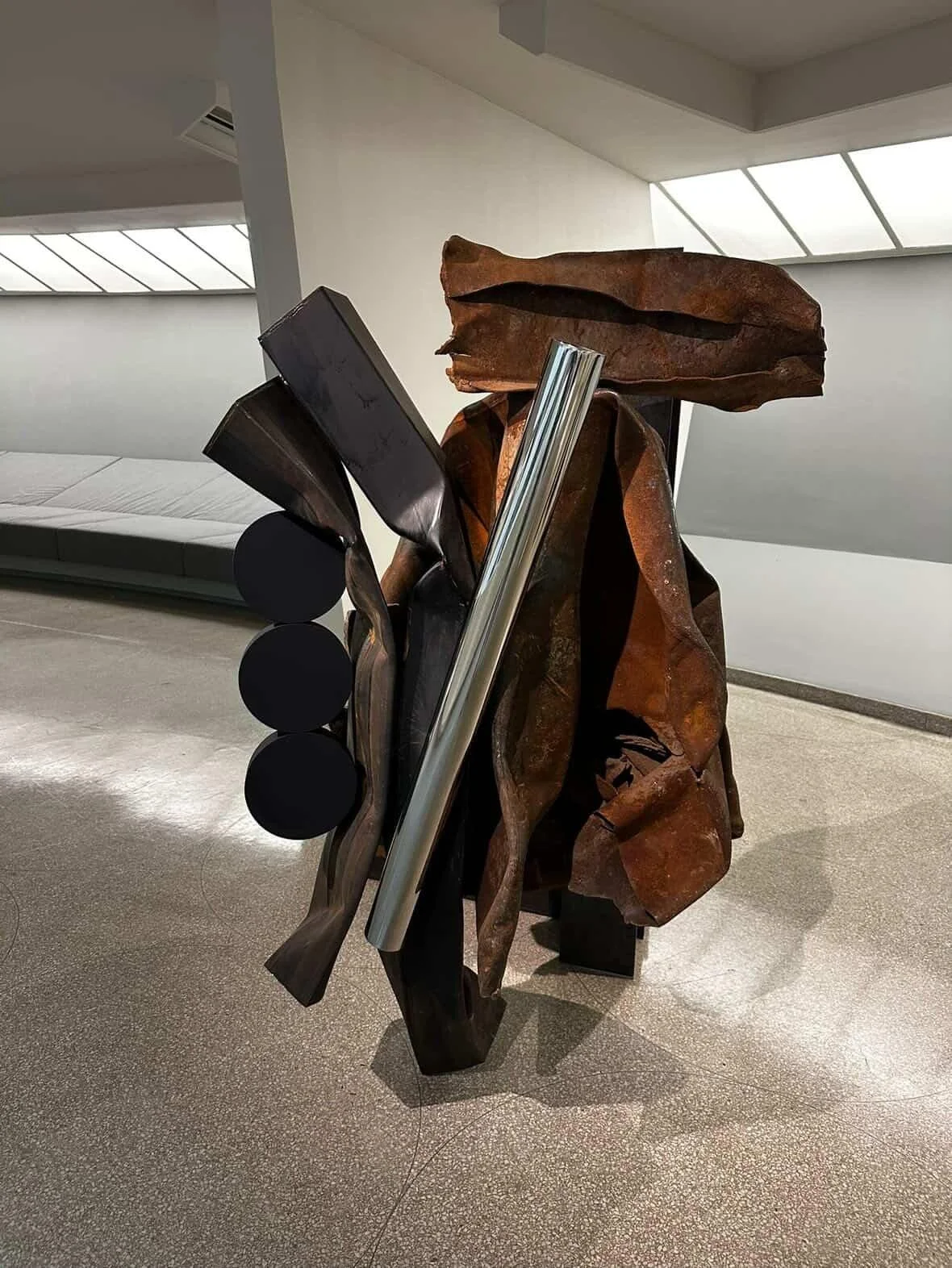
That is partly by design. The Guggenheim installed the show in reverse chronology, so we started with the newest work at the bottom and moved backward through Bove’s career as we climbed. The museum framed that as a way of letting the show unravel upward, with large steel works giving way to earlier, lighter pieces near the top.
In practice, that meant loop after loop of steel. Bent steel, crumpled steel, painted steel, smooth steel. Steel that looks soft and folded while remaining heavy. I got the point. Then I kept getting it. Then I got it again.
By the second or third ramp, I was no longer thinking about transformation or surprise. I was thinking, how many times are we being asked to look at the same thing? When do I get to meet the rest of this artist?
That was frustrating, because the rest of her work is more interesting. Once the show loosened its grip on steel, I felt pulled back in. The earlier works were stranger, a mix of materials that shifted as I moved through the space. They felt less determined to insist on their importance. That is where I began to feel range instead of repetition.
What made this more irritating was how strongly the museum insisted the show was about access, rest, play, and touch. Mark McClary, the Guggenheim’s senior director of marketing, described it that way directly, emphasizing the seating, the tactile room, and the idea that visitors should feel the show instead of observing it from a distance. I could play a one-string instrument. I could build with gold cubes Bove has not used in years. The curator echoed this in the opening remarks. There is a tactile library tucked into the reading room on the second ramp, lounge seating meant to create reflection and receptivity, chess tables on the ground floor, and even tea service on weekdays, all meant to make the museum feel more welcoming before visitors take on the long climb upstairs.
It sounds great. It sounds like an institution trying to pull the community in.
And yet, those elements felt peripheral. The chess tables read like a seating nook. The sofas and chairs felt like places to recover while moving up the ramp. The tactile room was genuinely fun, but it felt like a side chamber rather than a central experience.
So while the show talks about openness, what I actually felt was the familiar museum message. There is still a right way to move through this, a right way to read it, a right way to interpret it, and if you do not get it, then you do not belong here.
The most disappointing part was that the best work appeared at the very end, and one of those pieces was not even Bove’s. It was part of her collection: Richard Berger’s My Couch (1976), a floating couch that feels both present and absent, more delicate and more direct in its impact.
At the end of the day, I am not sure I can recommend this show. When I left the museum, banquet tables were being set up for the board’s lunch, beautifully adorned with some of the most striking flowers I have ever seen. Some were rare varieties I have only encountered in South American botanical gardens, where cultivating orchids can feel like an act of devotion.
But I am not sure I can recommend supporting a museum that will not support its own