SANTA! I KNOW HIM!
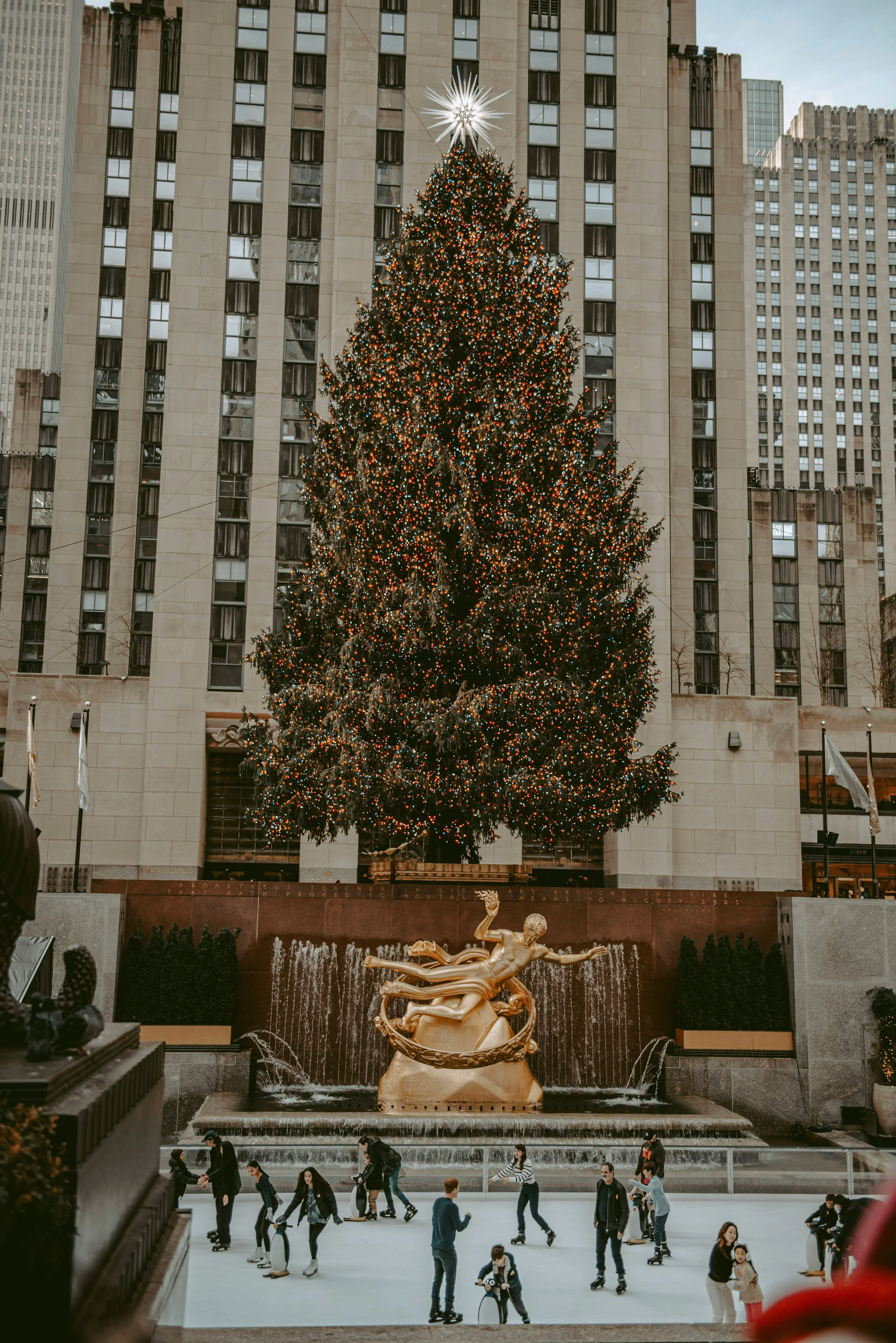
Working in Midtown when that damn tree comes to visit is an Olympic sport. Starting on November eighth, the neighborhood descends into anarchy, overrun each day by over half a million worshippers traversing from afar to pay homage to their shrub god. As a ritual sacrifice, they drop their collective life savings on amateur Glambot shots with rogue Elmos, then stand still in the middle of the street for probably six hours of reverent meditation.
Meanwhile, the employed dodge pedicabs and hop barricades, mapping Rockefeller Center’s underground tunnels like Russian spies just to get to the other side. We throw children aside GTA-style, draft unsuspecting Ubers and DoorDashers into the war zone, and pretend to be cool with the deity’s bodyguards brandishing AR-15s in our office lobbies (don’t worry—the first line of defense is a dog).
After performing an episode of American Ninja Warrior to get on and off the subway each day, I emerge like Pennywise from the sewer to face my arboreal arch-nemesis. And every single time, drenched in sweat and bruised by a stranger’s backpack, I am compelled to take out my stupid phone and take a silly little photo.
No one is immune to Christmas in New York. Short of the OG Bethlehem edition, every great Christmas story was made here, from “‘Twas the Night Before” to Elf. In fact, according to Aristotle’s rubric (what, did you think I knew how to ball?), the city’s season is a story itself: it’s got plot, characters, a theme, dialogue, definitely music, and one hell of a spectacle. But perhaps most importantly, much like its tree overlord, the trappings of this ridiculous month are so unchanging.
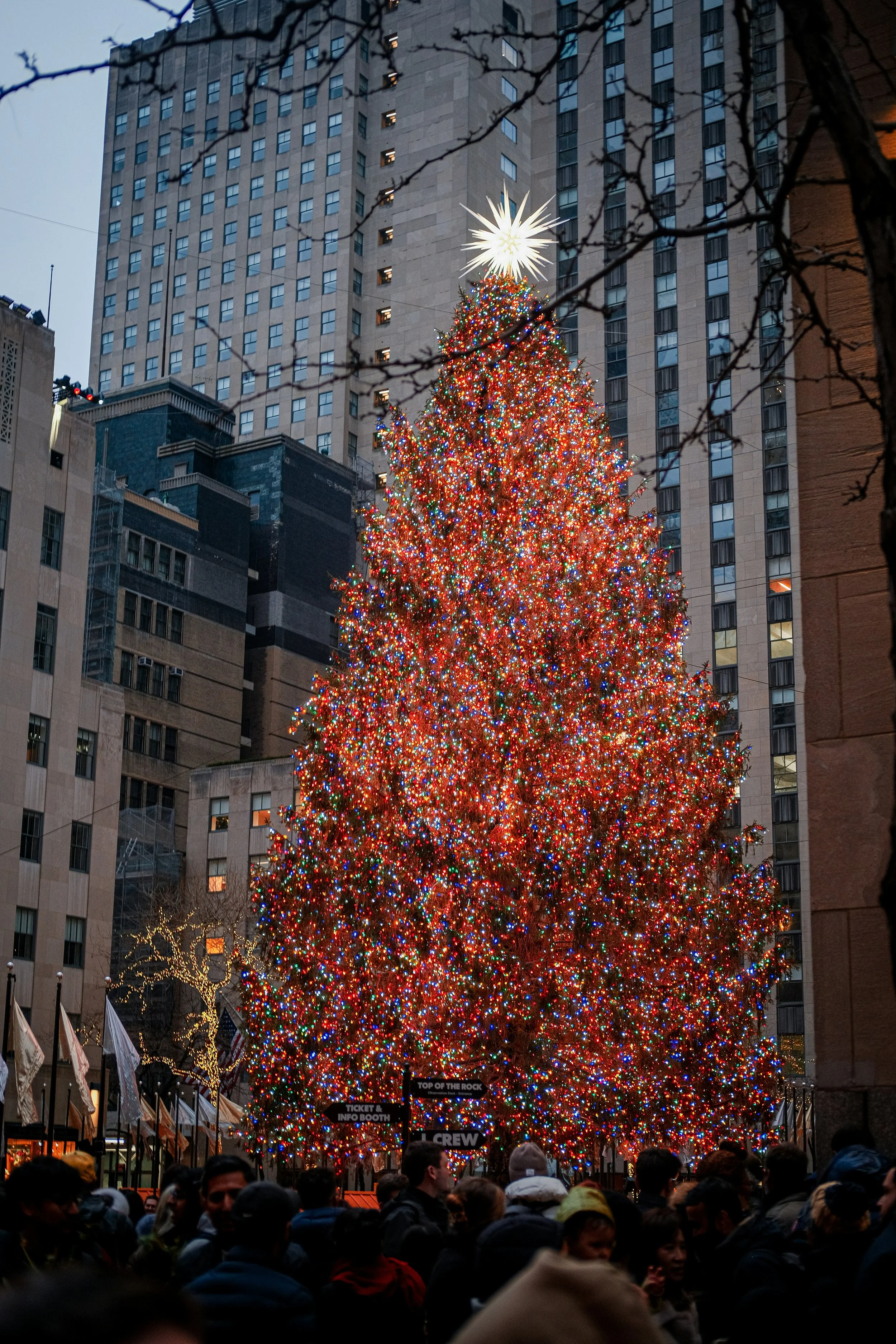
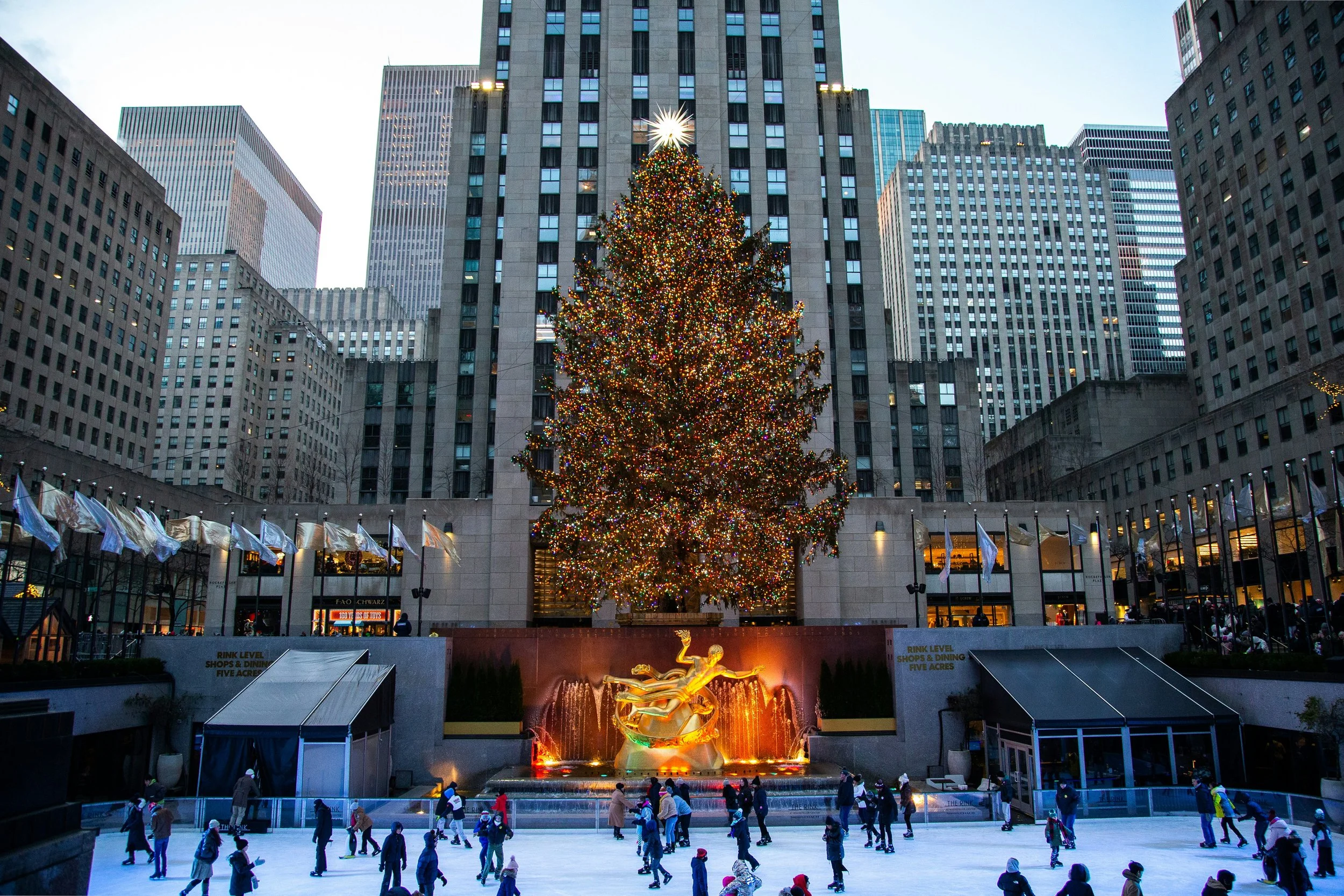
For almost a century, members of the tall bush dynasty have stood in that very spot. The first, in 1931, was a modest 20-foot fir, erected on the much more reasonable date of Christmas Eve. A symbol of gratitude for mid-Depression employment, she was purchased with the pooled cash of 30 Rock’s Irish, Greek, and Italian construction workers. They dressed her up with cranberries, paper, and tin cans, then lined up on the rubble beside her to collect their checks. Whoville who!
For just as long, the Rockettes have kicked next door, their Spectacular originally a 30-minute intermission between movies. Once known as the “Missouri Rockets,” these Midwest transplants have grown to call themselves New Yorkers (nice try—when they hit the required 100 years, I’ll allow it). And while their show has expanded too, the bulk of that initial half-hour remains—probably 29 minutes of kicklines, plus the living Nativity scene and “Parade of the Wooden Soldiers.”
Real fans know that the Rockettes make me cry (one of my more normal traits), and those storied numbers are always the kickers (sorry). Every year, the wooden soldiers report for duty, their obstructive uniforms leaving them indistinguishable from their predecessors. Their glass-cutting choreo is a mystery on par with Stonehenge and sundials—there’s no way these pre-microwave, pre-Advil bitches had access to that level of math. And yet, spinning into geometry-proof formations with #Spectacular precision, they miss not one step (per their contract, they’d be executed). Every night, as all 36 of them pull off their final cannon-shot fall, a kid or a tourist is watching for the first time. Then the girls spring back to life and salute as the curtain falls, as if to say, “and we’ll do it again.”
But New York Christmas history stretches back further than even those cunty Hessians’ opening night. It’s so old, in fact, that our city practically invented Noël as we know it today. (Like, do we have to do everything? How about one other state pitches a holiday?)
In 1861, when Santa began squatting at Macy’s, the store’s gift options consisted exclusively of “dry goods,” and fun hadn’t been invented yet. Everyone was wearing bonnets, the average number of children per family was seven, and some idiot had just straight-up invented office jobs. Christmas was a thing, but any outside-of-church celebrations were pretty much just excuses for adults to binge drink, gamble, and, according to Google’s AI report, “shoot guns.” So for the city’s kids—whose Christmas hauls to date probably consisted of a Bible and an orange—this hard launch of Christmas magic was kind of a big deal.
While New Yorkers were still deciding exactly what Santa was, the flour-shopping children hurled onto this strange man’s lap had at least heard of him. After all, we were once New Amsterdam, and the Dutch who stuck around would not shut up about “Sinter Klaas” and his, quote, “huge Flemish trunk hose.”
In 1809, Washington Irving (19th-century Nathan Fielder) dropped a series of missing-persons ads for a made-up Dutch historian, Diedrich Knickerbocker. In the throes of the townspeople’s futile search, said ads were followed up by a notice from a “hotel manager” who threatened to publish the manuscript abandoned in Diedrich’s room should his bill remain unpaid. Knickerbocker’s History of New York inevitably hit shelves, featuring a handful of factual stories and a ton of zero-context BS. (To quote PinkPantheress, “Is this illegal? It feels illegal.”)
One of Knickerbocker’s historical accounts was like, “and then Sinter Klaas flew over the city in a wagon and became the patron saint of New York,” and everyone was like, “bet.” A decade later, a poem by an anonymous New Yorker was like, “hear me out: also reindeer.” Two years after that came “‘Twas the Night”’s response: “oh, you mean Dasher and Dancer?” (The rest of the country was like, “Are you guys on drugs? We’re still out here shooting guns.”)
Fast-forward to 1889: in addition to grain, Macy’s now sells petticoats and stoves. The department store features modern marvels like departments, prices you’re not allowed to haggle, and a soda fountain. But perhaps their most impactful invention is window shopping, debuted with their very first Christmas displays. The elaborate, sometimes steam-powered dioramas first advertised porcelain dolls, a mild upgrade from a Bible and an orange.
By 1891, a certain broke nonprofit decided their best fundraising bet would be to offer a gaggle of unemployed men a gig and a pair of huge Flemish trunk hose. They unleashed their Kris Kringles on the city SantaCon-style, and Salvation Army bell ringers were born.
Come 1936, there was a “skating pond” designed to lure Depressed shoppers to Rock Center (once you’re there, might as well go into debt at the oyster bar and multiple tobacco shops). In 1954, The Nutcracker, then a sort of underground deep cut you’d probably never heard of, hit the NYC Ballet. It checked all the Christmas lore requirements (fever dream, woodland creatures with jobs, cunty Hessians), so they’ve kept it around every year since.
No one’s ever noticed before now, but pretty much everything in this city changes. The F and the M swap lives (get over yourselves), Pasta Wiz closes (where am I supposed to go when I’m sad), El Rio Grande closes (where am I supposed to get margs), everyone’s building gets compost bins (fine), we get a rat czar (you guys have been watching too much Nutcracker). Everyone moves every five seconds, and every building someday gets its wings (permanent scaffolding).
Still, New York Christmas doesn’t budge. It’s what draws the tree cult every year and what makes the locals tolerate it. There will be a tree, there will be a St. Patrick’s midnight Mass, there will be a statue of giant ornaments on top of a running fountain (call me when they roll away, geniuses). Even the latest additions—1993’s Union Square Holiday Market, 2002’s Bryant Park ripoff, 2004’s Saks light show—have a habit of sticking around.
The world keeps spinning, but every year, an organ overture welcomes children scarfing 10 a.m. hot dogs (and “pizza cupcakes”? Insane concessions menu) to Radio City. Every year, confused sheep enter stage left as a narrator on a literal God mic tells a tale as old as time. Like in your Christmas pageant and your mother’s and your grandmother’s, angels and wise men take the stage (I played Mary with the flu because at five I knew the show must go on). There are camels and donkeys, and I forget, but probably a kid with a drum.
“I have no gift to bring,” the little drummer boy apologizes every year, for he is a poor boy too. But his drum solo, played with a passion even J.K. Simmons couldn’t squash, is gift enough—much more practical than frankincense or myrrh (men: not knowing how to shop since 0 AD).
And like all actual good gifts for babies, the rum-pum-pum-pum is secretly meant for the parents. For those of us who’ve become little drummer men—one or 92—New York Christmas’s bizarre, familiar beat has become a yonder star to depend on. One that, even to the Scroogiest of commutes, brings just a few tidings of comfort and joy.