Beneath the Surface at HERE ARTS CENTER
An underwater gala complete with mermaids, squid hands, and a lip-syncing clam puppet offered a glimpse into how one of New York's most influential experimental theater companies is rethinking who theater is for.
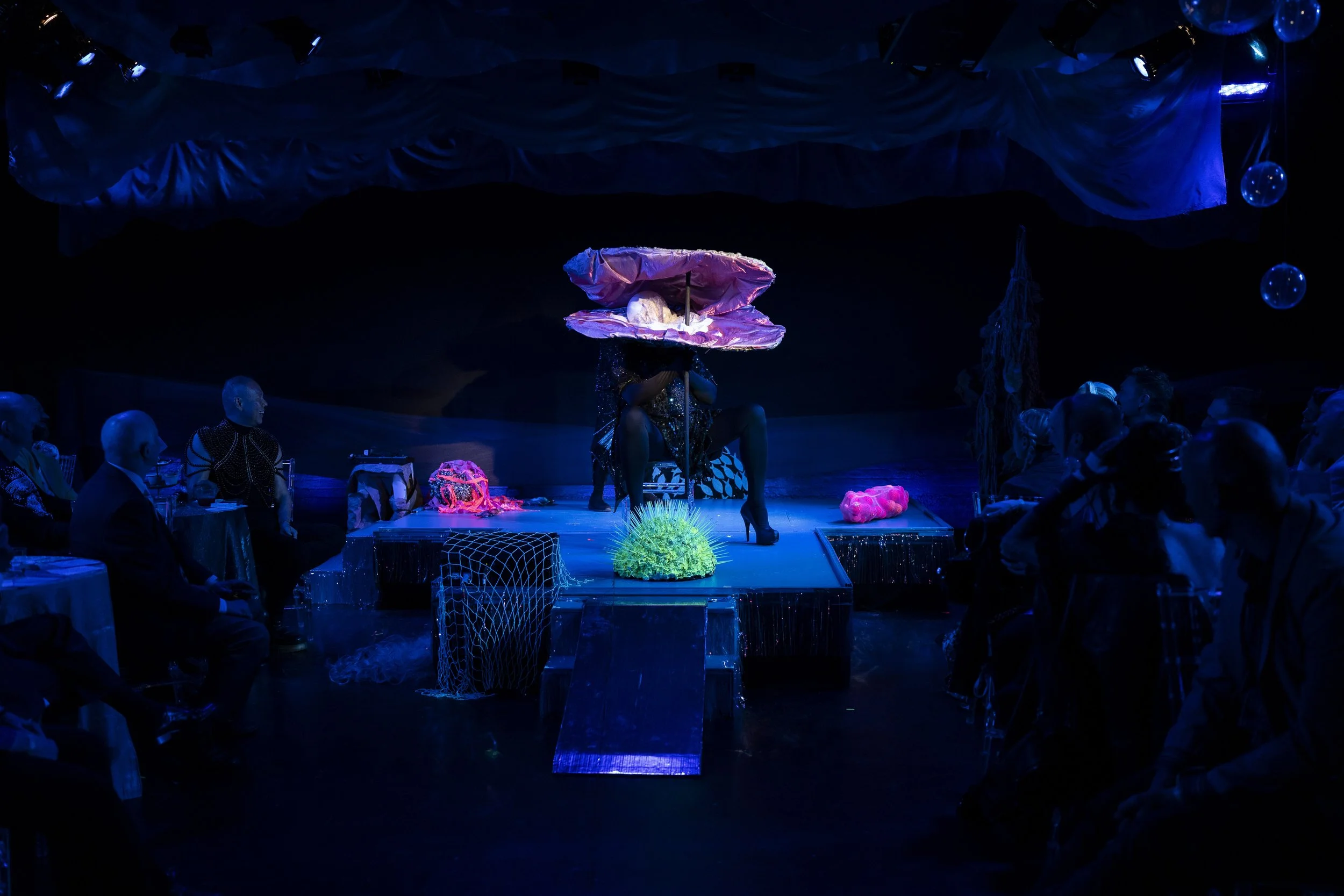
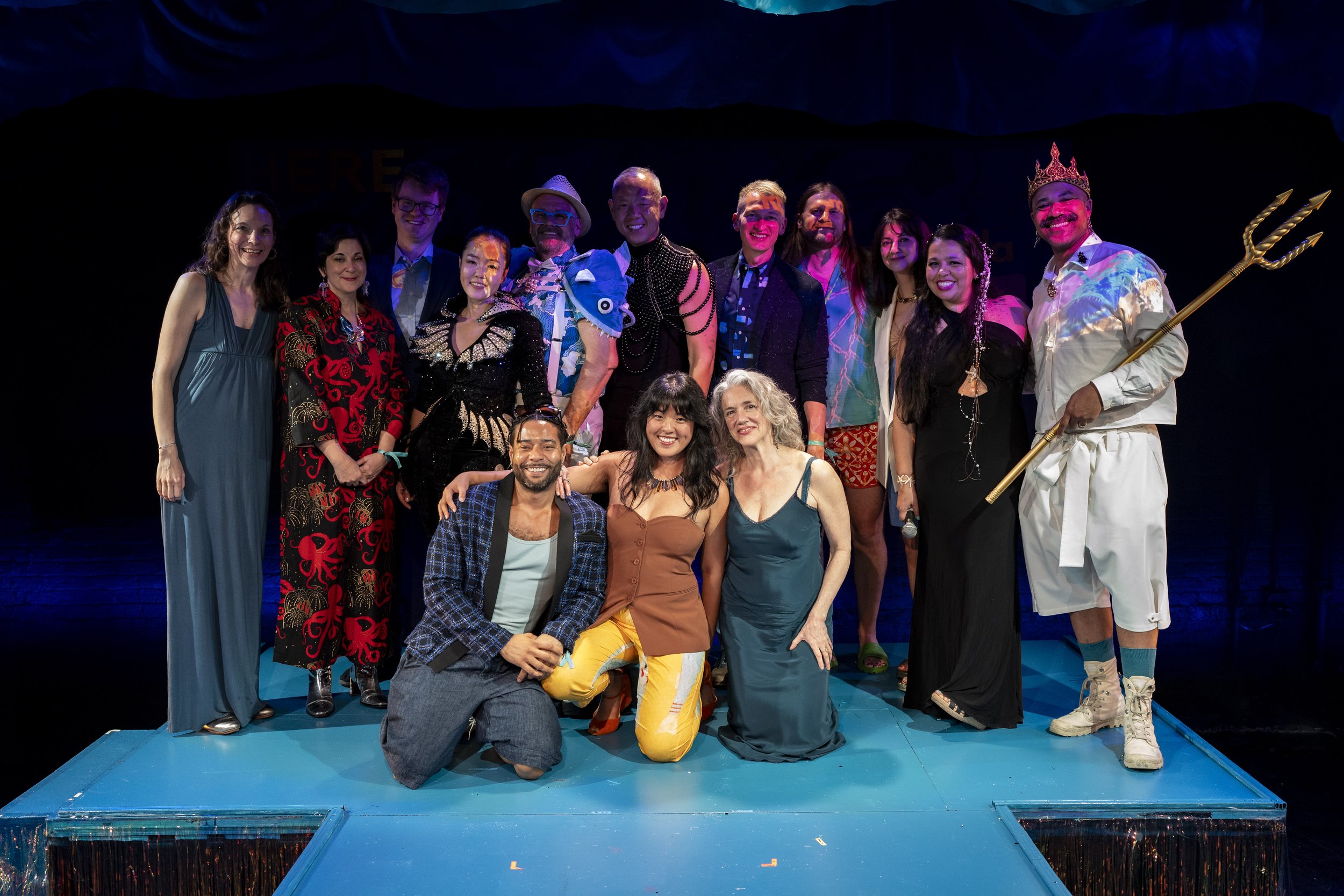
Guests dressed as mermaids, pirates, sea kings, and every imaginable ocean creature gathered in SoHo for HERE Arts Center's 32nd Annual Gala. A lobster wandered through the crowd. Two men arrived wearing squid hands. Children raced around swinging pirate swords, while glowing bioluminescent jellyfish made from LED lights floated overhead downstairs.
The underwater theme could have easily become a gimmick. Instead, it felt like an extension of HERE itself: playful, communal, a little strange, and completely comfortable embracing the unexpected.
Since opening in 1993, HERE Arts Center has become one of New York's defining homes for experimental performance. Now led by Co-Directors Jesse Cameron Alick, Annalisa Dias, and Lanxing Fu, the organization continues to champion artists working outside traditional theatrical boundaries while asking an increasingly important question: how can experimental theater welcome more people into the room?
That spirit carried through the evening.
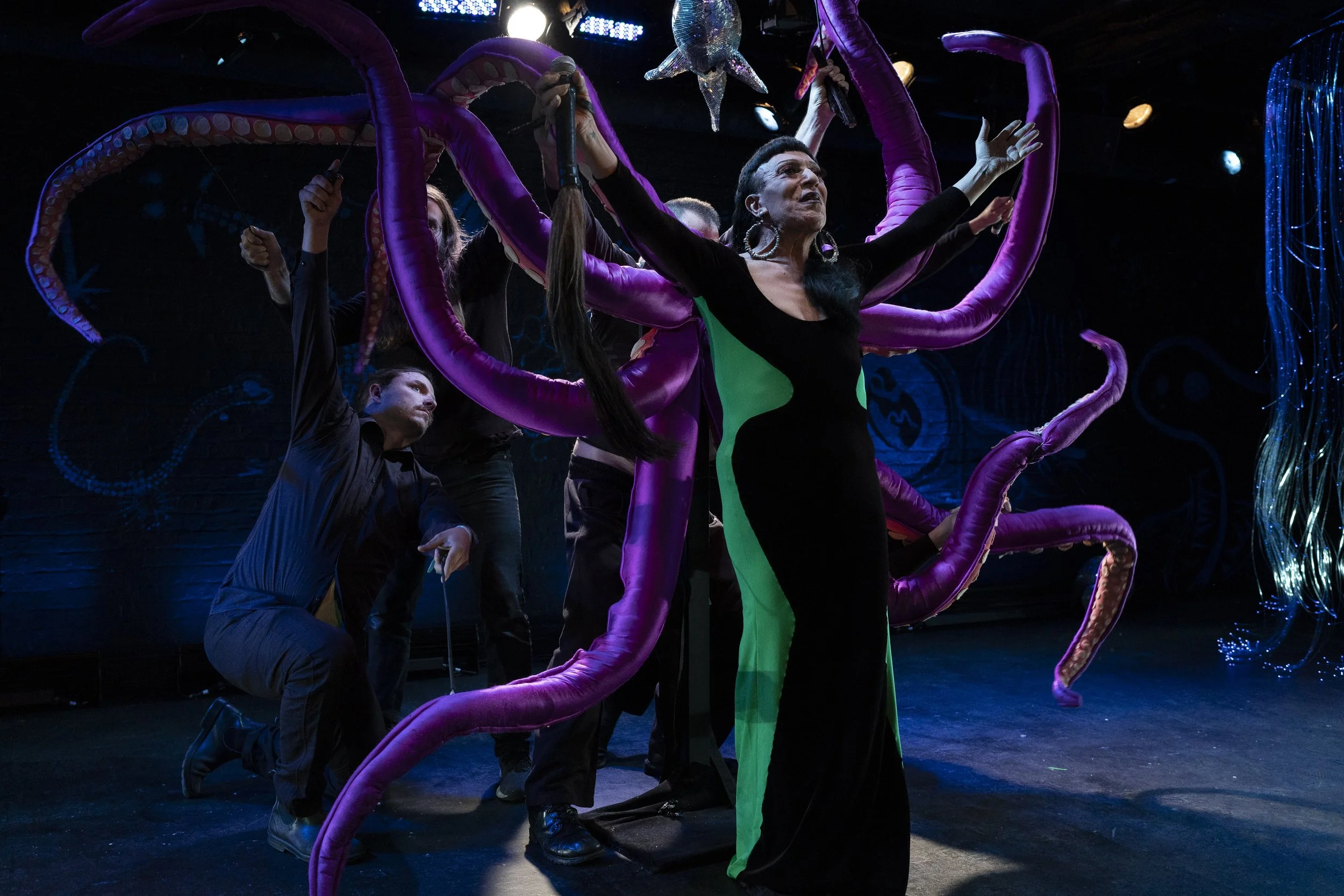
The gala's emcee kept the audience laughing and seamlessly connected each segment of the program, but it was the performances that left the strongest impression. A lip-syncing clam puppet delighted the crowd before Avant Guardian honoree Heather Christian, a MacArthur Fellow and former HERE artist, performed an original composition accompanied by a chorus of backup singers. Christian's work doesn't fit neatly into a single genre, but it didn't need to. The audience hung onto every note.
Courtesy: Marcus Middleton
Jennifer Suh Whitfield, who received the HEREmanitarian Award for Visionary Leadership, spoke movingly about her longstanding relationship with HERE, first as a supporter and audience member, and now as Board Chair. Alongside Christian, she represented two different kinds of artistic stewardship: one through making work, the other through ensuring organizations like HERE can continue supporting it.
Speaking with the three co-directors after the gala, the conversation repeatedly returned to audiences. One statistic, in particular, has shaped their thinking. Citing a 2022 National Endowment for the Arts study, the directors noted that only about five percent of American adults attended a non-musical play that year. Rather than seeing that as a reason to compete for the same audience, HERE is asking a different question.
"What feels truly risky to us is deciding that the other 95% are actually your audience," they said. "Not just as marketing or outreach, but as a genuine artistic premise." They continued, "The risk is in standing still."
That philosophy also informs how HERE approaches experimental work. The directors don't believe audiences need less challenging theater. They believe audiences deserve spaces that don't make them feel like they already need to know the rules.
Each co-director arrives at that idea from a different perspective.
Courtesy: Marcus Middleton
For Jesse Cameron Alick, whose background spans dramaturgy, artistic research, and science fiction, speculative storytelling offers a way to imagine possibilities rather than predict outcomes. Referencing Ursula K. Le Guin, he said that many people think science fiction is about forecasting the future, but its real strength lies elsewhere.
"Sci-fi gives us thought experiments, not predictions," he said. "It helps us think about our present from points of view that are unusual, unlikely, radically different from our own." In a theater industry often consumed by immediate challenges, he believes artists also need to make time to imagine what comes next. "If we don't plan our future, the future will just happen to us."
Annalisa Dias approaches theater through the lens of climate justice. She believes the problem isn't a lack of information but a lack of imagination.
"We don't have a knowledge gap on climate," she said. "In fact, we have the science. We have the solutions. What we have is a narrative gap about what kind of change is truly possible." For Dias, theater is uniquely positioned to help fill that gap because it happens "between bodies in a room, in real time," allowing audiences to experience and visualize questions that data alone cannot answer.
Lanxing Fu sees playfulness as central to that work.
"Play is not a distraction, it is how we remain ungovernable," she said. "It's how we remain rooted in imagination and mischievousness, which gives us space to resist oppressive conditions." For Fu, humor, joy, and curiosity don't weaken difficult conversations. They create the connections that make those conversations possible in the first place.
Looking back at the gala, those ideas were everywhere. In the clam puppet. In the lobster. In the glowing jellyfish. In the audience that happily embraced the evening's invitation to dress up, play along, and celebrate artists whose work refuses easy definition.
For an organization known for experimental theater, HERE felt remarkably free of pretension. The atmosphere was warm, generous, and full of people genuinely excited to support adventurous work and the artists making it. In a moment when the arts often feel under pressure, the evening served as a reminder that New York's creative community is still eager to invest in bold ideas, especially when everyone feels welcome to be part of them.
Courtesy: Marcus Middleton