
Why Lit Club NYC’s Astrology Night Drew a Packed New York Crowd
It was a typical evening in NYC, and I was headed out to interview the renowned Astro Twins. After putting my daughter to bed, I slid my passport into my waistband, tucked pepper spray into my bra, and grabbed my research, because in 2026’s America, a woman of color doesn’t just prepare questions; she prepares for risk.
I assumed the event—Lit Club’s “Astro Twins: Forecasting Your Future”—would be a light night of giggling over sun signs and sipping cocktails. Instead, Ophira Edut offered perspective rather than prophecy. Astrology, she explained, reads cycles much the way a researcher reads historical trends. People and planets orbit on predictable schedules, and when the slower giants converge, history often pivots.
Astrology, she said, isn’t a belief system but a measurement of planetary cycles. Your birth chart is simply a snapshot of where the planets were when you took your first breath, not a script carved in marble. She urged us to be skeptics, not cynics, and to treat horoscopes like weather forecasts. When you’re facing something big—a job change, a breakup, a new baby—you can consult the skies to see when to make your move; and if your gut tells you to do the opposite, that information is useful too. It’s like being hungry and not knowing what you want to eat: friends suggest a dozen places you definitely don’t want until you finally land on what you do.
Astrology isn’t fortune-telling; it’s a tool for staying grounded—present, focused on our goals, and aware of what we can actually control. By the end of the Q&A, I was surprised by how comforted I felt. The future feels more unknowable than ever, and every news headline lands like another slap in the face. I’ve struggled to imagine a future for myself or my family—one with dreams and long-term goals—when basic safety feels precarious. Buying a house or saving for retirement feels laughable. I’m more worried about being kidnapped off the street or watching someone I love get hurt than about what I’m making for dinner.
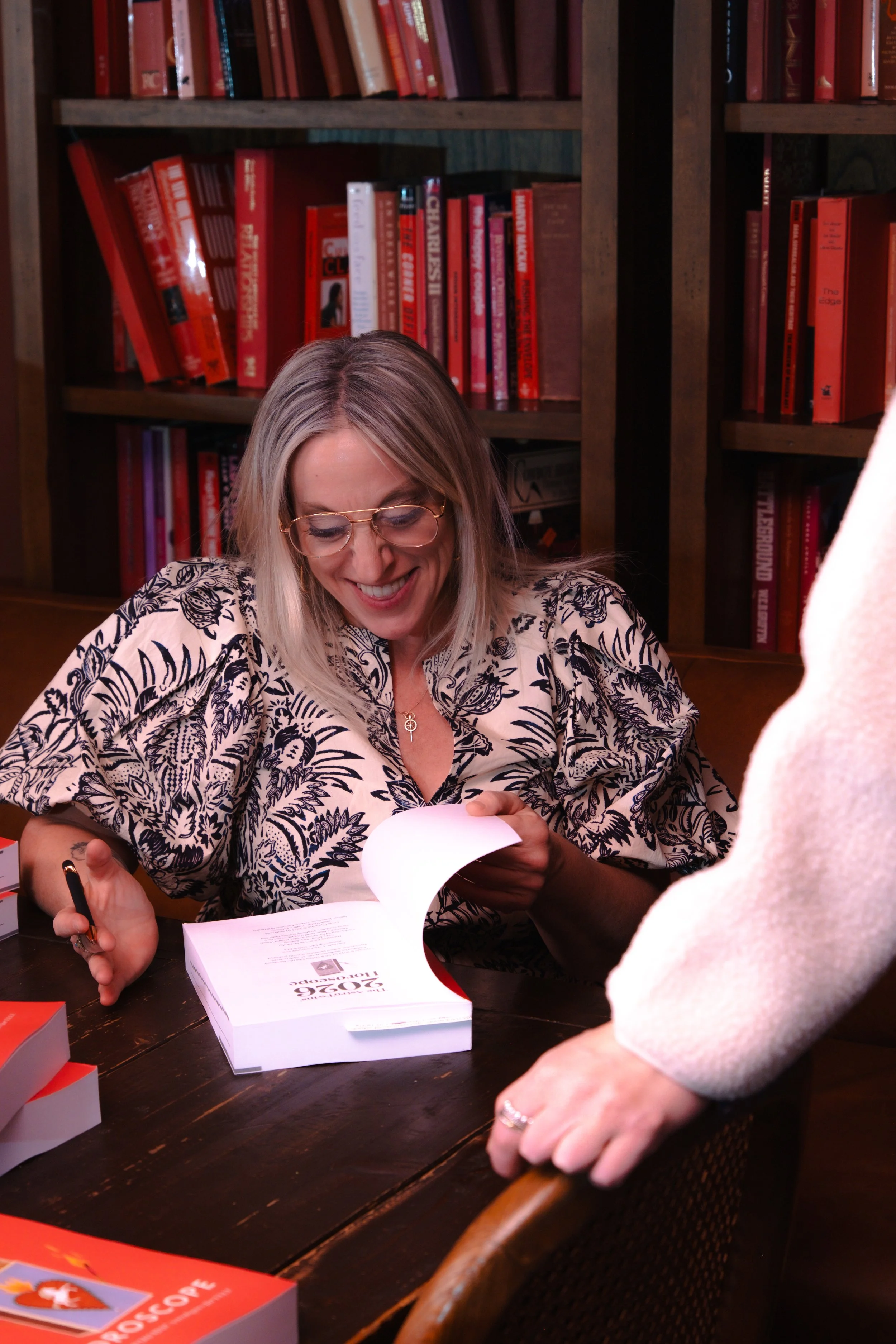
Courtesy: Lit Club NYC
Yet astrology reminds us that upheaval isn’t random punishment—it’s part of the human story. In a world where men still control most levers of power and keep forcing the future to bend their way, astrology’s refusal to predict outcomes feels radical. It invites us to trust our intuition and engage with life in real time. That perspective doesn’t erase my fears, but it does remind me to vote, protest, and protect my loved ones. It nudges me to notice what I need—and to remember that I still have the power to try to get it.
Looking ahead to 2026, Edut and her sister emphasize that it won’t be business as usual. It’s the Year of the Fire Horse: maverick energy that pushes us into uncharted territory. After the dizzying pendulum swings of 2025, 2026 is unapologetically decisive—masks come off, and everyone picks a side. Saturn and Neptune will unite at zero degrees Aries on February 20, triggering a major reset across politics, culture, and technology. Think 1966, but bigger. The last Fire Horse year saw preparations for the moon landing, the debut of Star Trek, and the rise of the Black Panther movement. This time, Edut predicts a surge of independence and new relationship models—less ownership, more choice. Pluto’s transit through Aquarius will accelerate deep systemic change. Economically, the lunar north node shifts into Aquarius on July 22, signaling a correction after the AI-fueled gold rush. And because 2026 is a “one year” in numerology, it marks the start of a new nine-year cycle—one defined by experimentation and resistance to old structures. In Edut’s view, 2026 isn’t about apocalypse; it’s about awakening. The energy is unbridled, and we’ll be asked to choose autonomy over tradition, community over control—to redefine commitment when permanence is no longer guaranteed.
That kind of expansive, counterintuitive thinking is exactly what Lit Club was built for. Its founder, Kelly, is a Puerto Rican–Jewish New Yorker who grew up straddling identities and turned to books to untangle them. As a K–12 teacher, she saw how reading sparked self-discovery. Later, after moving into tech, she realized adults needed that same intentional community. She hosted the first Lit Club event—a Latino readers meetup—where strangers discussed generational trauma and politics. The hunger for meaningful, low-barrier spaces was immediate. Since then, Kelly has built a literary community for the culturally curious, curating books and author talks that respond to the zeitgeist and welcoming everyone from horror fans to horoscope skeptics to pull up a chair.
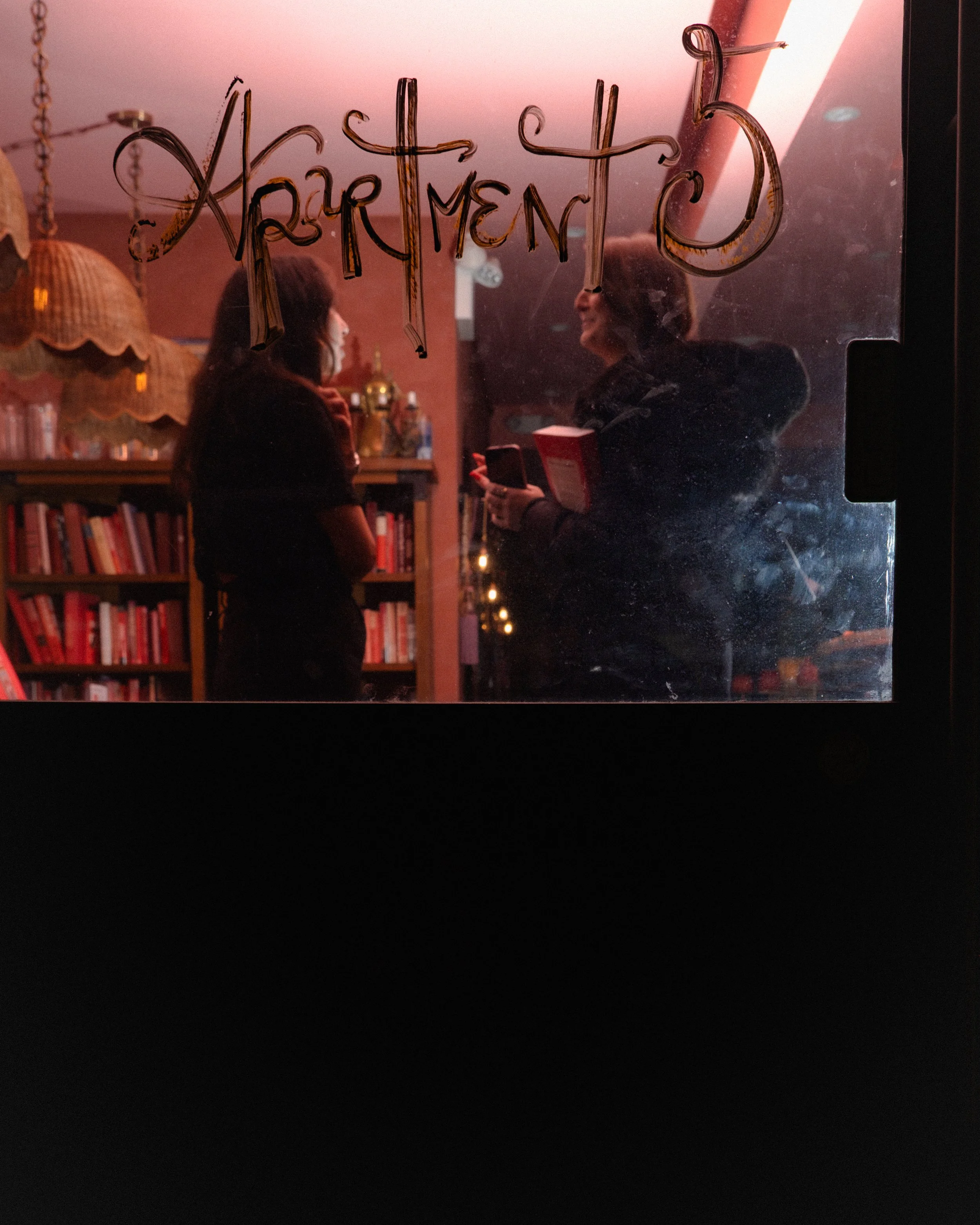
Kelly chooses events the way she chooses books: by asking what conversations people are already having—and who needs a seat at the table. January’s theme was “grounding beginnings,” so alongside Toni Morrison’s The Bluest Eye, she invited Ophira Edut. February’s theme is “liberating love.” She’s leaning toward Wuthering Heights, not for the hype, but to interrogate why this bleak romance is having a pop-culture moment and what that says about us. The month will include an author on romance novels, a historian on the women of the Black Panther Party, and a film screening. Kelly’s goals are both practical and political: keep Lit Club sustainable, partner with more authors and publishers, and ensure everyday readers—especially those excluded from traditional literary spaces—have a place to belong. She’s building a New York where you can think critically, be vulnerable, and explore big ideas without pretension. If that means pairing Toni Morrison with horoscopes or Brontë with Black liberation, so be it.
If you’re looking for community, for answers in the writings of others, for more literature and thoughtful conversation in your life, follow Lit Club at @litclub.nyc. For grounding direction, check out The AstroTwins’ 2026 Horoscope by Ophira and Tali Edut (astrologers for Elle). And if you need more guidance, you can work with the twins directly at astrostyle.com.