Death of Classical and the Art of Listening Differently
Art is political. Right now, art demands to be political. Stories and themes illustrate political messages—but even form itself can be political. Art contorts; it is endlessly malleable. It can exist unbounded by the rigidity of work, school, and capitalism. Art can create a world that speaks to you outside the confines of what you expect.
Enter Death of Classical. Death of Classical presents classical music and opera in New York’s strange and surprising places—catacombs, crypts, churches—delighting audiences with new ways to imagine the genre. And enter the Prototype Festival: a festival committed to “surprising our audiences and confounding their expectations” while centering diverse voices. Together, the two co-presented Tiergarten, an underground cabaret delving into periods of societal madness. The show aims to be unexpected, using creative explorations of the past to speak to our current chaos. In this reviewer’s opinion, it succeeded.
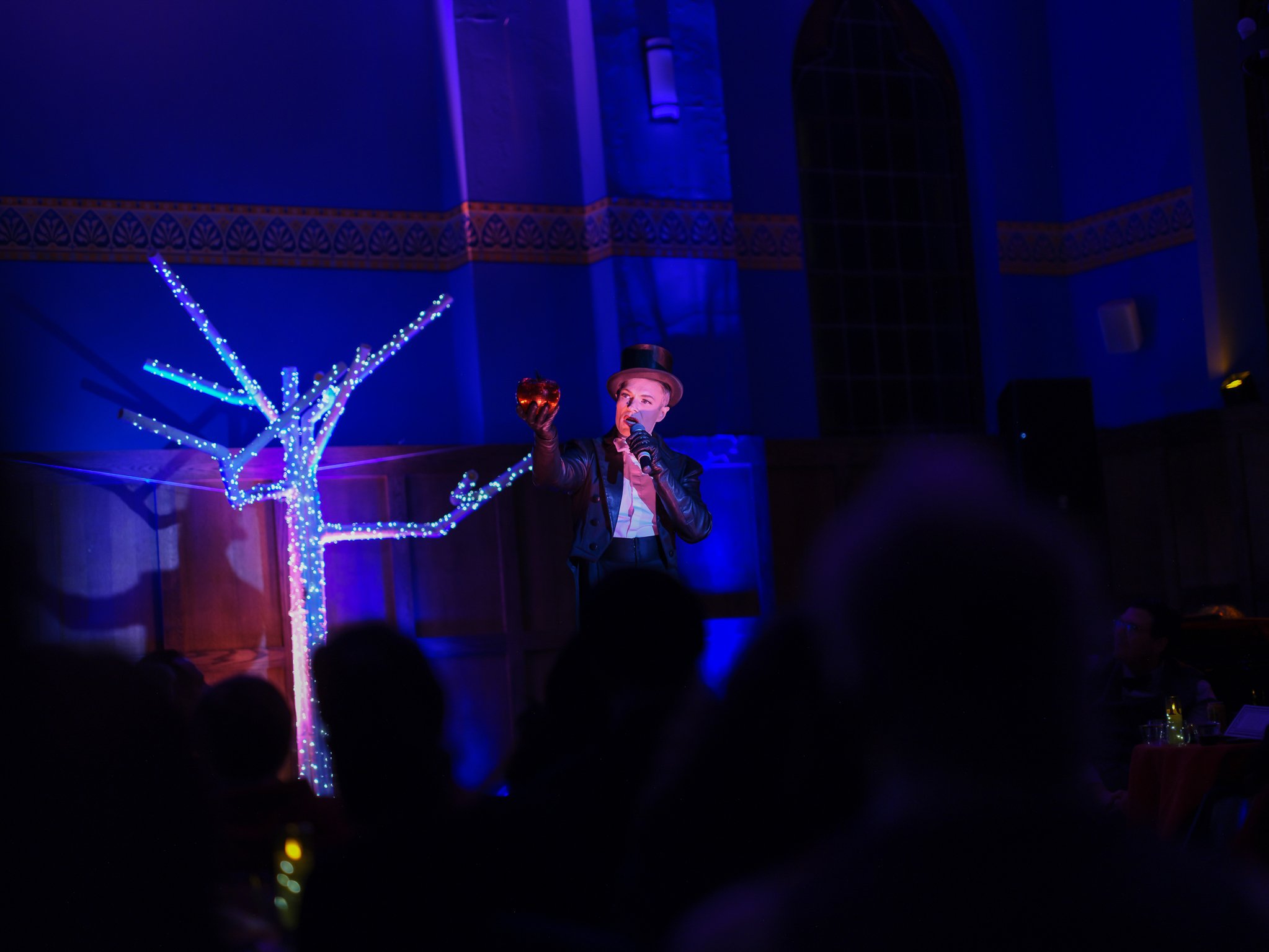
Tiergarten created a true cabaret. It blended opera belting with jazz ballads, burlesque shimmying, shadowed puppetry, and lyrical dance. The audience wove through periods of history, beginning in Weimar Berlin and moving backward through time until landing at the story of Adam and Eve. A charismatic cast guided us through these worlds, led by the charming Kim David Smith. The show did not shy away from the realities of our moment—or mirrored moments of the past: sorrow, pain, and seemingly never-ending panic. Instead, it sought to explore them through art. And even if the room already agreed with its politics, art connects us in a distinct and necessary way.
“We’re coming in with the same heart, but being in the room is such a comfort and such an inspiration,” said Master of Ceremonies Kim David Smith. Alongside donating, protesting, and voting, he said, “building community is really one of those things in the face of despair… and [shows like Tiergarten] are also a joyous and lovely time.”
Courtesy: Kevin Condon
Writer and director Andrew Ousley became both historian and puzzle master for this piece. He jigsawed together historical “tipping points,” from the late-stage empires of Rome to the overwhelming patriotism of the American Revolution. The cabaret format allowed him to jump across time periods while maintaining a sense of timelessness in the human condition. “When you share the same kinds of stories,” he told me, “it allows us to look at the echoes across time periods. It reminds us that so much more unites us.”
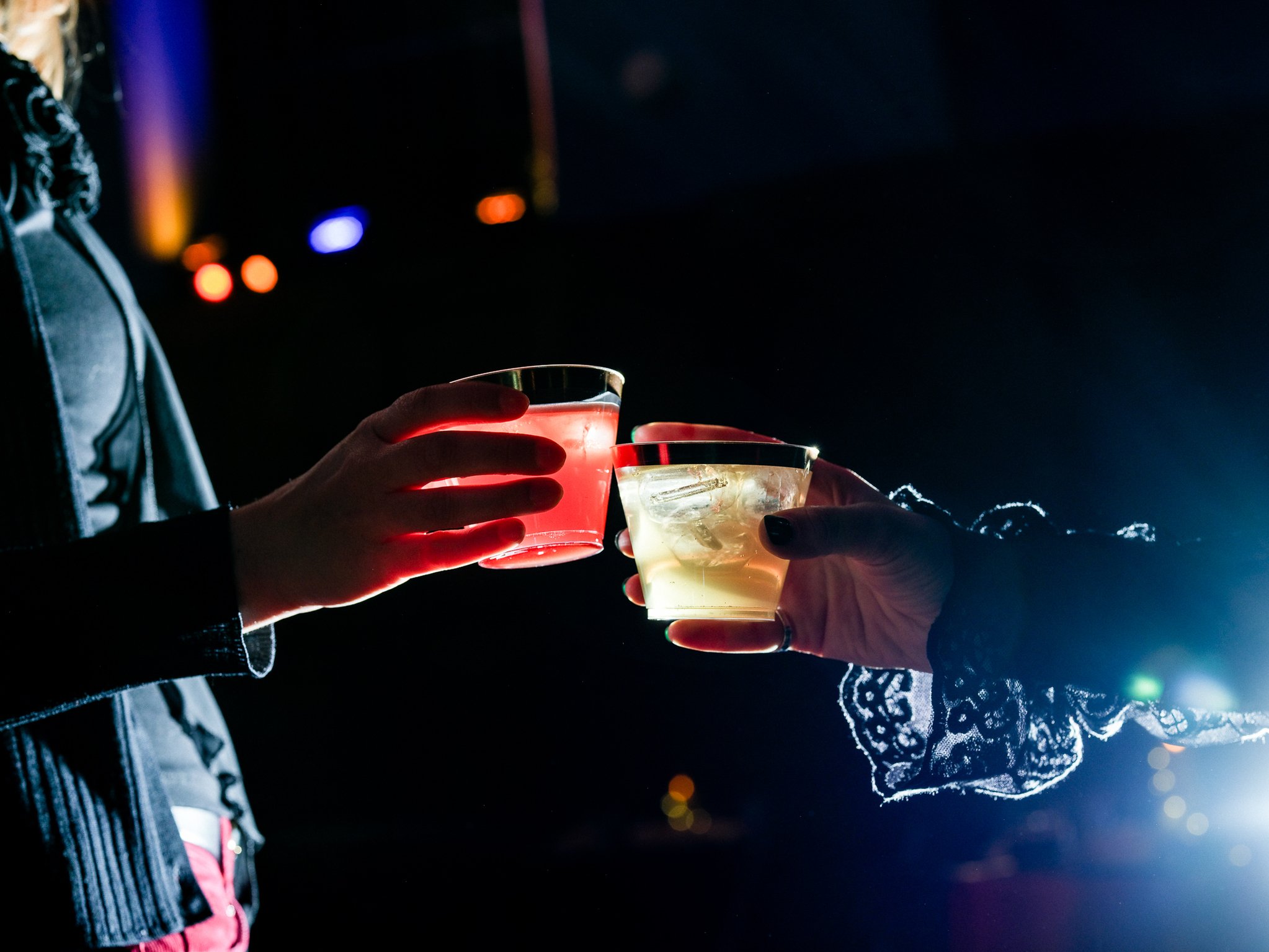
As for the space: we entered through the alley at St. Paul’s Episcopal Church on Carroll Street. Certainly an unorthodox way to consume cabaret—but the simple space felt cozy and warm. Patrons sat at tables or sprawled onto benches around the room. Ousley told me he puts great thought into every step of the performance, from entrance to exit, and I felt it—from the moment he skirted the room personally pouring wine for the audience. Each table enjoyed curated charcuterie, and a makeshift bar at the back of the venue allowed ample time for libations before the performance. “It is all about the welcoming and generosity of this shared experience,” said Ousley.
So many cast members charmed me immediately. Of course, Kim David Smith stood out as emcee. I felt genuine warmth in the way Ousley and Smith spoke of each other’s talents and contributions, and that kinship translated clearly into Smith’s performance of Ousley’s work. Smith struck a balance between a colloquial, confident, jovial tone while skillfully shepherding us between performances. Cabaret, he told me, is his entire life—where “I excavate and discover myself, where I commune with the muse.” That grounding energy was essential to keeping the piece cohesive, and he delivered it in spades.
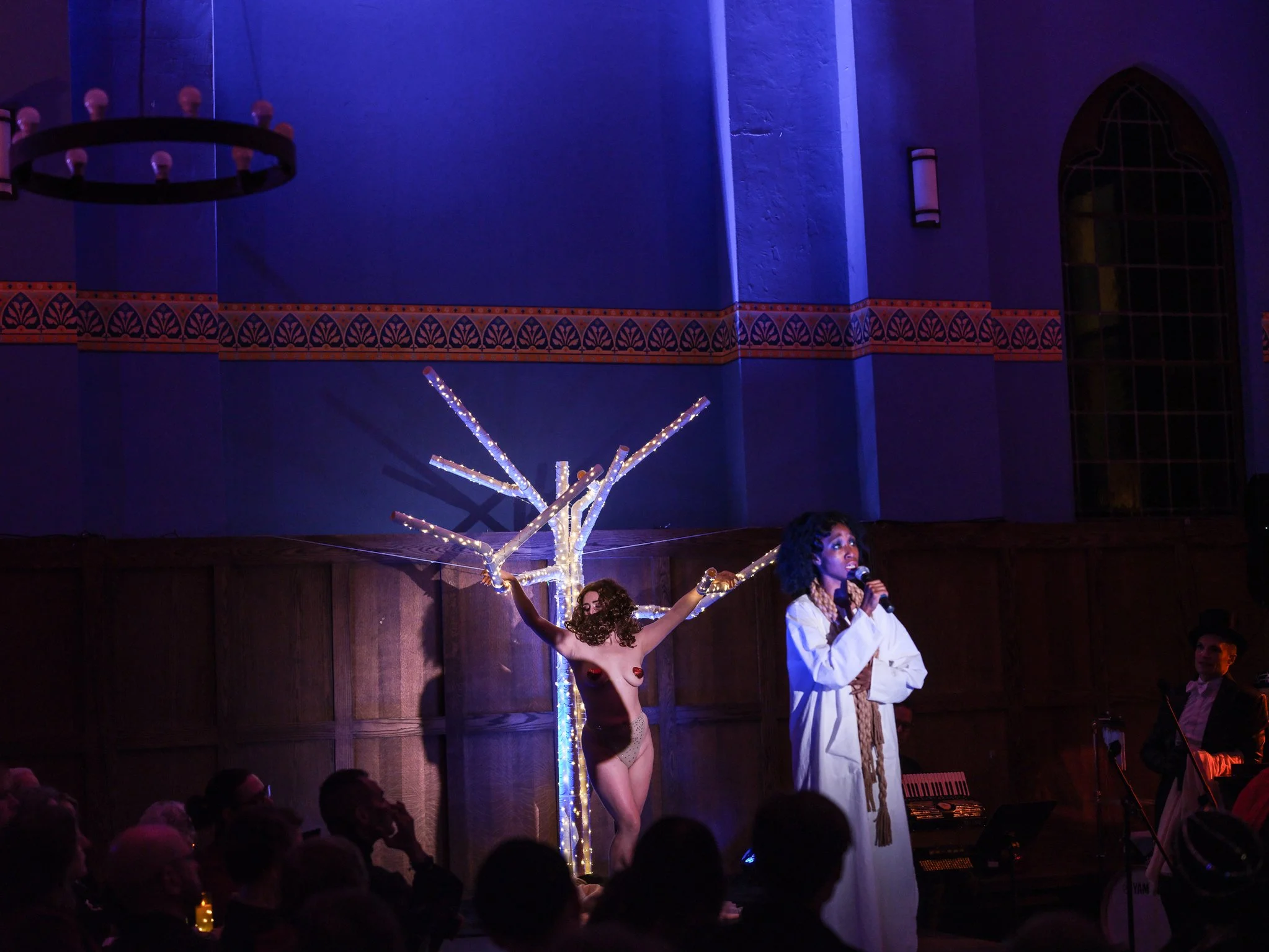
Among the rest of the strong cast, I was particularly struck by the rich vocals of Amara Granderson. Her performance of “Strange Fruit” pulled at my chest—eyes wide, the room hushed. Her impassioned delivery of “Were You There,” performed in front of a burlesque Jesus, lived up to the show’s promise of diverting expectations. Yet Tiergarten never felt interested in shock for shock’s sake. Instead, it sought to understand these moments and their complexities. We felt deep sorrow—but also humor and levity. “The camp and the winking-ness are important,” said Ousley, “but vulnerability is the most important part of cabaret and drag culture.”
Courtesy: Kevin Condon
The most emotional moment, for me, came near the end of the show and felt like true catharsis: Liana Zhen-A and Dylan Contreras performing a contemporary dance to Max Richter’s This Bitter Earth / On the Nature of Daylight. A perfect song choice for two phenomenal talents. Perhaps I am biased as someone who dances a bit herself—but it gave me chills, and you can’t fake that. As they swirled around the stage, I found myself grateful to be surrounded by other New Yorkers, watching live performance with rapt attention—no screens, just presence, just community. I felt lucky, a feeling that sometimes eludes me in our current climate.
Art right now demands to be political. This moment demands all of us be political. It can be difficult to know whether joy and levity accomplish anything—or whether they are simply a break from the madness. But a break is necessary, too. Tiergarten made that break feel meaningful, allowing it to speak directly to what we’re all living through. Andrew Ousley told me this: “If anything will save us, it’s the vulnerability of allowing ourselves to love and be loved.” If we keep making art, if we keep confronting our collectiveness, if we keep examining the echoes of our shared human condition—maybe we’ll be saved from today, too.
You can find out more about Death of Classical here.