
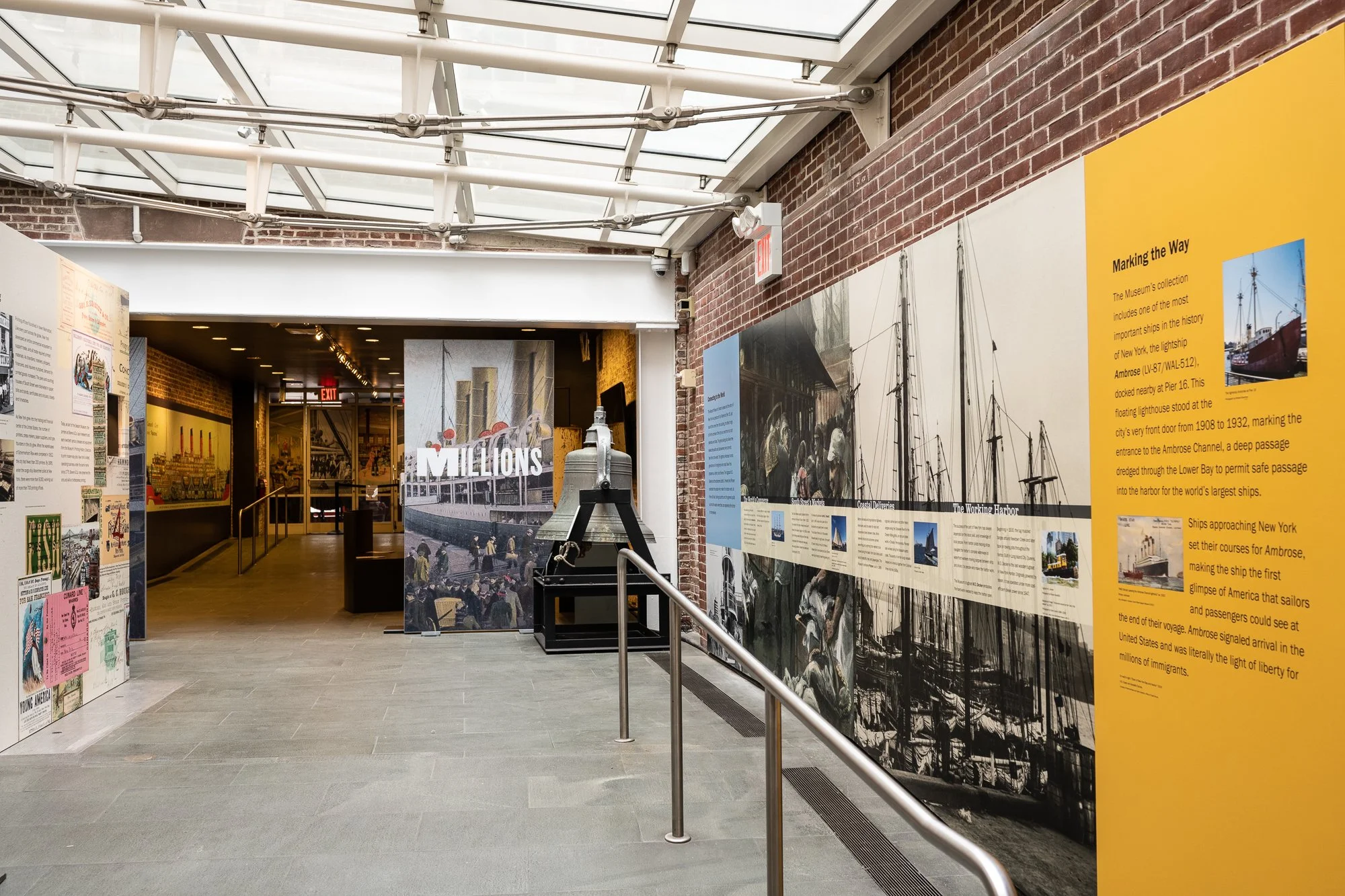
Before social media, cable news, or even the radio, New Yorkers were already arguing about politics in print. At the South Street Seaport Museum, an exhibition of historic documents and a new book about the city's revolutionary printers offer a timely reminder: America's founding ideals weren't born from unquestioning loyalty, but from people willing to challenge those in power.
Credit: Richard Bowditch
We just had an incredibly eventful midterm election that saw blockbuster results in states and districts across the country. I don’t have to tell you how saturated the news coverage was; we all watched the results come in. Every news station and social feed was full of campaign updates for a multitude of candidates. Candidates who may live thousands of miles away from here.
But imagine experiencing this midterm season… without your phone.
Actually, imagine there are no phones at all. No social media. There’s no internet.
Let’s push it even further. Imagine trying to stay updated on the results without landlines, or emails, or faxing. There’s no television. Not even a radio.
It might seem impossible to fathom the task of keeping up with current events without our digital media or electric mediums, but our world of inter-telecommunications is a young one. For over half of the lifespan of our country, written text, i.e., newspapers, journals, stone tablets (okay, maybe not stone tablets), was the main source of news. And beyond American history, the written word has been crucial for spreading news and information for millennia (this would include stone tablets). When mass printing came into the picture, the invention allowed people to share ideas and hold social discord at a larger scale than, say, a gathering in the town square. Monarchs and academic elites may have been keeping records dating back thousands of years, but mass publication provided a means to keep public records, not only of data on an administrative level, but of ideas, philosophies, and societal promises, shaping the way people think and debate.
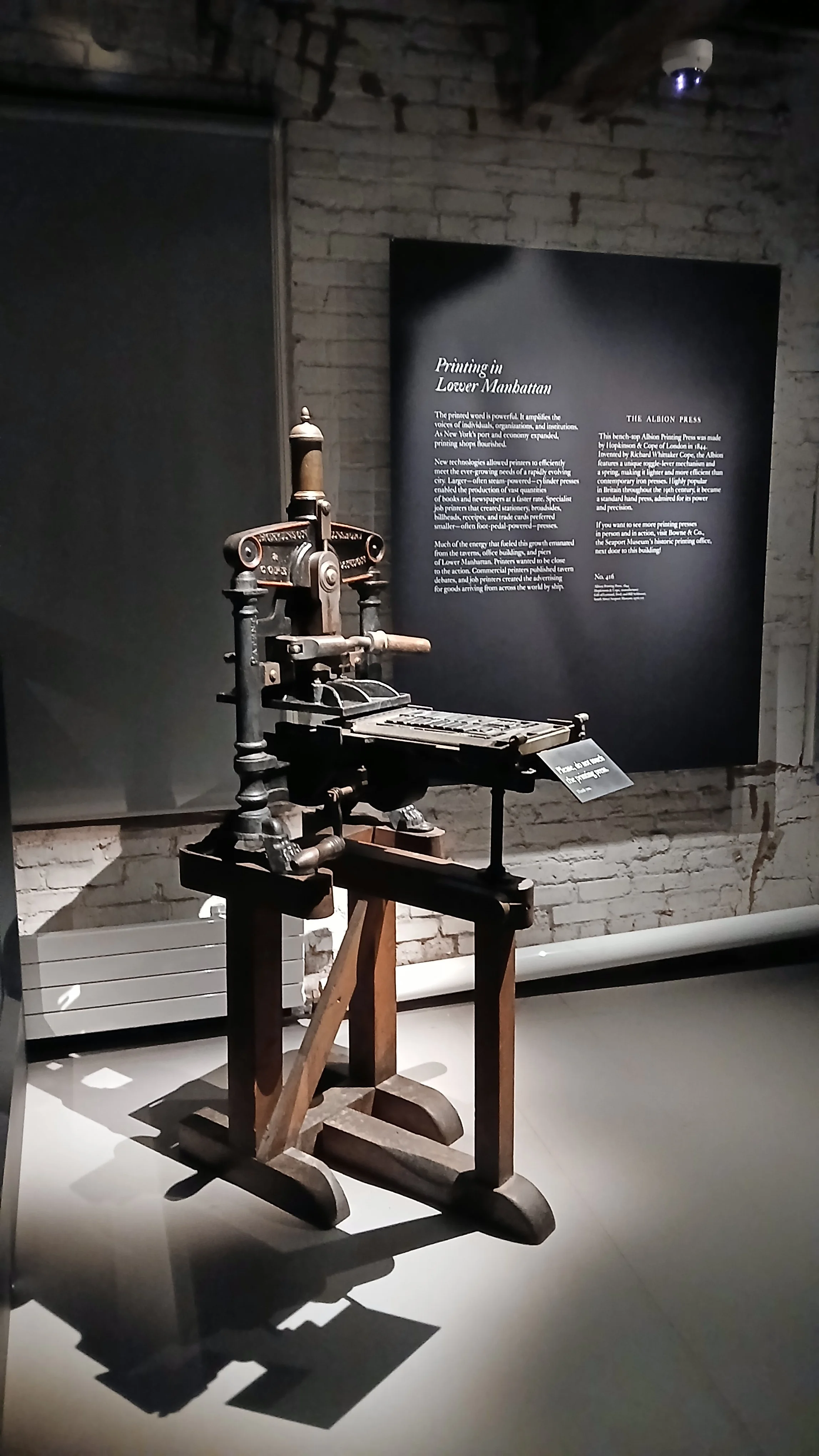
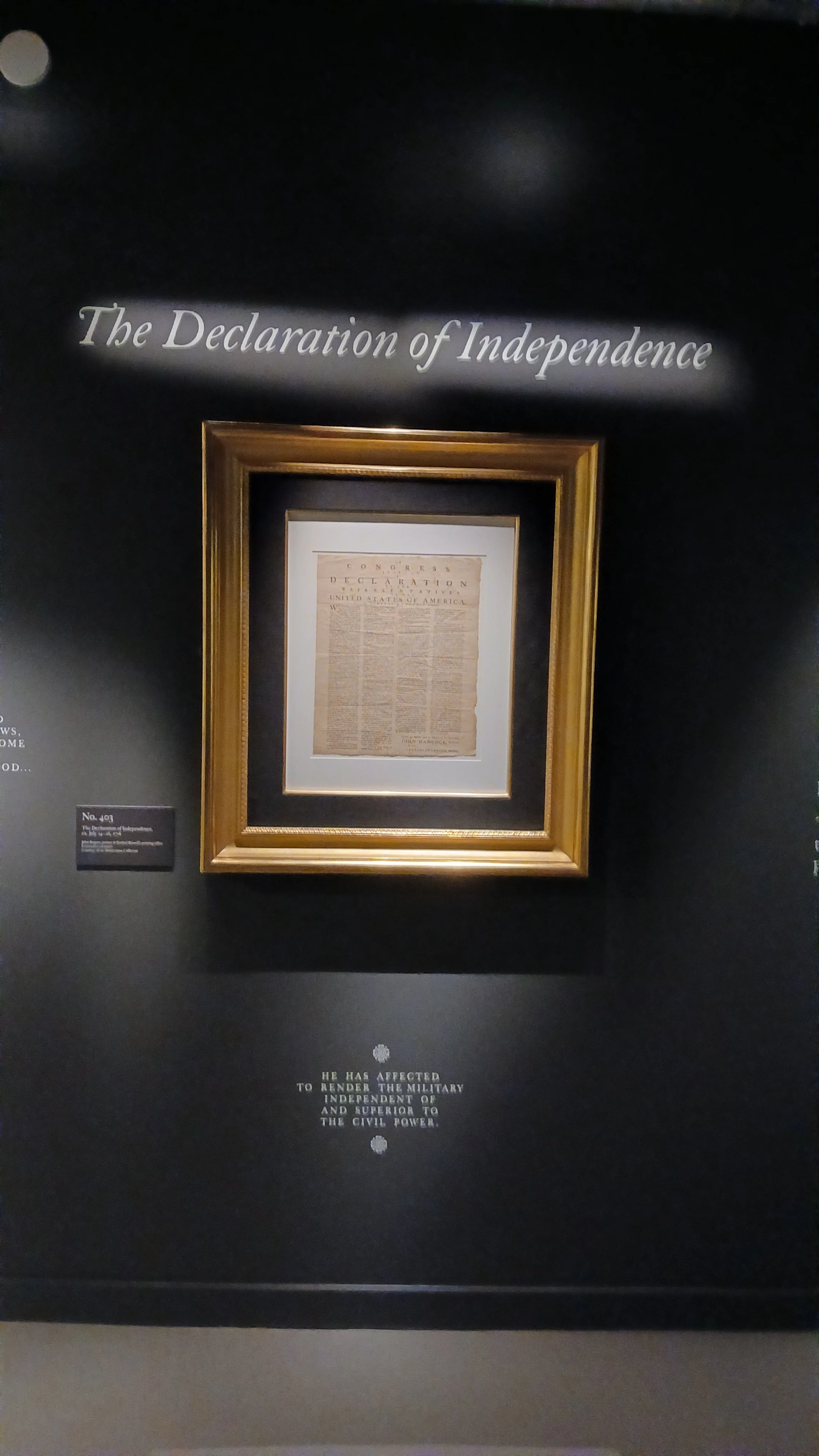
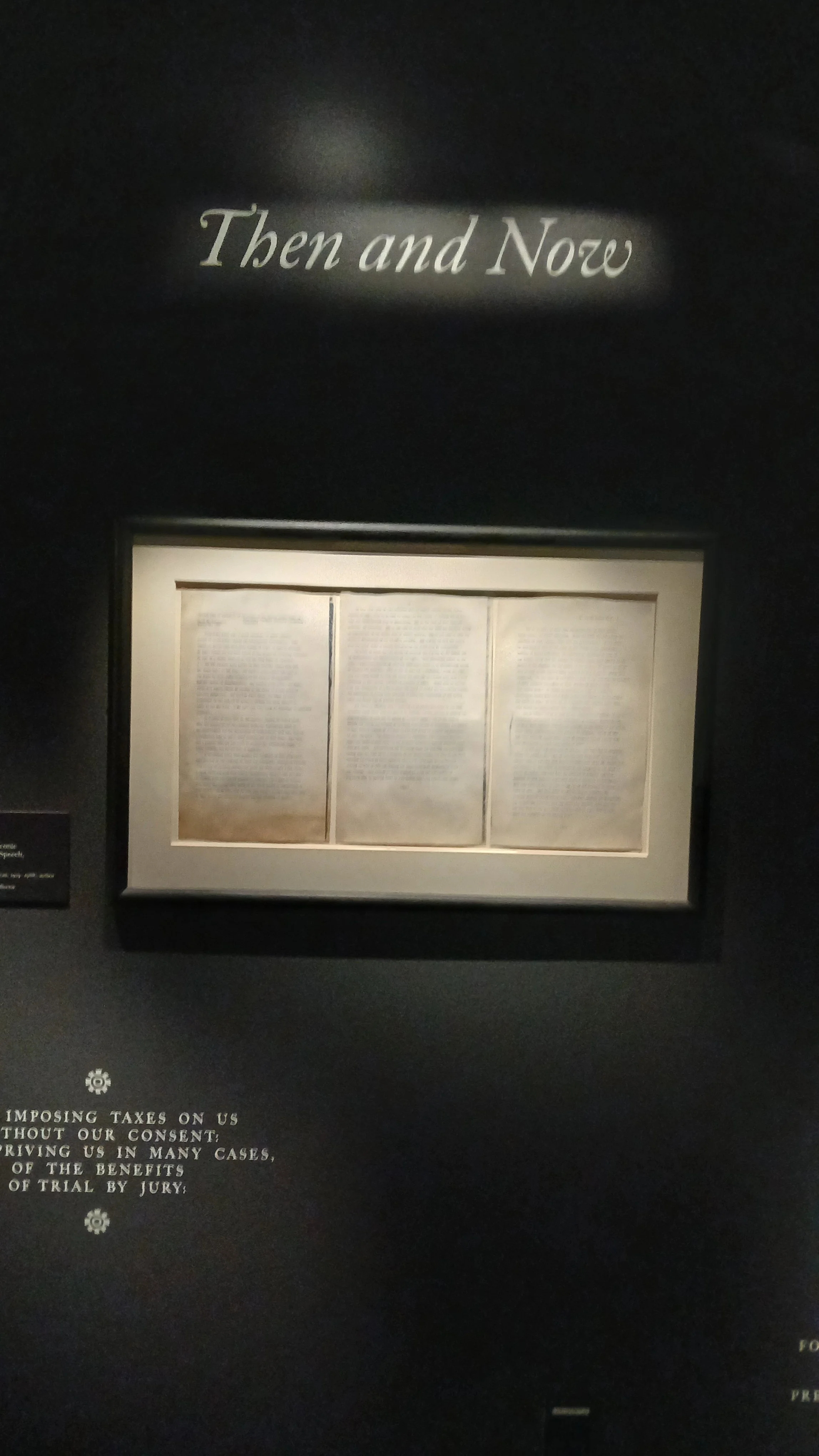
The South Street Seaport Museum hosted the launch of Mark J. Noonan’s new book, Revolutionary Ink: New York Printers and the Promise of Democracy, 1693–1804, as part of their exhibition, The Promise of Liberty: Words That Shaped a Nation, which is nearing the end of its run. The exhibit showcases historically significant documents and publications from American history, including a newsprint copy of the Declaration of Independence, Martin Luther King Jr.’s advance copy of his “March on Washington” speech, 1920s women’s suffrage news clippings, and so much more. Noonan’s book complements the exhibit, diving into the history of printing in the American colonies, particularly in New York, starting with William Bradford, one of the earliest printers in the colonies, whose work would lead to the New York Gazette, New York’s first newspaper. The book then follows several key printers that would rival the newspaper, a prominent one being the New York Journal, and ends with the death of Alexander Hamilton, who was not only the first Secretary of the Treasury (and future Broadway icon), but also a Federalist, with whom Thomas Greenleaf did not agree. Greenleaf, as owner of the New York Journal during the infancy of the American republic, would publish support for the Bill of Rights in the Journal as part of the anti-Federalist movement.
Publications and the written word are so powerful, the British targeted John Holt, Greenleaf’s predecessor at the New York Journal during the revolution. After Holt fled the city and started printing in Kingston, the British set fire to Kingston. Noonan’s book and the museum’s exhibit express the importance of the highlighted literature, not only for the readers of its own time, but as something to continuously study. Yes, it turns out your high school history class had a purpose besides making you memorize dates of battles or engrain the important factoid that George Washington had wooden teeth (which is not accurate).
Some might not see the importance of studying history. “It's already happened.” “Look forward, not backward.” “History isn’t relevant today. Also, why do so many states have ‘new’ in the name?” But understanding where we've been can help us get to where we're going.
Dr. Nantasha Williams, Deputy Speaker of the NYC Council, opened the program talking about the importance of reflection during this year as we celebrate America250. Williams celebrated the Seaport Museum, along with other museum institutions, for their mission of preserving the truth of the past, whether or not it makes the individual uncomfortable. She continued with a statement that sat with me the rest of the night. She said, “preserving the truth doesn’t diminish the ideals.”
I’ve been to several America250 events this year, and they all have been in celebration of the country, or honoring different peoples that make up the country. The events have been absolutely wonderful and the celebrations, completely valid. We should absolutely acknowledge that 250 years of the American “experiment” is an incredible feat, but we are still just that—an experiment. As much as our 21st-century society likes to think we’ve reached peak enlightenment, our country is still a work in progress that should be open to constructive criticism. Sixty-three years ago, Dr. King called out the texts of history, saying,
When the architects of our republic wrote the magnificent words of the Constitution and the Declaration of Independence, they were signing a promissory note to which every American was to fall heir. This note was a promise that all men — yes, Black men as well as white men — would be guaranteed the unalienable rights of life, liberty and the pursuit of happiness.
A perfect example of celebration and criticism.
Noonan called out a key moment in pre-American history during his presentation. John Peter Zenger, who was imprisoned after publishing critiques of the royal governor, brought his case to trial. There, Andrew Hamilton (not Alexander) represented him and won the case, supporting the idea of a free press. This was in 1735, over forty years before the Declaration was signed and more than fifty years before the Constitution would be ratified. Although the verdict did not establish a binding legal precedent, it became an important milestone in the development of press freedom, a principle that would eventually be protected by our Bill of Rights. The ideals on which the country was based come from critique.
I almost wish this exhibit, these remarks, this event had come sooner in the year to set the tone for all the America250 events. But as I roamed the quiet, dimly lit floor of The Promise of Liberty exhibit, chewing on Dr. Williams’ remarks, I realized that my experience at the Seaport Museum, coming at the close of this semiquincentennial year, is even more poetic. The exhibits and souvenirs and programs have provided sufficient celebration. Now, as we near the end of the year, it’s time to reflect. Constructive critique of the country isn’t a bad thing; in fact, it’s profoundly patriotic.