
The House Outworked the Art
Inside a decaying Governors Island house, only a handful of artists proved as compelling as the building itself.
EDITOR’S NOTE: Our art & culture writer noted a strong odor inside the NOo Arts House on Governors Island during their visit. I agree that this context is important and should be included. However, after publication, a participating artist reached out to note that exhibitors were also affected by the fumes and had raised concerns with building management. According to the artist, steps have since been taken to address the issue, and conditions have improved. The smell of fumes was not caused by the participating artists.
In addition, the exhibit previously accredited to Agnes Lin actually is the work of Elena Greta Falcini. Her work can be found here: Elena Greta Falcini
I wanted to love the NOo Arts House on Governors Island. On paper, it had everything I am easy (and willing) prey for: fungi, moths, birds, transformation, decaying architecture, strange ecological systems, and work beyond everyday humanity. (You know, dark romance in a woodland setting.) The exhibition, part of WE ARE NATURE: Transformation Stories, aims to explore transformation across ecological, urban, social, and artistic scales inside a historic house on Governors Island.
It is precisely the kind of programming Governors Island needs: strange, ambitious, imperfect, site-specific work that is not built for luxury collectors, sterile fairs, or the usual white-box shuffle. There is real joy in finding art tucked inside one of those old houses, away from the city but still connected to it. The island itself is a surreal space, part park, part ruin, part redevelopment project, and part escape hatch. It naturally invites transformation.
But the first thing I felt in the house was not transformation. It was nausea.
Whether the rooms had recently been painted, were poorly ventilated, or the building simply exuded the atmosphere of muggy institutional decay that marks many of the island's abandoned buildings, it was difficult to stay present with the work. Exhibitions happen through the body, and frankly, mine wanted out. (The millennial Latina in me insists I mention that I am so sorry to say this. It was hard to handle, and maybe it is not an issue anymore.)
However, on that day, the central problem was that the house was not neutral. The walls peeled, the ceilings cracked, the fireplaces sat hollow, and every room came loaded with texture, smell, history, and presence. In a space like that, art cannot simply be placed inside. It must merge with the building and become part of its peeling paint, creaking floors, and cracked plaster. Only a few pieces fully embraced the house. Most faltered, creating a struggle between art and architecture at the heart of the exhibition.
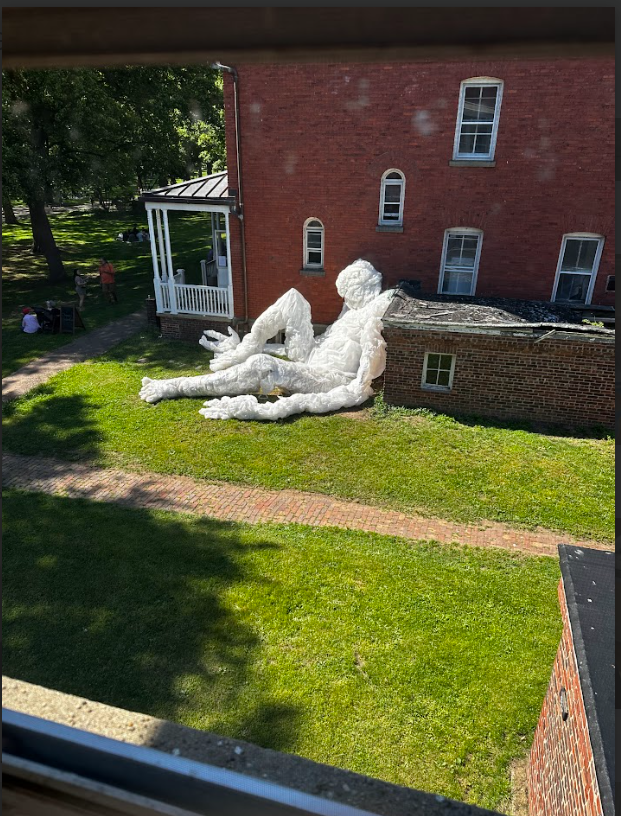
Too much of the work seemed to reject the house's atmosphere entirely. Jonah King's Honey Fungus had a promising premise: a nine-minute VR experience led by a queer mycelial guide. Fungi are their own kingdom, networked, reproductive, relational, and unconcerned with human categories, which should have made them ideal material for a queer ecological piece. The actual result felt superficial. Queer language appeared alongside fungal imagery without any meaningful integration between the two. The graphics were also underdeveloped, so rather than engaging with fungi, identity, or transformation, I found myself focused on the gap between the concept and its execution.
In a half-decaying house already being overtaken by nature, the work ignored its setting entirely. Instead, it placed a rug in a room, handed over a headset, and transported viewers to an unrelated field where they could peer inside a spore. Meh.
Other rooms suffered from similar problems. Projection, sound, hanging objects, natural fragments, handwritten notes, and dim lighting can all be powerful tools, but here they often felt arbitrary rather than intentional.
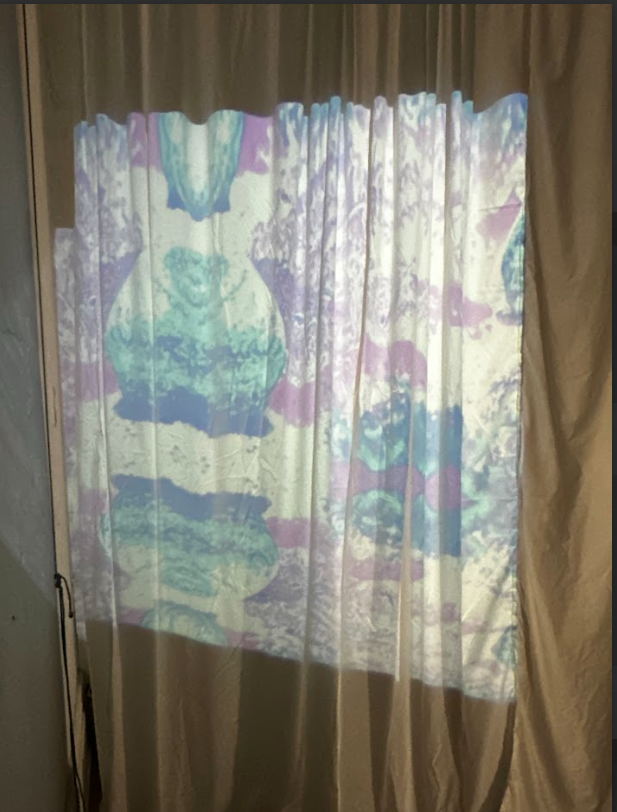
After Black, presented by Patera & Perego + Yugenpunk, features a body in shadow against vivid sound and imagery, struggling to enter or govern a world of colliding light and sound. The projection and movement occasionally worked, particularly against the room's strange proportions. However, the installation's physical limitations distracted from its impact. The room was too small, making it difficult for viewers to move without blocking the projection once more than a few people entered. The sound was overwhelming at close range, with constant screeching filling a tiny space. The piece also felt poorly edited, running nearly twice as long as necessary for a performance that often seemed improvised.
Had it been half as long, I might have felt the tension within myself, empathizing with the dancer and moving through the discomfort of the soundscape. Instead, I simply wanted to leave because the experience did not justify the time commitment. People came and went after only a few minutes, not long enough to understand the struggle the work was attempting to convey.
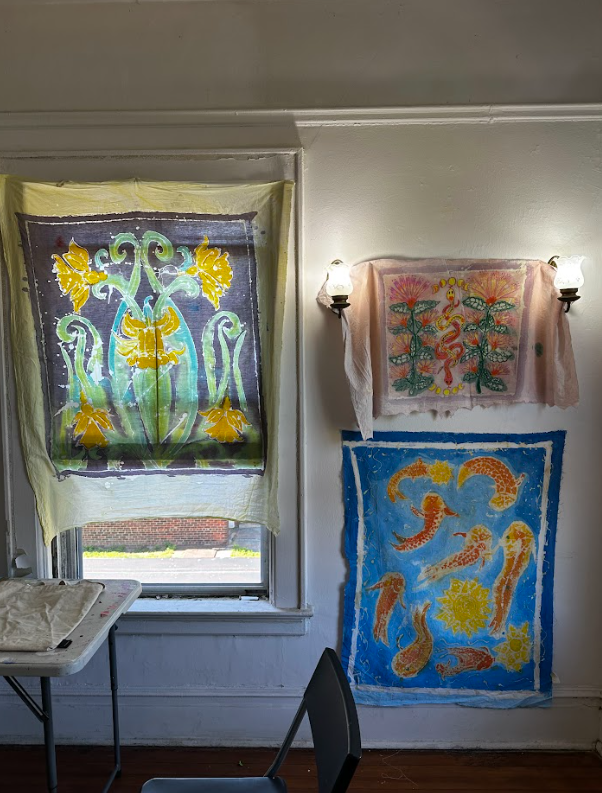
The works that truly succeeded understood the house as both material and setting. Sally Beauty Twin's vibrant natural textiles depicting flora, architecture, and insects, with the luna moth being a particular favorite, honored the surrounding environment, the room's light, and the fragility of both the house and the island. The work felt delicate without disappearing, handmade without feeling flimsy, and alive to the window, the weather, and the site's temporary state as nature continues to reclaim human-made structures.
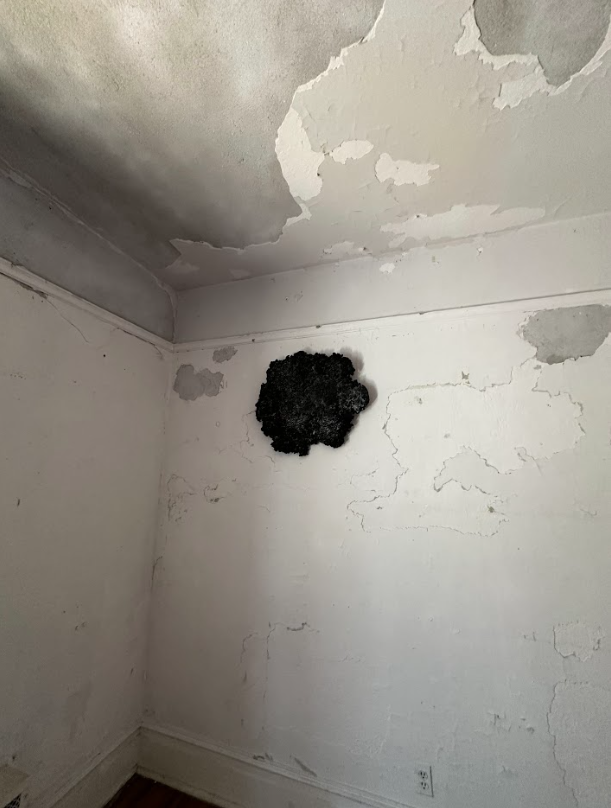
Elena Greta Falcini's black, organic wall-mounted forms were easily the strongest works in the exhibition. They did not decorate the house. They colonized it. They seemed to grow from it, transforming what is likely happening microscopically beneath the plaster into something monumental and visible. They made me want to explore the decay rather than escape it.
The exhibition succeeded most when transformation was not explained, projected, or theorized, but given physical, responsive form. The house demanded engagement. Only the strongest works met that challenge, turning art from passive installation into active transformation and ultimately answering the house's call.
NOo Arts hosts exhibitions throughout the year, and I encourage visitors to explore them. Good experiences and bad ones alike, especially the bad ones when they provoke such visceral reactions, help clarify not only the kind of art you enjoy but also the world you inhabi