
At the Asian Burlesque Festival, Everyone Does Whatever the Fuck They Want
The costumes shimmered, the jokes were filthy, and nobody seemed interested in meeting anyone else's expectations. The NYC Asian Burlesque Festival was a reminder that great burlesque isn't about being desirable. It's about being unforgettable.
I arrived in the hustle and bustle of the Village on a sunny Saturday afternoon, which meant the streets were packed with NYU students ordering spendy cocktails and trendy brunches.
It reminded me how lucky we are that clubs like Le Poisson Rouge still exist in a part of town mostly run by the children of the one percent. It was a little chaotic, a little overheated, a little everyone-is-on-top-of-each-other, but thankfully, still very New York.
I was nervous, however, that the gentrification of the neighborhood might mean the festival wouldn't be as strongly attended.
But thank goddess: inside, the show was packed. Every table was full. Everyone seemed ready to have a great time and celebrate one of the great working-class art forms:
A burlesque show.
Before the 14th Annual NYC Asian Burlesque Festival, I had the opportunity to speak with co-producer and phenomenal MC Calamity Chang, and asked her how it all started.
Courtesy: Asian Burlesque Fest
Being an accomplished, and might I say brilliant, performer herself, by 2013 Calamity had started to notice how few Asian performers were in the New York burlesque scene with her.
And when she did find herself in those spaces, there was backstage hostility, audience members and performers being weird about her race (yes, in the fetishizing and inappropriate way), and the particular exhaustion of being one of the only Asian people there, again and again.
So instead of waiting around for the scene to magically become more welcoming, she helped rebuild it herself, and the NYC Asian Burlesque Festival was born.
This year, there were about forty applications for nineteen slots across two nights, the first time ever the festival has run for two nights. The festival welcomed a broad range of acts and talents, and while planning it, Calamity and her co-producer, Jen Gapay, made a choice I just adore: there would be no pageant structure.
No winners, no crowns, and no ranking system to decide who had the Best Body in the room. The point was not to crown someone for being the hottest or most flexible. The point was to give Asian people a stage to do what they love, in whatever form that took, within and outside of typical stereotypes, because burlesque isn't about who the audience wants to fuck most.
Burlesque is too often dismissed as "stripping, but with feathers," which is an annoyingly lazy take. That's not to say that stripping is beneath burlesque. It is not. But they are different worlds and forms of performance that have, let's call it, a different contract with their audience.
One of the things I loved most in my conversation with Chang was talking through that difference. Strip clubs are often built around a more direct exchange: money in exchange for attention, attraction, athleticism, and physical labor. You go in expecting a sexual response to a kind of financial transaction. Burlesque, however, is more theatrical. It is not only sexual stimulus. It is showmanship and theater in its own right.
Historically, burlesque comes out of parody, vaudeville, cabaret, music halls, and variety performance, essentially working-class entertainment borrowing from upper-class forms like opera, drama, symphonies, and ballet, then making them funny, sexy, strange, and a little rude. It was people taking all the expensive, serious things they were supposed to admire politely and turning them into something louder, cheaper, funnier, and more alive.
Courtesy: Asian Burlesque Fest
That is the romantic part of burlesque to me. Not romantic like everyone being soft-lit and tasteful, but romantic like 1910s Paris: smoky basements, live jazz, illicit cocktails, velvet curtains, feathers, circus acts, dirty jokes, and a room full of eccentric artists trying to make something beautiful while the world outside feels like it is falling apart. After World War I, for so many people, it had. Europe was bruised, hungry, cold, unstable, and exhausted, and still people wanted rooms where, for a small moment, they could have glamour, humor, sex, music, and fantasy, however briefly.
And honestly, that feels very current. There is a reason people still want to escape to shows like this. When the world feels unstable, when the future feels expensive and stupid and maybe a little doomed, people still want somewhere to go where the lights are low, the costumes are shimmering, the jokes are filthy, and someone truly talented is making magic out of scraps, sweat, and nerve.
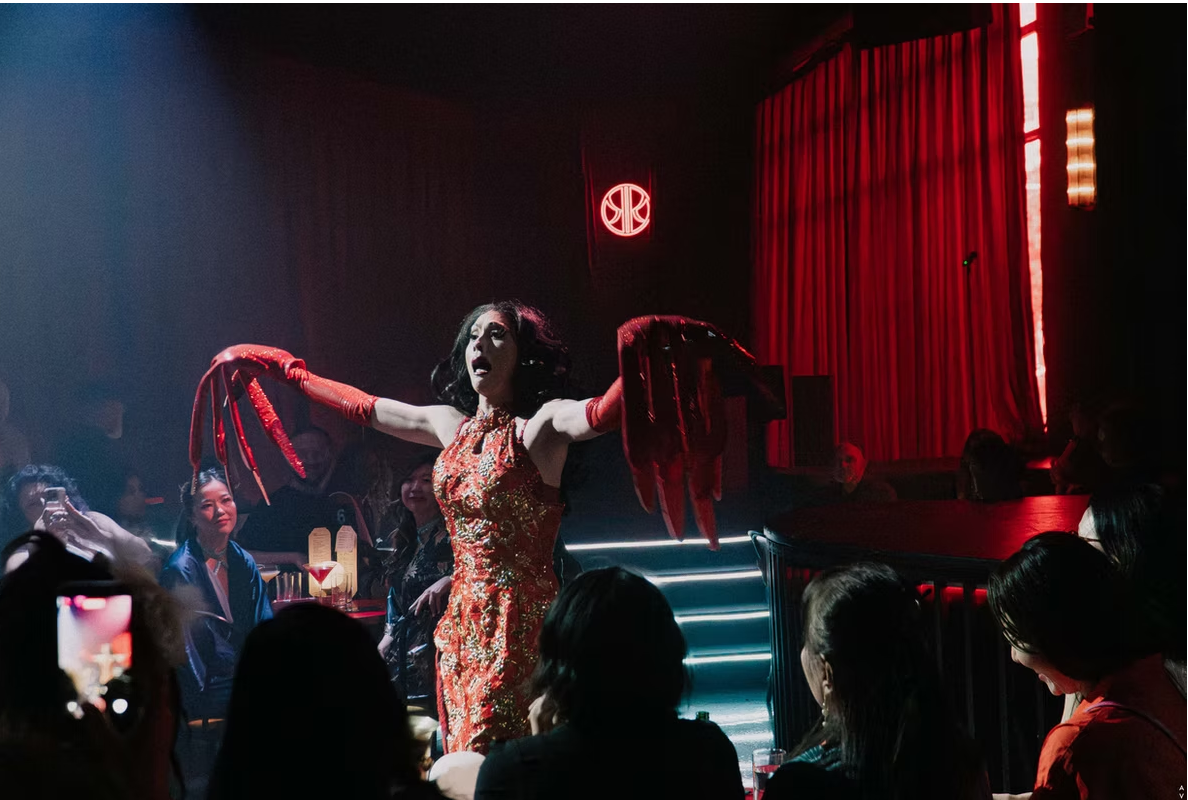
So when Calamity walked onstage and said, "They don't have to do an 'Asian' act. We're all Asians, and we can do whatever the fuck we want," it clarified what kind of show we were watching.
This was not an "Asian-themed" show. It was not a tidy heritage showcase filled only with traditional costume, cultural explanation, and polite representation. Those things can be meaningful, obviously, but burlesque is almost the parody of that kind of event. Calamity called the show "the gateway to nudity in public. What could be more devious than that?" and the room followed her there.
That mattered because Asian bodies, especially Asian women's bodies, are so often squeezed between desire and expectation. Be wanted, but not too much. Be delicate, but not boring. Be cultural, but not too specific. Be sexy, but only in the way someone else already imagined for you. This festival did not seem interested in any of that.
Courtesy: Asian Burlesque Fest
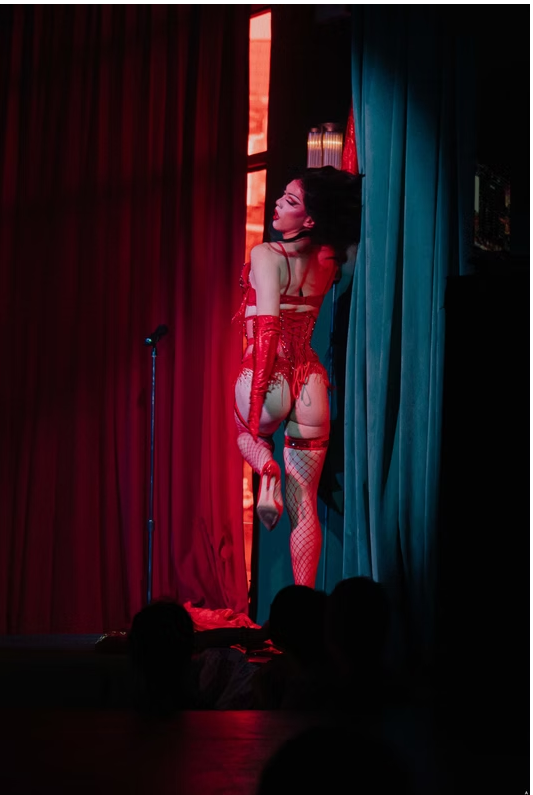
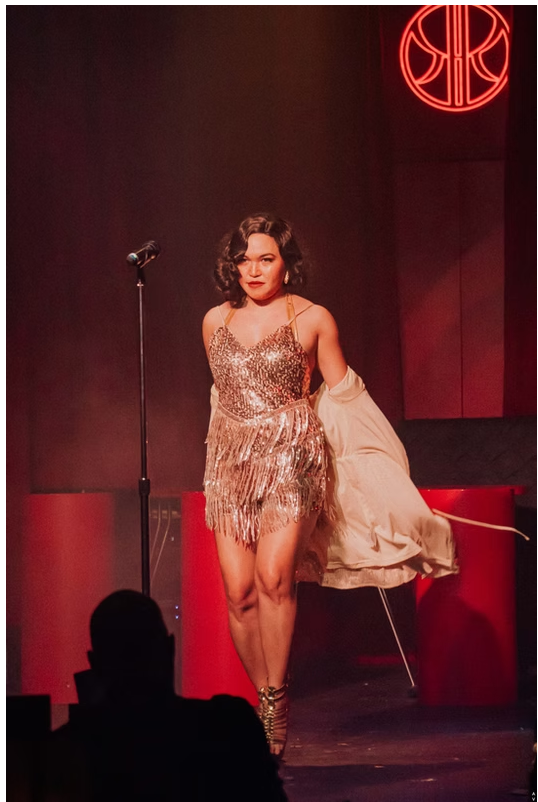
The acts were fantastic, and more importantly, they were not all trying to prove the same thing. Across both nights, performers included Kitana Louise, Andrea Flow, Phoenix A'Blaze, Bunny D'Vine, Ruby Revel, Princess Moonface, Stella St. James, Felicia Oh, Filthy Mari Chino, Joona Bae, Lychee Mynx, Maria Pucciarelli, Lisa Bella, Aimee & Belinda, Malaya Sol, Ryan Shinji, and Masae Satouchi. Each brought something different to the room.
One performer built an act around niche Asian foods. Another came out as a millennial stud-punk vision with bloody glitter tears. Another danced in traditional Vietnamese dress. Another did a glamorous 1930s jazz performance. I was moved by the drag queen who delivered an excellent camp rendition of Everything Everywhere All at Once. I was especially entranced by the duo hoop act, which I've never seen before. I loved that so many performers had doctorates and master's degrees and were doing this because they loved it, with some of their moms and aunties there to show support, too.
I loved that there were two men performing, and that they were encouraged to be just as sexy, funny, theatrical, and desirable as the women. At one point, Calamity joked, "We need to celebrate and fetishize our Asian boys' bodies," and the room laughed because it was blunt, but also the reverse of how many Asian men have been viewed in the past.
My only real note is that some acts repeated across both nights, which made getting tickets to both feel a little less worth it than it could have. Not because the repeated acts were not good. They were excellent. Both nights had brilliant performers, but if you are asking people to come out for two separate events, I do think the nights should feel as distinct as possible.
At the end of the festival, I left thinking more people should go to burlesque shows like this, especially ones led by performers of color. Not because it is good for you, like homework, but because it is fun, like sexy homework. These performers are doing the actual work of keeping nightlife strange, alive, funny, sexy, skilled, and open to more than one kind of body or story.
No one had to serve an "Asian" act. It was never about that. It was about Asian performers doing what they loved, however the fuck they wanted to, and it was gorgeous and brilliant.