The Sims, Sleepovers, and the Messiness of Being A Teen
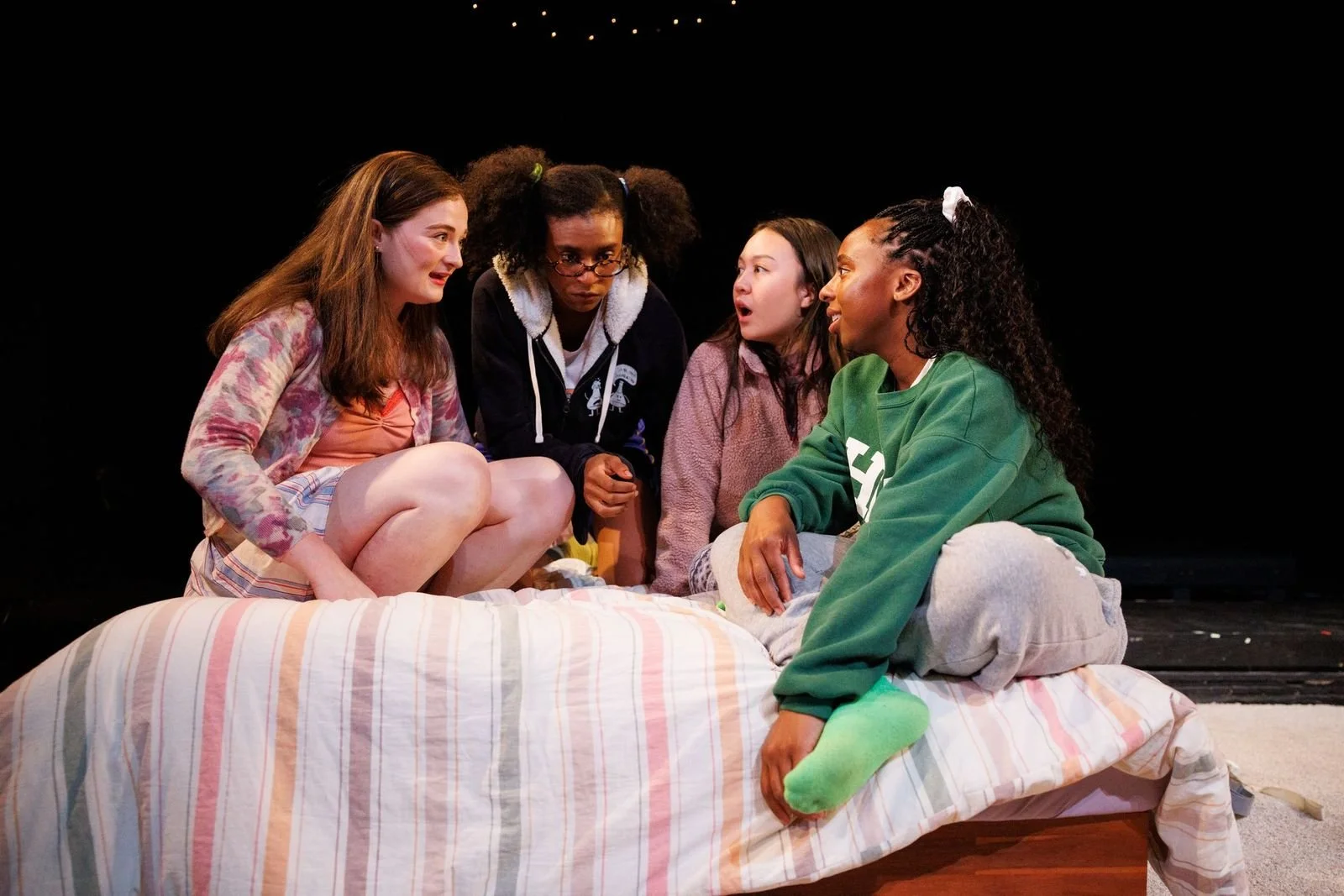
Written by Eliya Smith and directed by Chloe Claudel, Dad Don't Read This is a new play revolving around the friendship of four teenage girls and their obsession with The Sims.
The girls fit the usual stereotypes; the sporty one, the pretty one, the oddball... and then there's Mal, around whose bedroom it all takes place. We don't know much about Mal, other than that her parents often fight, and her comments - to both her friends and her Sims - often careen past snarky into downright cruel territory.
Portrayed by Amalia Yoo, who anchors the play with great maturity and a watchable, open face, Mal seems to be dealing with a deep depression, searching for any sense of control. She stays home from school, barely eats, won't explain to her friends, and becomes a little too addicted to making her Sims 'woo hoo'.
The bedroom set isolates the girls in one space where their excitement or tension bounces off the walls and the energy rises until there's nothing to do but blow up - usually at each other. We witness their sleepovers, gossip, fights and general shenanigans, as well as their horror stories.
Sophie Rossman's monologue describing a creepy instance of sexual harassment was both eerily familiar (probably to every woman watching) and an absolute masterclass of acting in the moment. It felt like she was finding a way to say this to her friends for the first time. Her performance was natural, unforced, and I believed every word. I will be watching for more from her.
The lighting and sound cues were completely on point, and I was impressed at how in sync everything was with the performances onstage, especially for a sound-effect-heavy production. However, the seating layout in the venue was abysmal, with everyone on one plane, so half the stage was blocked by the tall person directly between me and the stage. I can't have been the only audience member in this situation. Most of the action seemed staged to avoid this, but I felt as though I missed several key moments when I couldn't see the faces of the actors, primarily on the bed, the beanbag or the ground.
The writing reflected the dynamic of a young group of friends well. Conversations bounced between tangents, one character talking over another with the relaxed informality with which a group of people who have grown up together can slot in and out of each other's lives. Their dialogue barreled along in a carefree and organic way, emphasizing this bond.
Occasionally, though, this did itself a disservice; while the overlapping conversations contributed to a playful teen atmosphere, they also made it impossible to decipher any of those lines. I sat not knowing if I'd missed some vital piece of information, or if it was intended to be confusing and loud.
There were also several transitions between scenes into moments of breaking the fourth wall where it became unclear what was happening. I can't be sure if it was the writing or staging that let these moments down, but these transitions soured an otherwise fairly faultless piece of theatre.
The writing proved highly entertaining, the performances were high-energy and reminiscent of the days of our youth, and the cast did a fantastic job, treating each moment with appropriate weight and a sense of play. I look forward to seeing more from this writer/director duo and their actors.
Dad Don't Read This will be playing at Greenwich House Theatre all summer.
Credit: Maria Baranova