
History remembers presidents, generals, and great artists. But what about the little girls who were growing up alongside them? At the American Folk Art Museum, nearly 100 objects reveal how young girls stitched, painted, and documented their worlds, and how their work challenges the stories we've been taught about early America.
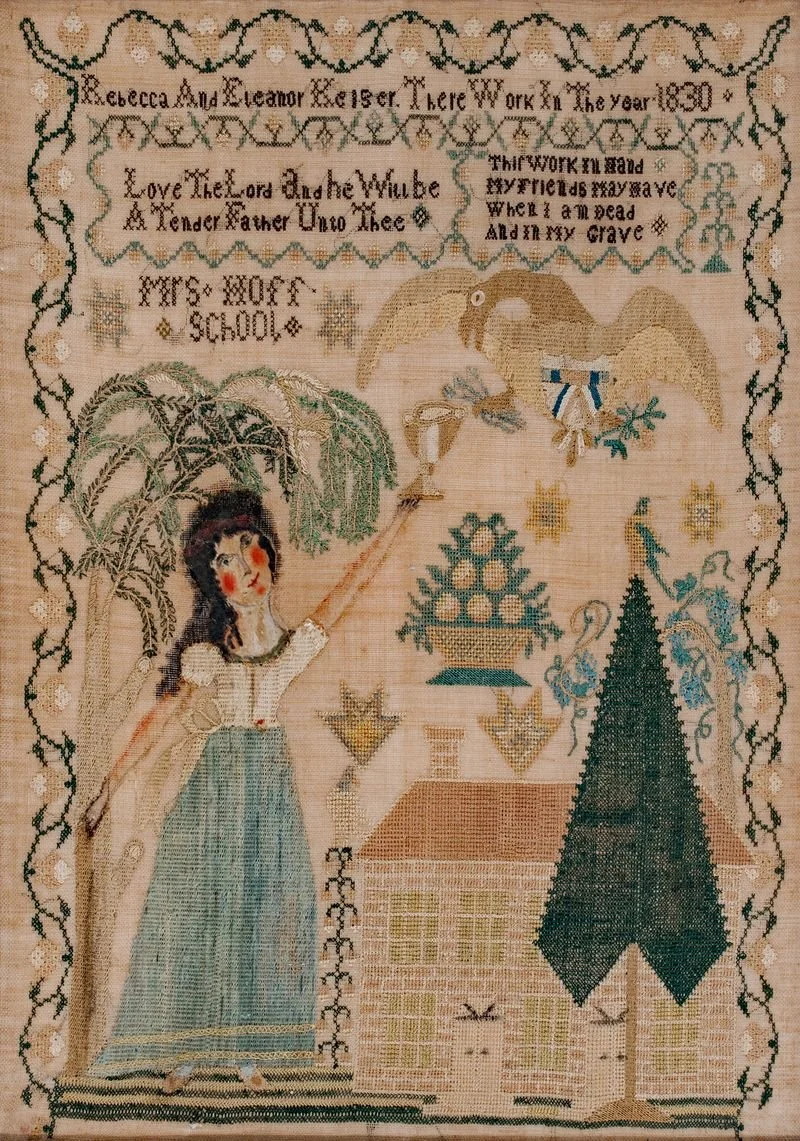
Courtesy: American Folk Art Museum//Rebecca and Eleanor Keiser Sampler
If there's one group that's difficult to research historically, it's children, particularly girls. Often, what survives is little more than a birth or death record, occasionally a medical record, or documentation of children considered important enough to remember (such as royalty). The American Folk Art Museum, however, has taken on the extremely difficult challenge of bringing the everyday lives of ordinary girls into focus and, in my opinion, has triumphed with its exhibition, Locating Girlhood: Place and Identity in Early American “Schoolgirl” Art.
Upon entering the exhibition, you are immediately greeted with a large wall asking, “Who was the first American landscape artist?” Most of us would probably name a man, such as Thomas Cole or another member of what the Metropolitan Museum of Art calls “America’s first true artistic fraternity,” the Hudson River School.
But long before these men became celebrated for their depictions of early America, young girls were already painting, stitching, and mapping the America they were growing into. However, their work was largely dismissed as decorative—something pretty to hang on a wall or proof that a girl could become an accomplished wife or capable worker when she reached maturity.
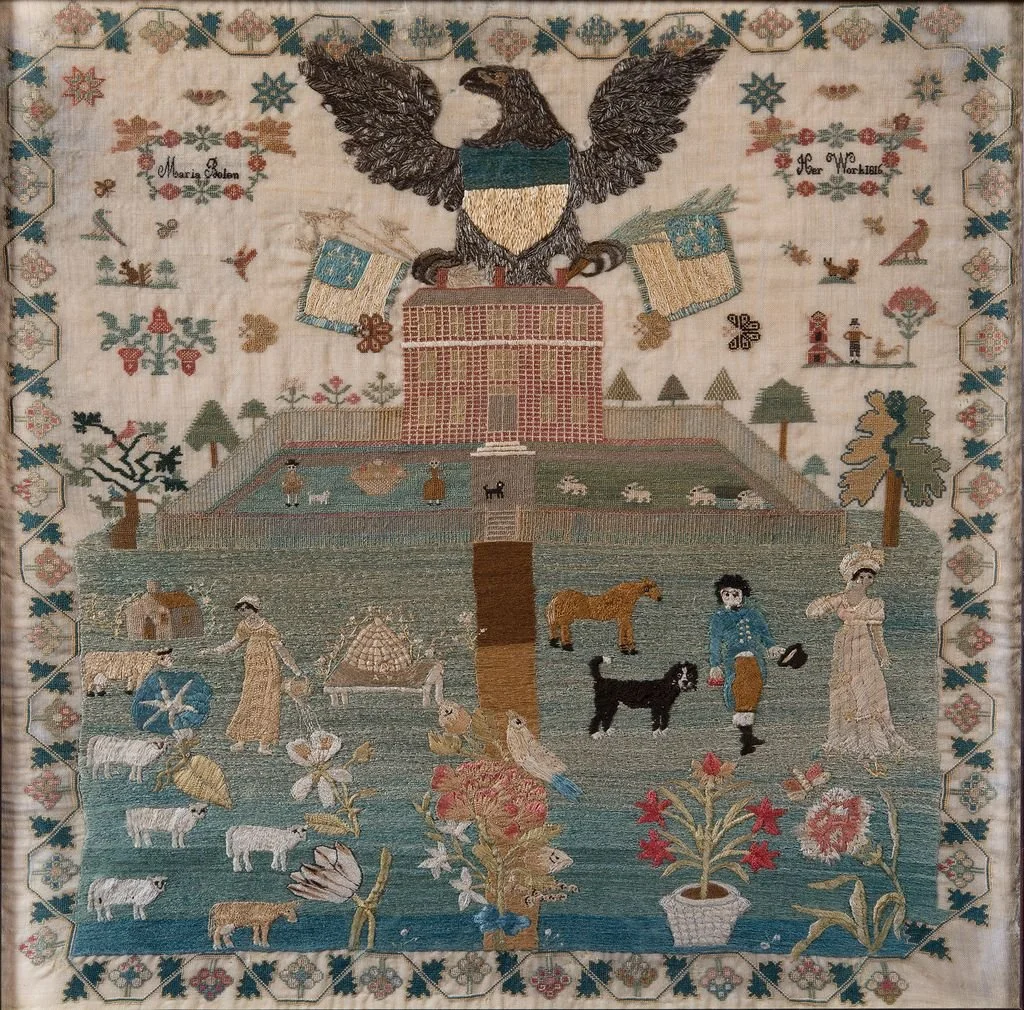
Courtesy: American Folk Art Museum//Maria Bolen Sampler
The American Folk Art Museum challenges that narrative right from the exhibition's entrance, asking us to reconsider not just who made these pieces, but what they tell us about the girls themselves. Their homes, their communities, their understanding of a young nation being born, or older nations being invaded. Above all, it shows us how they saw their place within this new America. What may once have seemed like sewing lessons or school assignments now serves as documentation of history, even if nobody thought it important enough to call it that.
One of the most incredible pieces I viewed was a sampler the museum was able to source by twelve-year-old Rachel Barrett, who, in 1845, embroidered a picture of the African School in Halifax, Nova Scotia. The beautifully stitched sampler shows Rachel’s school, where Black girls learned needlework, a skill that could help them support themselves. Her teacher may have designed the picture, but the stitches were Rachel’s.
Crafted with silk and wool threads on a linen background, it’s miraculous that a piece made of these materials has survived almost 200 years, even more miraculous because of the hands that sewed it. The Nova Scotia Museum holds more than 80 samplers, yet Rachel’s was the first identified in its collection as the work of a Black Nova Scotian girl. The museum’s curator also emphasized how remarkable its survival was given the poverty and overcrowding surrounding Rachel’s school.
There's a difference between telling your own story and being tucked into the background of someone else’s, and the exhibition does a beautiful job of highlighting both works depicting these young girls of color and works created by them. During my tour, we stopped at a piece where a Black figure peers from behind a wall, almost lost in a scene centered on white figures. “She’s included, but she’s literally behind a wall. She’s peering in,” the curator explained. Now consider Rachel, who stitched her own name into her work. As Nova Scotia Museum curator Lisa Bower writes, her sampler is “a product of her own making.”
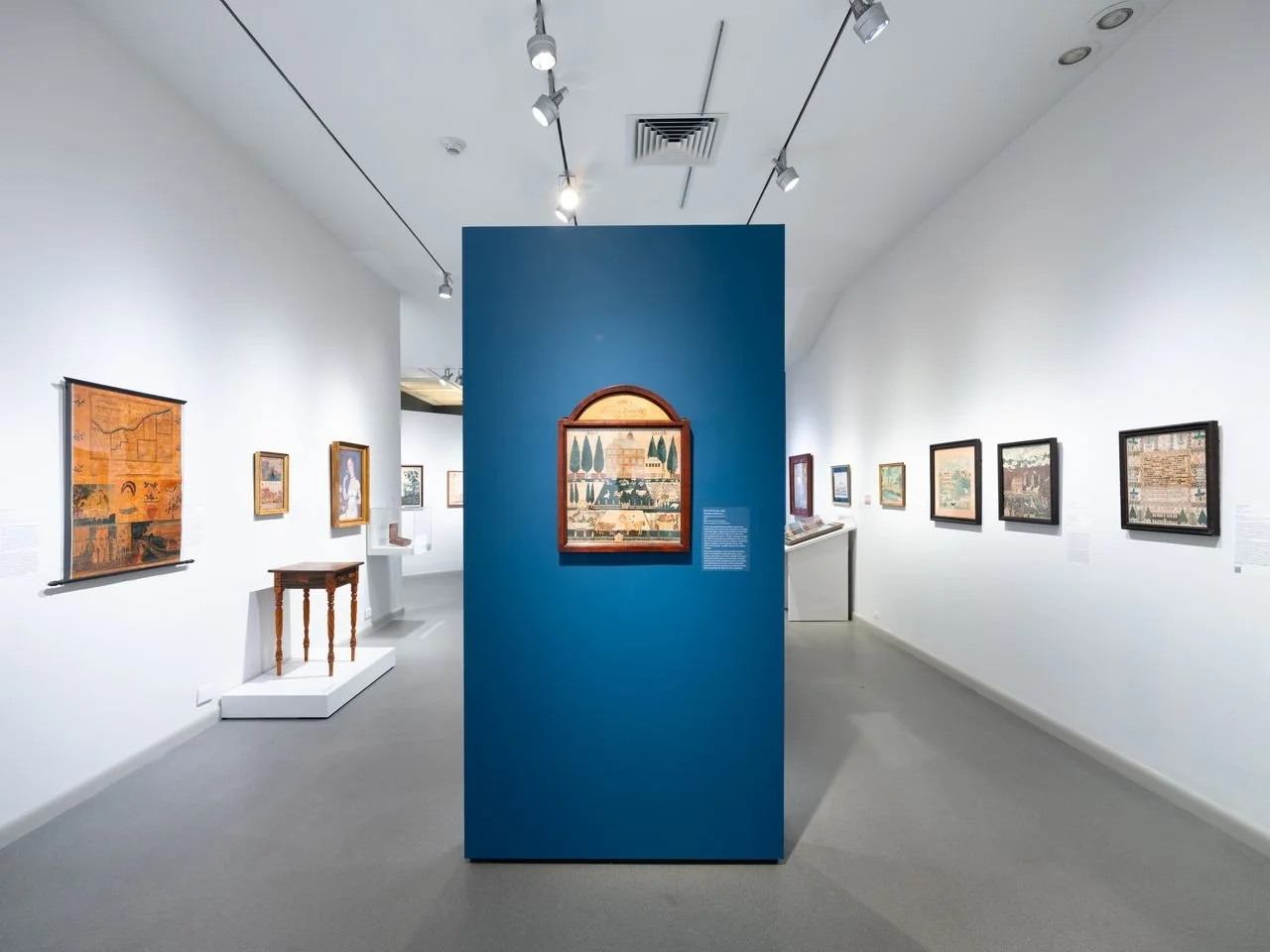
Courtesy: American Folk Art Museum
White girls’ needlework tells its own fascinating, and sometimes uncomfortable, political story. We saw George Washington, figures of Liberty, even a giant eagle perched above a house. These girls weren’t simply learning to sew: they were absorbing the politics, patriotism, and expectations of the new nation growing around them. As the curator put it, they were “blending their personal with the national.” Their needlework was teaching them far more than domestic skills. It was teaching them who belonged in the American story.
And who didn’t.
The Indigenous pieces offer another important perspective, and one that deserves particular care. During the tour, we discussed Seneca artist Caroline Ga-ha-no Parker Mountpleasant, whose extraordinary beadwork and clothing helped preserve and reinterpret Seneca artistic traditions. The exhibition includes samplers connected to Choctaw, Hawaiian, and Mackinac Island communities. Indigenous histories have too often been painted over, and the history of education is no exception.
Choctaw leaders established girls’ seminaries using tribal treaty funds in the 1840s, while later federal boarding schools sought to forcibly assimilate Native girls as well as boys. These were very different experiences, and both deserve to be remembered and taught so we can move forward with better understanding and accountability.
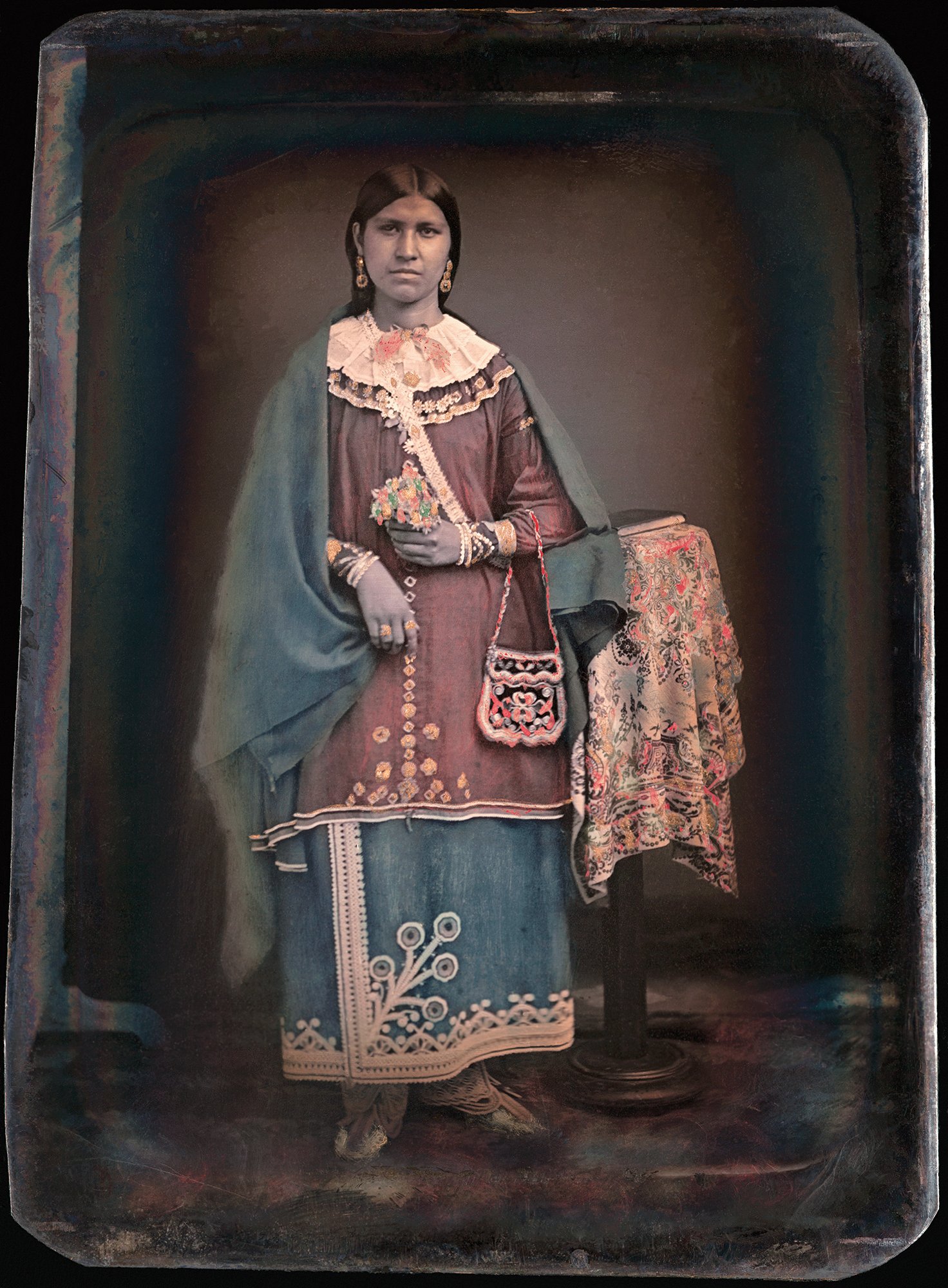
Credit: American Folk Art Museum//Ga-hah-no Caroline Parker Mt. Pleasant Rochester Museum
And that’s what makes this exhibition so good. It isn’t asking us to pretend every girl had the same childhood. It’s asking whose work was valued, whose education came with conditions, and whose life made it into the collection.
With nearly 100 objects, many lovingly and meticulously crafted by girls as young as eight and young women in their early twenties, this exhibition is one to see for anyone who loves America and her history.
Locating Girlhood: Place and Identity in Early American “Schoolgirl” Art runs October 9, 2026 – February 28, 2027, at the American Folk Art Museum. Admission is free, so take all your friends and family, especially children, to this exhibition.