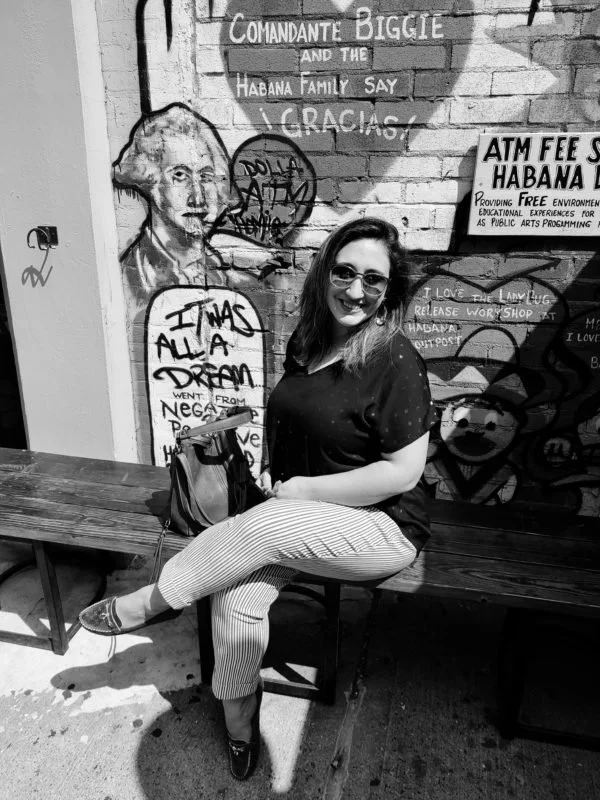
Standing Inches from History at the New Tang Wing for American Democracy
If you've ever wanted to spend a day getting unreasonably excited about American history, the new Tang Wing for American Democracy at the New York Historical is for you.
Last week, I attended the opening with Tawk's history writer, Dia Griffiths, and her baby. (Our newest one year old intern. Child Labor Laws be damned.) We arrived to find a bright, sparkling-clean space buzzing with excitement. Journalists, historians, museum supporters, and guests filled the room, but it never felt stiff or exclusive. People seemed genuinely happy to be there. I’ll put ten toes on the fact that history nerds are the best people to be around.
After grabbing some coffee, water, and pastries, we entered the Klingenstein Family Gallery, home to the Democracy Matters exhibit through November 1.
Within minutes, I was already nerding out. There was not a drop of chill in my entire being.
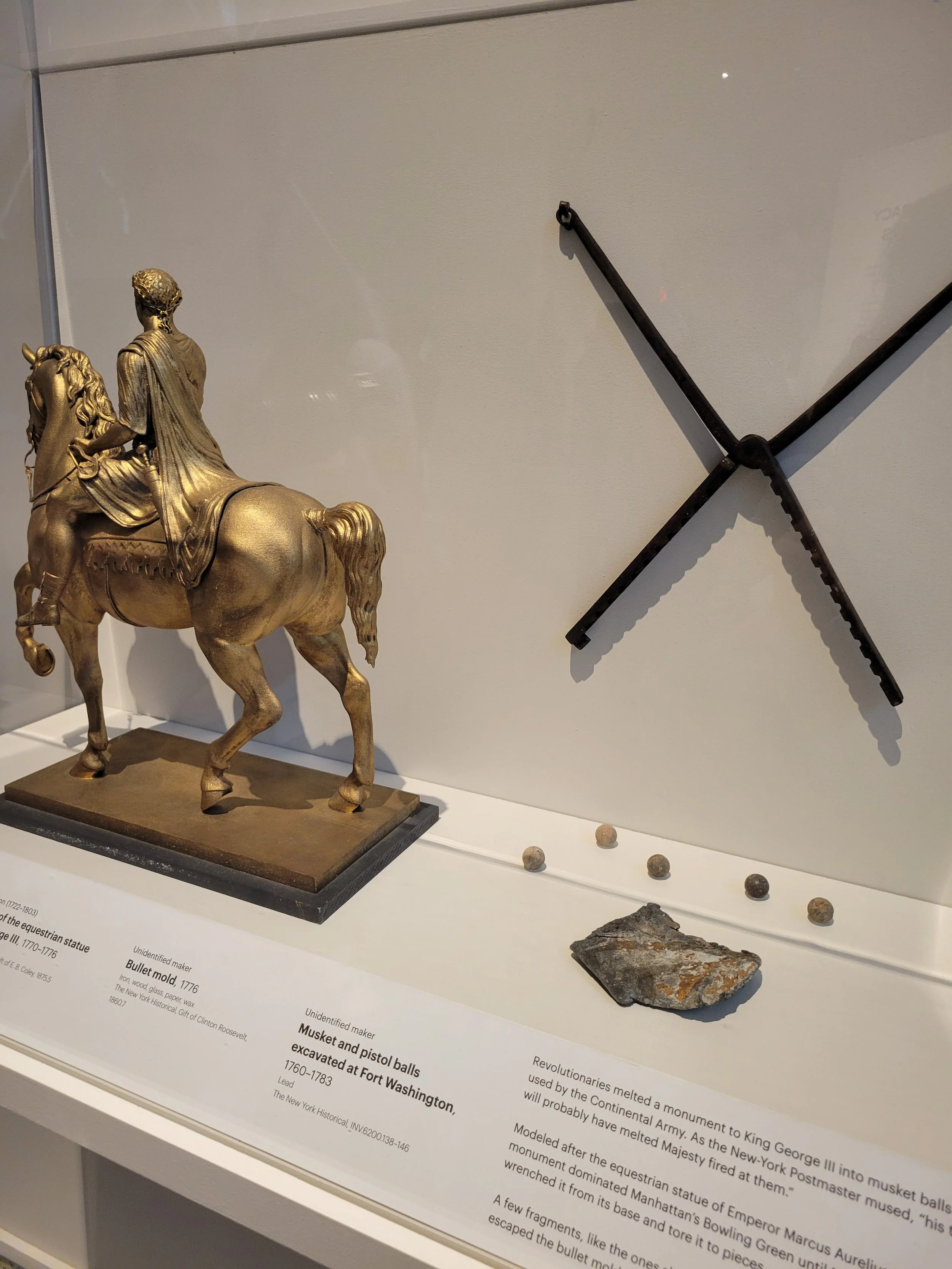
Visitors are greeted by a projection depicting one of the most dramatic moments in New York City history: the destruction of the statue of King George III that once stood in Bowling Green. I've read about this event countless times. I’ve run my hands on the jagged edges of the fence around the park which housed the statue. It remains one of the most exciting, chaotic, and frankly bonkers moments in New York history. Colonists pulled down a statue of the king depicted as Marcus Aurelius, tore it apart, and melted much of it into musket balls for the Continental Army.
I looked into a display case and saw an actual fragment of the statue.
I have no other way to describe my reaction except pure excitement.
There I was, standing inches away from a piece of the actual statue I've read about in books for years. There is no high that compares to that feeling. I can feel myself forming a limerence style attachment to that display case.
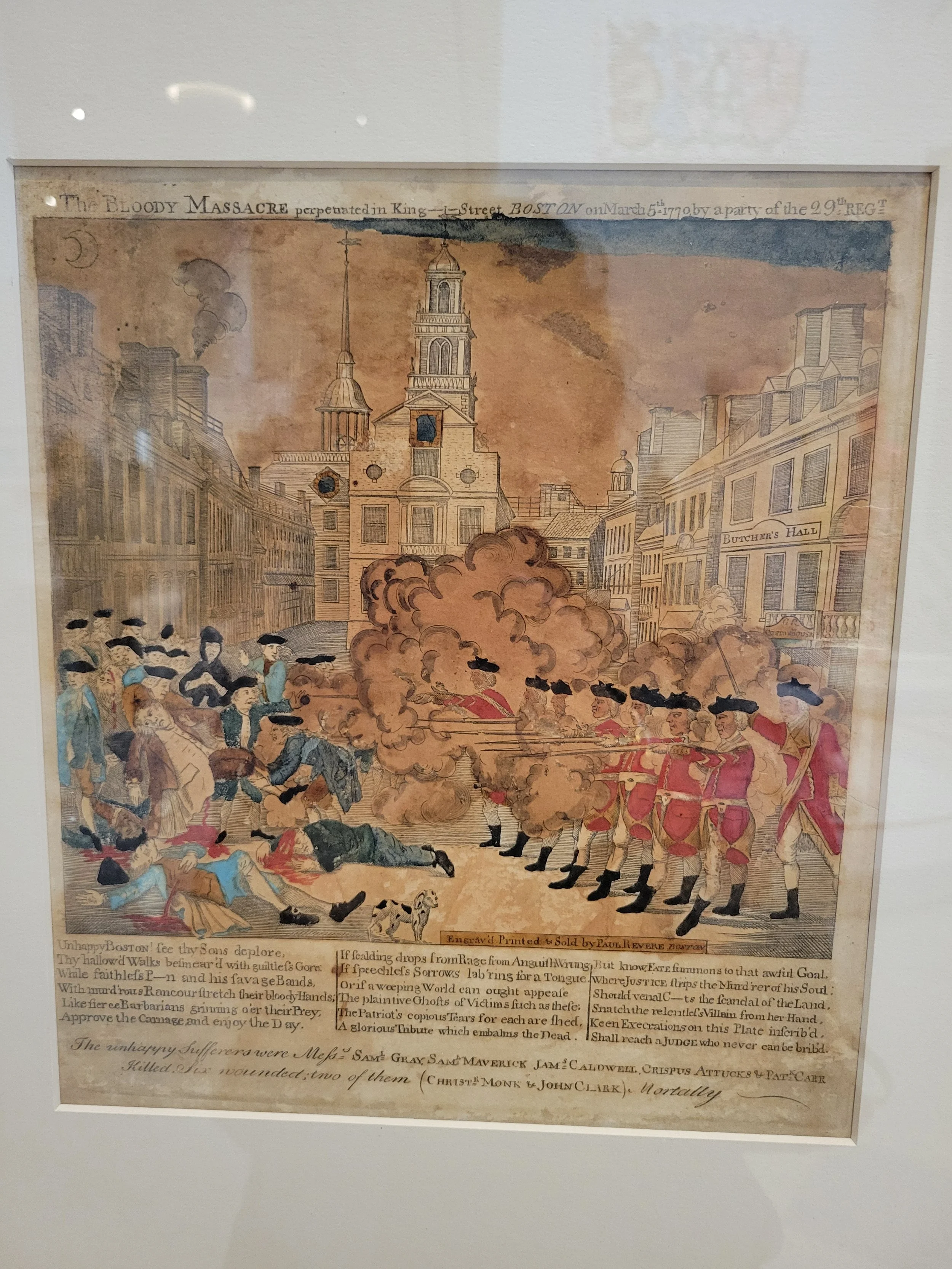
Nearby hangs a painting depicting the statue's destruction, giving visitors a sense of the scale of the event. I also spent a good amount of time admiring Paul Revere's famous print of the Boston Massacre. The colors remain remarkably vivid more than two centuries later. What I appreciated most, however, was the way the exhibit broadens the story of America's beginnings by highlighting figures such as Crispus Attucks, the Black and Indigenous merchant sailor, former enslaved person, and first casualty of the Boston Massacre. This was one of the only paintings to accurately depict Crispus Attucks.
One thing became clear very quickly: every piece in this gallery is a smash hit.
You know how sometimes there's one exhibit everyone is crowding around and you're forced to spend time with the less interesting thing nearby while you wait your turn?
Not here.
Every time I found myself lingering by an artifact, there was something equally fascinating sitting right next to it.
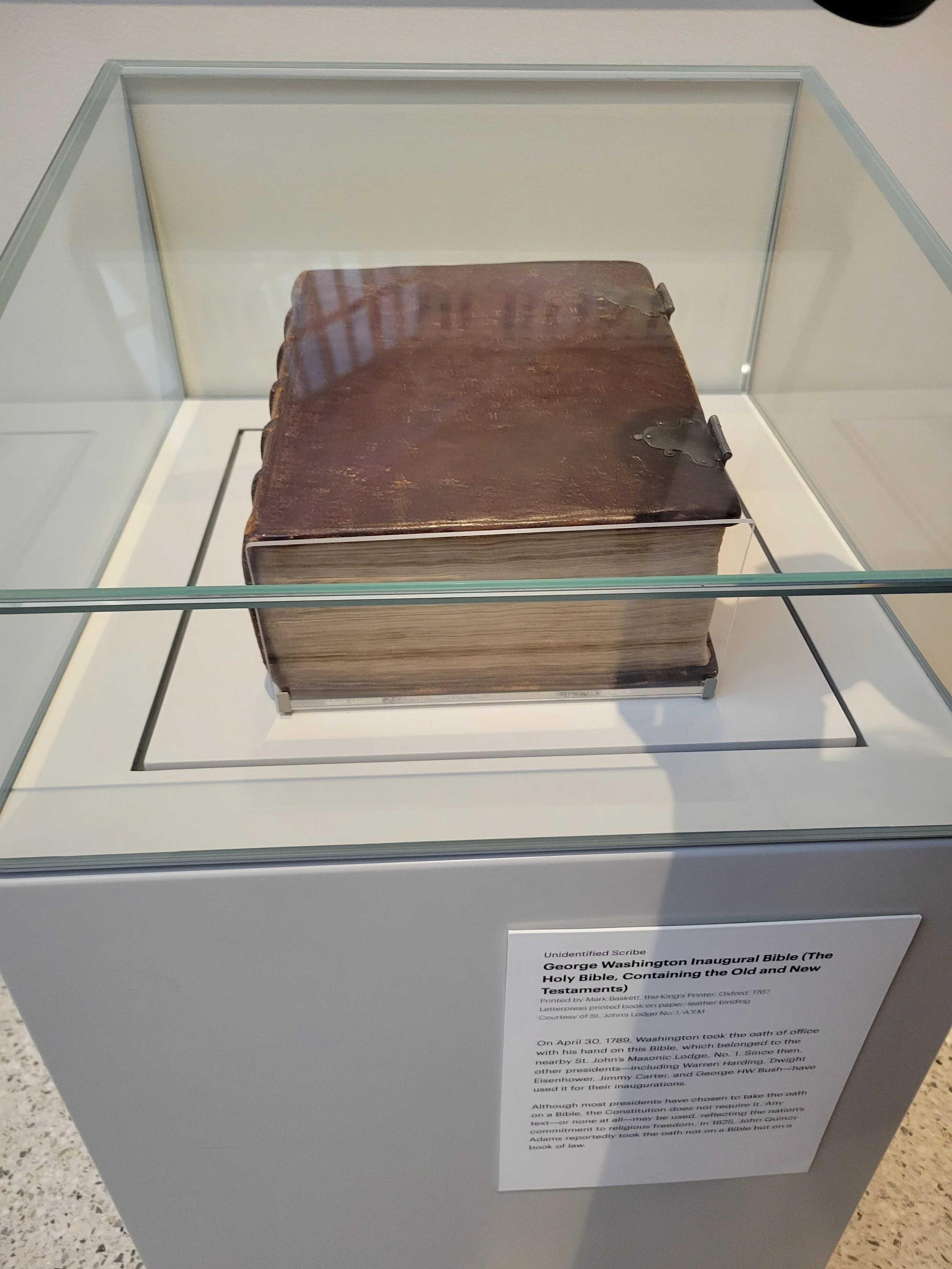
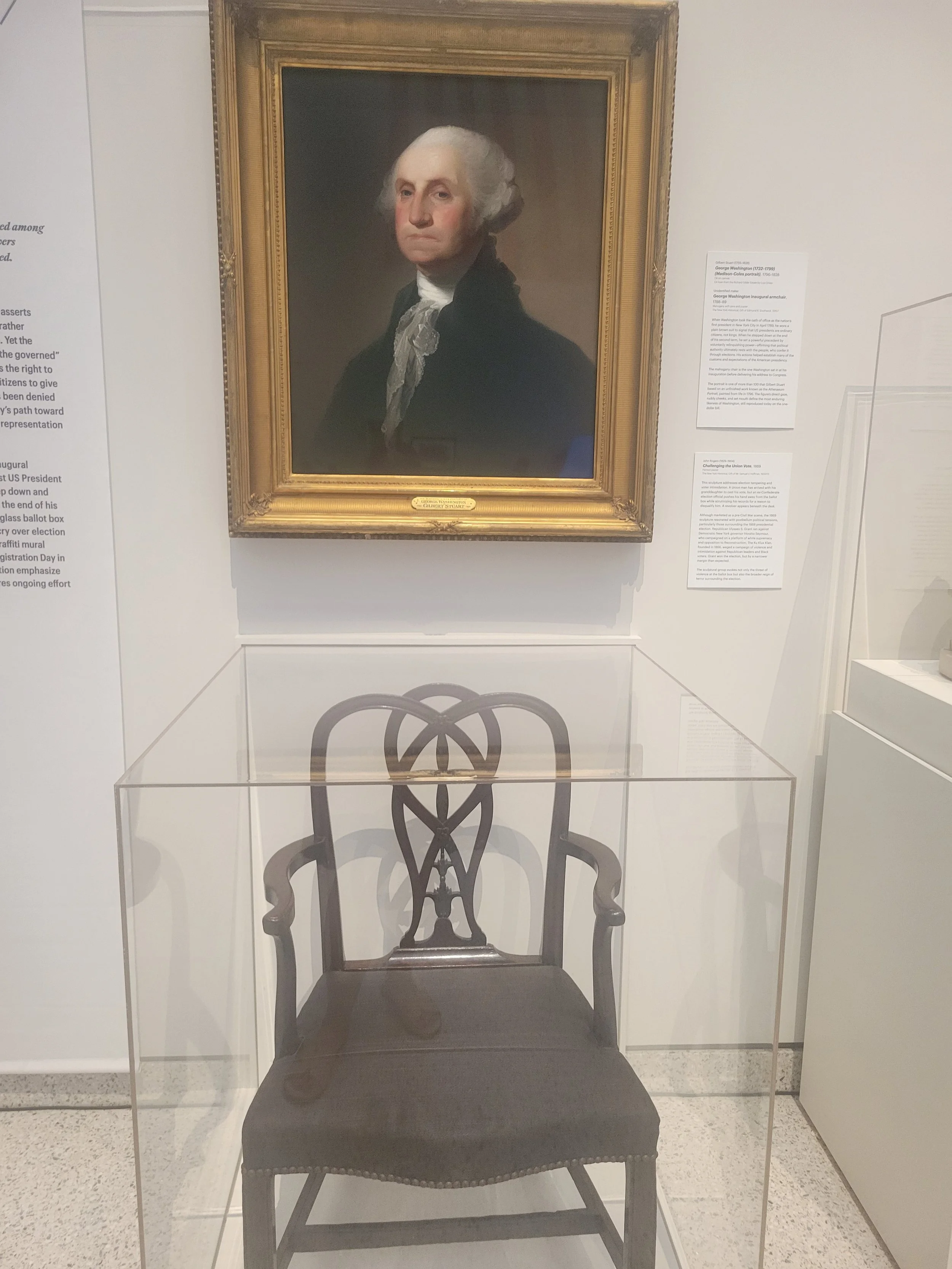
The George Washington Inaugural Bible.
The inaugural armchair.
The Boston Massacre print.
The King George III fragment.
You could spend an entire afternoon moving from one remarkable object to the next. In fact, I did.
The space itself deserves praise too. I never felt crowded. The ceilings are high, the exhibits have room to breathe, and the layout is thoughtful. If someone happened to be standing in front of the object you wanted to see, there was always something equally compelling nearby.
Can we also talk about the placards?
Museum labels often fall into one of two categories: they tell you almost nothing, or they require the reading stamina of a PhD candidate. Somehow, the New York Historical managed to avoid both extremes. The labels are clear, informative, and concise. I actually remember what I learned because I wasn't being asked to read a manifesto every time I approached a display case. Here’s what this is and why it matters. Boom. Done.
One of the highlights of the evening was hearing remarks from Agnes Hsu-Tang.
Afterward, I asked her if she had a favorite object in the room.
"I don't know if I can do that," she laughed. "That's like asking someone to choose a favorite child."
Still, she admitted she was particularly fond of George Washington's inaugural armchair, which she also discussed during her remarks.
Tang reminded attendees that New York was America's first capital and the birthplace of the American presidency. In 1789, George Washington was inaugurated in Lower Manhattan and sat in that very chair.
What struck her was its simplicity.
Washington wasn't sitting on a throne. He was sitting in a plain wooden chair, elected by the people rather than born into power.
The chair takes on even greater significance when viewed alongside the George Washington Inaugural Bible nearby. Moments like these are what make the Tang Wing so special. You're not simply learning about history. You're standing face-to-face with it.
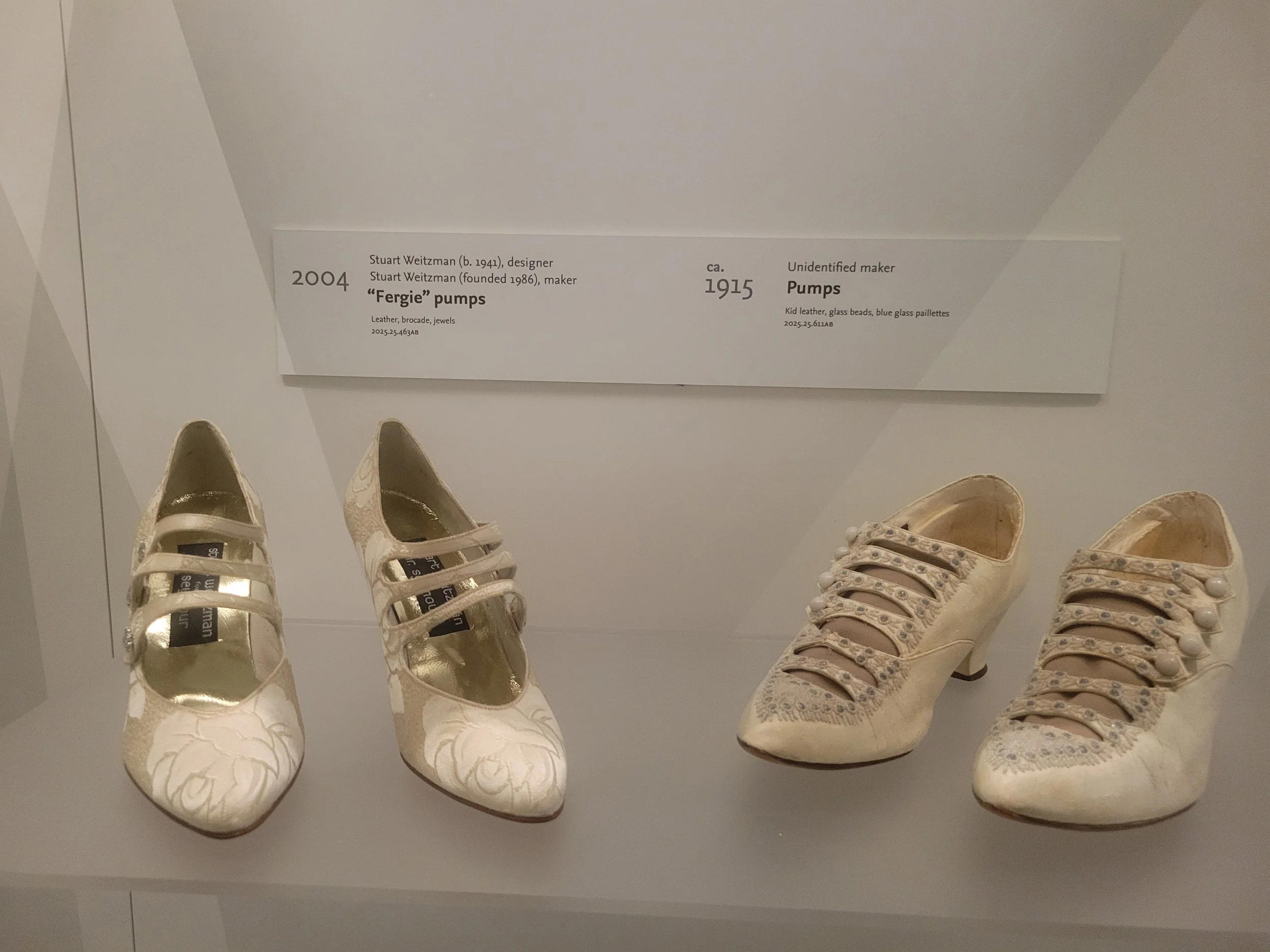
One of the biggest surprises of the evening was the Stuart and Jane Weitzman Shoe Museum.
I'll be honest: fashion history has never done much for me.
I'm not what anyone would describe as fashionable, and I've often felt like fashion spaces weren't really for me.
Then I met Dr. Keren Ben-Horin.
The public historian working in the gallery is an absolute gem. Warm, approachable, and deeply knowledgeable, she has a gift for making history feel accessible. Instead of feeling intimidated, I found myself asking questions about everything around me.
And that's exactly what good public history should do.
Each pair of shoes tells a story.
In many cases, visitors can see shoes worn by famous individuals displayed alongside the older shoes that inspired them. Dr. Ben-Horin told me about a pair of historic house slippers worn by middle- and upper-class women who didn't want to track city filth into their homes.
I admitted I was surprised they had a heel at all. They didn't look particularly comfortable.
That sparked a conversation about how our definitions of comfort change over time.
Years from now, someone might look at a thong and wonder how on earth people wore them.
We both laughed. She’s the coolest.
It was such a small moment, but it perfectly captured what I loved about the wing. History didn't feel inaccessible. It felt approachable.
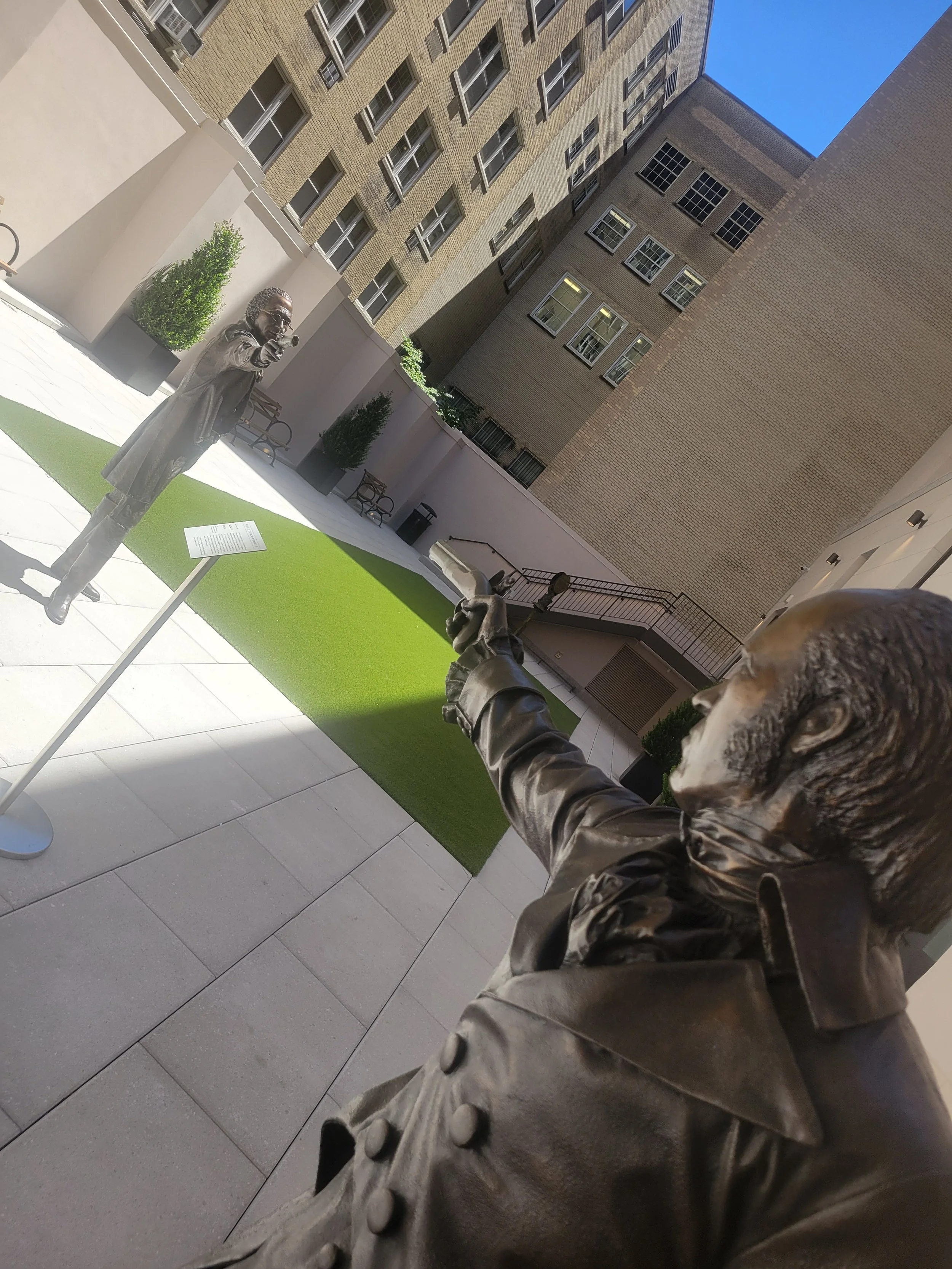
Outside, I spent time in the sculpture garden, where Alexander Hamilton and Aaron Burr face one another across the same distance that separated them during their infamous duel.
I stood next to one figure and looked toward the other.
To my surprise, it felt uncomfortable.
They're much closer together than I imagined. I could feel the tension of the encounter. It was unsettling and did more to drive that moment in history home for me than any book I’ve ever read on the matter.
The classrooms in the Chang Chavkin Academy for American Democracy will host students soon. Spacious, bright, and filled with resources, they make it clear that education is central to the mission of the new wing. The Tang Wing will also become home to the American LGBTQ+ Museum when it opens in 2028.
Three hours flew by at New York Historical. What stayed with me most was the atmosphere. People lingered. They talked with historians. They read placards. They stood beside their favorite artifacts and excitedly discussed them with friends. Nobody seemed eager to leave. Neither was I.
I've visited a lot of museums in New York City, but few places have made me feel the way I felt walking through the Tang Wing. Everything seems carefully considered, from the layout and educational spaces to the exhibits themselves and the people tasked with bringing them to life.
I left feeling like the New York Historical might officially be my favorite place in the city.
My nerdy history heart was completely full.
And I can't wait to go back.