
In New York City right now, it’s hard not to feel like a class below the rest. We’re tired, stressed, commuting from everywhere, doing the nine-to-five (or the five-to-nine), running the dinner math—order in (expensive) or cook (sobbing while chopping carrots)—and still asking: what can I do for me?
Enter stage left: Gainsborough: The Fashion of Portraiture, now at the newly renovated Frick. And yes—before anyone rolls their eyes—let’s say the uncomfortable part out loud: a mansion museum built on robber-baron money can feel like the last place you want to patronize, especially now, when it feels like robber-baroning is back in vogue. I’ll come back to this later. But first, let’s dive into a little… transfiguration, shall we?
“Clothing in portraits represented rank, wealth, political and familial alliances, formality and intimacy, even the time of day.” Meaning: the painting isn’t decoration—it’s that person’s status. Silk catching light like water, cuffs that would have taken several seamstresses weeks to ruffle, stones that would have taken years to unearth, polish, and set in gold and silver.
Think of it this way: it’s an Instagram photo of someone dripping in Hermès and Louis Vuitton, lying on a beach in St. Barts, being handed a Mai Tai by someone whose body isn’t even in the shot. This was Gainsborough’s bread and butter—an art director of the eighteenth century, saving the upper classes from their biggest fear: vulgarity. Gasp. Swoon.
Axel Rüger, the director of the Frick, tells us about this deep-rooted fear among the upper classes: “Fashion is gentility running away from vulgarity, and afraid of being overtaken by it.” That fear—of slipping down the ladder and being lumped in with the great unwashed (me)—is the engine of Georgian portraiture. It’s also, frankly, the engine of the world today.
Who doesn’t own a real or faux luxury item? Who wouldn’t be wholly embarrassed if their item of prestige were called out as too extra, tacky, or fake?
So now we know what we’re doing here—but why would we care? Like, look… I don’t really care when a new influencer wears something off the rack to a red carpet event. Girl, I’m just trying to have some nice cheese I splurged on at TJ’s with my Netflix binge.
Thankfully, Chief Curator Aimee Ng doesn’t dodge this critique. In fact, she calls it out for what it is: a bunch of posers (forgive me for the throwback term; I am a millennial). Portraits weren’t background décor in Gainsborough’s world—they were social instruments. Everyone who could have one did, and they didn’t always tell the truth about the person.
Even Gainsborough, coming from modest country roots, climbed into the highest rooms, eventually painting the king and queen while still remaining awkwardly outside the aristocratic belonging of his clients. So what does he do? He blurs the lines: the glamour of rank, and what happens when rank gets blurred.
Ng tells one story that makes that blurring come to life. Gainsborough exhibited portraits publicly, and in one particular exhibition he showed a painting of a famous courtesan and hung it next to a portrait of a duchess. Both covered in expensive silks and jewels, both seated in places of glamour, and both in similar poses.
The critics lost it.
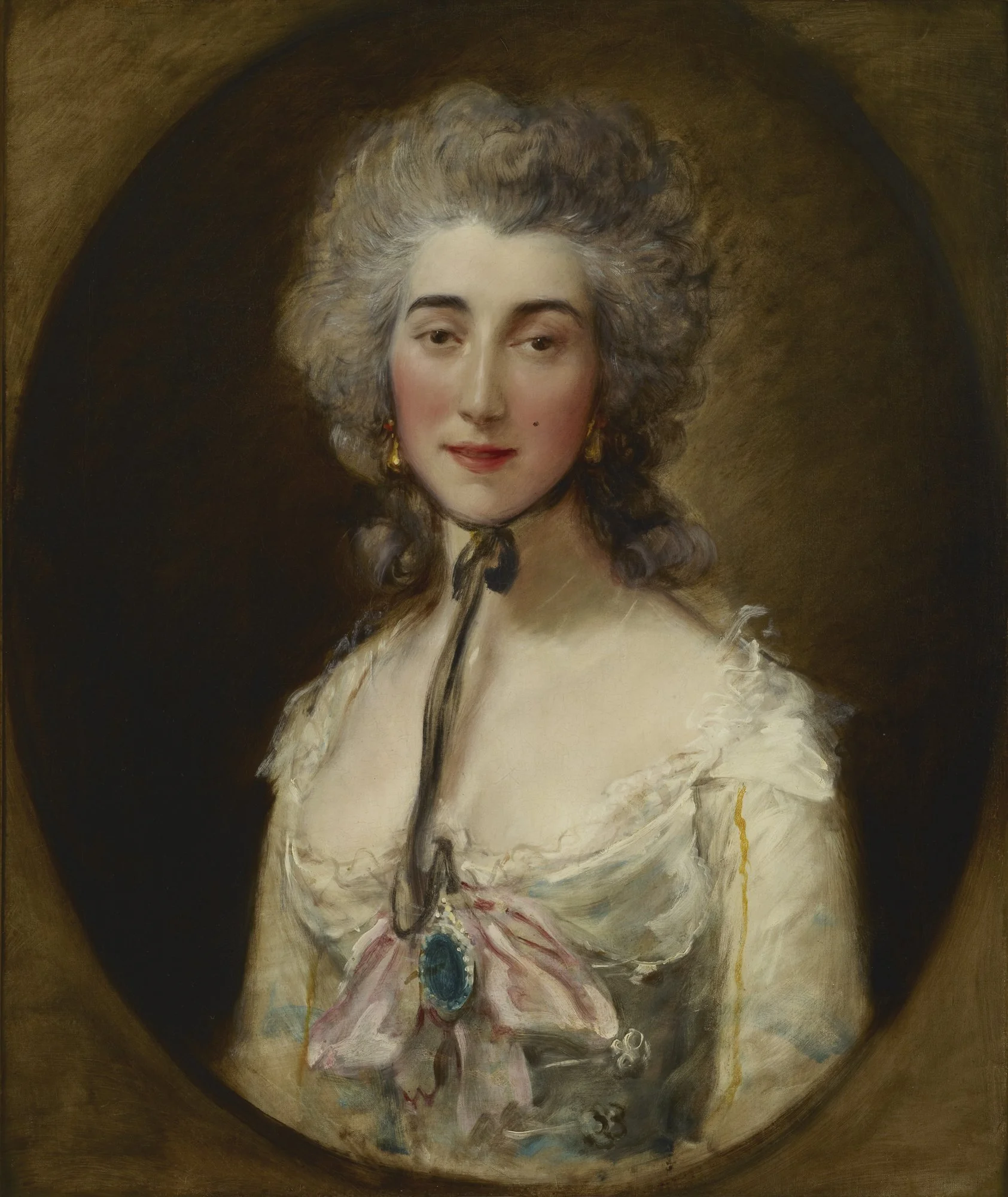
Courtesy: Frick Collection
First off, you can’t have “social mixing” in an exhibition—are you insane? Second, and my personal favorite, you cannot hang a sex worker next to the wife of one of the richest and most powerful men in the country. Why? Because Instagram didn’t exist. People wouldn’t know who she was.
The outrage isn’t that the courtesan exists. The outrage is that she can look like a duchess and almost no one could know the difference.
There are several examples of this rebellion within many of Gainsborough’s works, most famously in the portrait of Ignatius Sancho. Ng calls it Gainsborough’s only known portrait of a Black sitter—and the only known portrait of a servant by any major artist in eighteenth-century England.
That’s not even the best part.
Gainsborough doesn’t present Sancho in the livery of a servant or as a slave. He paints him like a wealthy gentleman, hand tucked into a waistcoat—a vision of respectability. Why? Because Sancho was not just a servant; he was also a composer, a writer, and an abolitionist.
If anyone at that time deserved to be preserved, it was Sancho—and Gainsborough gave him to us as he viewed him: a person worthy of respect and admiration.
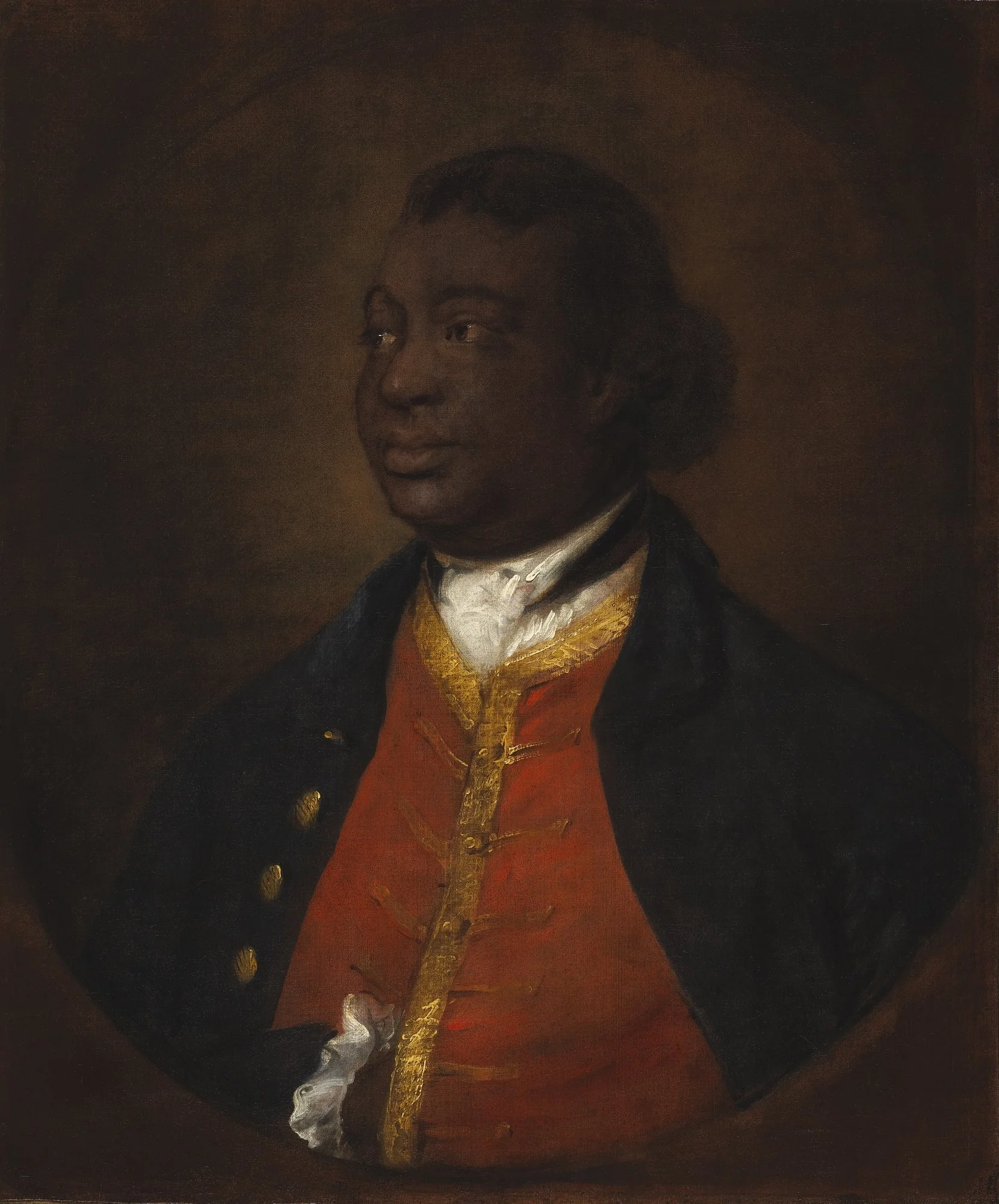
Courtesy: Frick Collection
Gainsborough did this often in his portraiture, painting admired friends and colleagues who were inventors and musicians as ladies and gentlemen of high fashion—including an absolutely stunning portrait of his wife. It’s a beautiful form of rebellion, showing his friends and loved ones of lower ranks and classes as important.
It’s an incredible exhibit, and I strongly recommend everyone go. The show has been beautifully presented to speak to you where you are—quietly, contemplatively.
But of course, there’s the Frick itself, and my original question: why would I want to patronize the Frick?
The Frick can feel like the kind of place meant for only one type of person—like you’re supposed to be fluent in old world/old money before you arrive. It was built on the backs of people like me, like most of us these days.
It’s the Good Place problem: you try to make one decent choice—go look at something important, powerful, and beautiful in a quiet, personal space—and then remember that the whole route that made that choice possible is befouled.
That’s the thing about “products of their time.” It doesn’t excuse anything, but it does explain how one person can be a public villain and a private angel. Frick’s name is tied to violent labor conflicts, and yet the museum was commissioned by his daughter, who knew him as a loving father and faithful husband—an immigrant’s son who turned himself into one of the most powerful men of his time.
Whatever he was to the public, he was—at least to them—worthy of devotion. And thanks to that devotion, we now have people in our own time trying to repair the damage of older generations.
That’s the theory, anyway.
I wanted to know what that looks like in practice. Here we have this fantastic exhibition celebrating an artist from the working classes who elevated people like us. But you know me—I like to take a slightly closer look. So I asked the Frick’s Head of Communications, Heidi Rosenau, what they’re actually trying to do right now to bring more everyday people into this imposing space—especially since, as she put it, “a lot of New Yorkers haven’t yet come.”
Her answer wasn’t a pitch about prestige or how people of a certain caliber would want to come. Instead, it was a pitch for relief from the struggles we go through today.
“The Frick is a refuge… a break from the outside, stressful world, an experience to look closely.”
You don’t have to arrive with the right vocabulary, the right foreknowledge, or even the right outfit. You can come as you are, move through the small museum unguided, and take only the encounters you want. Because even though it was built through exploitative means, it stands as a place where anyone can attend as who they are.
Gainsborough: The Fashion of Portraiture runs through May 25, 2026. Early March marks the beginning of First Fridays—free Friday nights with programming and cocktails. Pay-what-you-wish hours run Wednesdays from 1:30–5:30 PM. Free admission is also granted to community partners and college members who have partnered with the Frick.
Go see the show—and tell us what you thought.