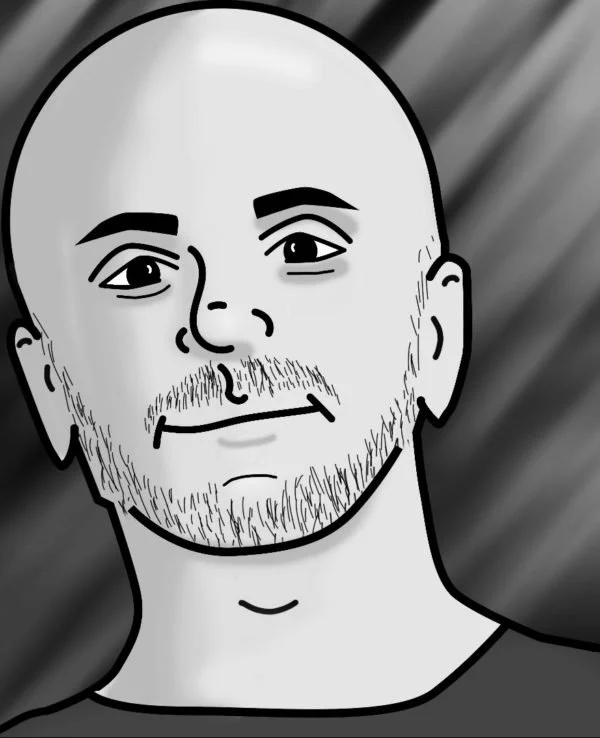
Portrait of a Playwright as a Young Man
An interview with Chris Gabo and a discussion of the premiere of his play The Surgeon and Her Daughters
I had the pleasure of speaking with playwright, rap producer, HBO’s In Treatment writer, and fledgling novelist (as if anything he does could ever come off as “fledgling”) Chris Gabo about his play that opened last week Off-Broadway.
We spoke a couple of weeks ago during rehearsals, where he was already deep into rewrites.
When you were young, was it music first?
Chris: Yeah, rap music was the first thing. It shall be the first and the last. But the play stuff came kind of early too, through Stephen Guirgis’ work—that Faber and Faber collection.
Scott: Oh, that grey book? I think every playwright and actor has that edition. I have it somewhere.
Chris: I keep not having it because I keep giving it away.
When did you say to yourself, “Holy shit, I’m a playwright”?
Chris: It all begins and ends with Stephen. I was in Drama Club in Florida, and we didn’t do a lot of very good plays. It was all like British sex farces—under-the-settee kind of stuff. Then our teacher gave us a really humble assignment: go and read a play that she didn’t assign.
So I went to Barnes & Noble—and I knocked down a bookshelf, like one hundred percent by accident—and this Stephen Guirgis book opened like Jumanji. I saw a bunch of bad words in it and bought it. I got home, devoured it, and thought, “Maybe this is cool to me.”
I was on the road a lot in high school—I was hip-hop touring—and if you don’t have a band, it’s just you and a laptop. I started writing these plays as an antidote to loneliness. When I came home, I would tape out the space on the living-room floor and get some friends. We were like, “You play the mom, you play the dad, you play the drug dealer.” It was an extremely social endeavor.
At that time, music was a career and plays were, like, a thing I did for fun.
Scott: It seems like the universe was pushing you in that direction—like the book literally falls open at Barnes & Noble.
Chris: I did feel that way. Driving in the car with my parents, I would read plays out loud to them. I came at it from a performance, oral-tradition angle—just trying to read the lines and make my dad laugh and whatever.
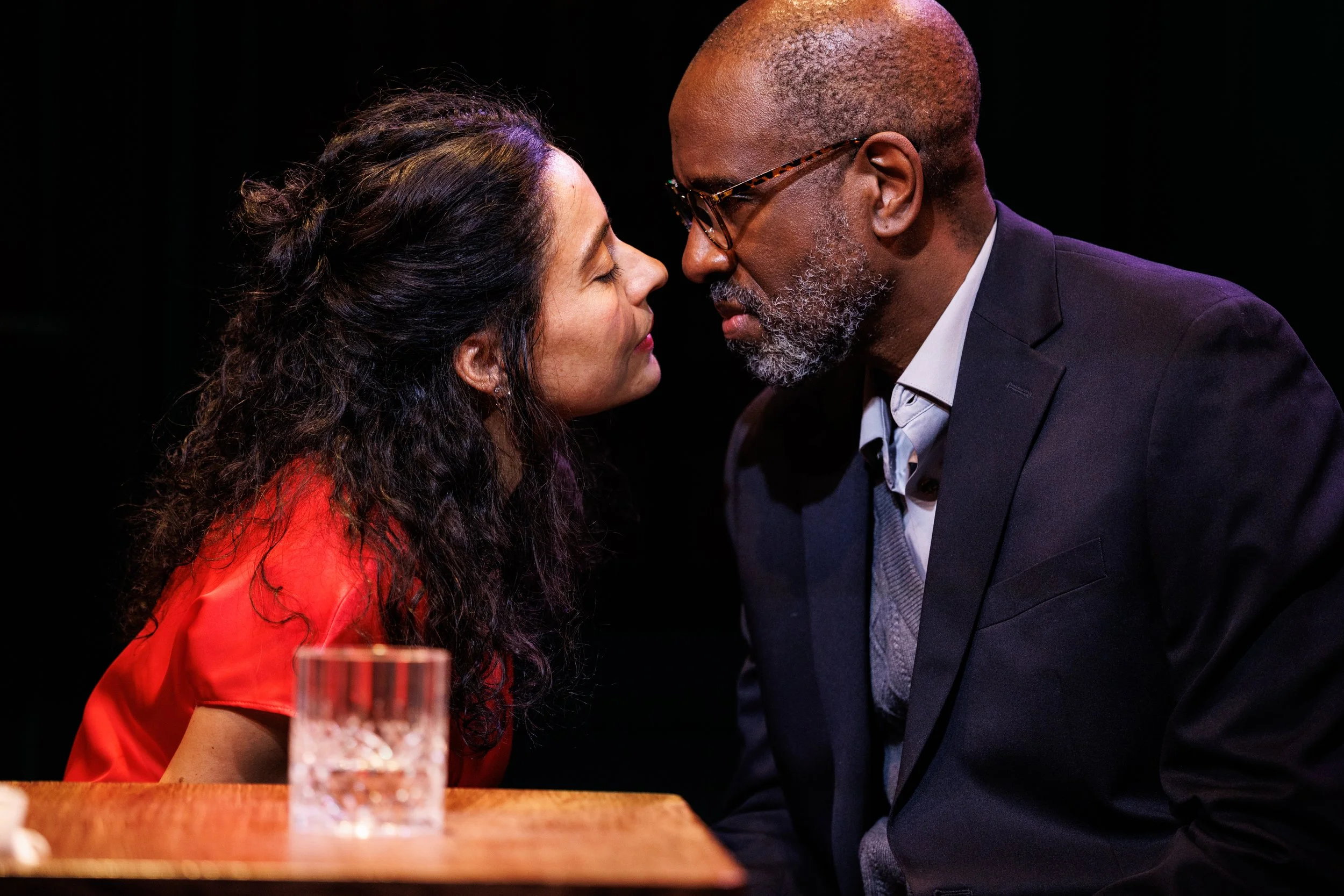
Credit: Maria Baranova
What happened next? I mean, you’re no slouch. You got into Yale School of Drama. What play did you submit?
Chris: It was this one.
Me: Oh shit, really?
Chris: I wrote Surgeon ten years ago. I got into the Ohio Playwrights Conference, then into the Emerging Writers Group at the Public. Then I was living in Astoria, and an old mentor told me I should apply to Yale. I didn’t want to go—I didn’t want more school. But she sent the play anyway. And they asked me to come. I wasn’t sure if I should go, and the other people in my group were like, “Hey dummy…” You know?
What was the spark for the piece?
Chris: My parents are from Colombia. My dad was an immigration attorney. It was kind of a refrain—a common story—of someone who was something over there, and comes here, and isn’t.
One day I was walking through Times Square and saw this Black dude wrapped in an Irish flag trying to get people to buy mozzarella sticks. I heard his accent, and I don't know where he’s from, but I thought, How did we get here?
So basically, the guy in the play was a surgeon in Africa. He meets this woman who goes overseas and doesn’t come back. He moves in with her daughters and—it’s about that.
I’m not the same writer I was ten years ago. I’m not sure I wouldn’t want to do a page-one rewrite on the thing I finished ten years ago.
Scott: A hundred percent. I mean, we grow a different skin every seven years.
Chris: But I wrote this play during the first Trump administration. It didn’t get produced, and I thought, Well, it’s a period piece. It’s in the dustbin of history. But… it’s gotten worse.
We almost set it back in 2017, but we didn’t need to.
Who would you most like to see this play?
Chris: I really want the people who are in the play to see the play. I would love for Colombians to see it. I would love for young people to see it.
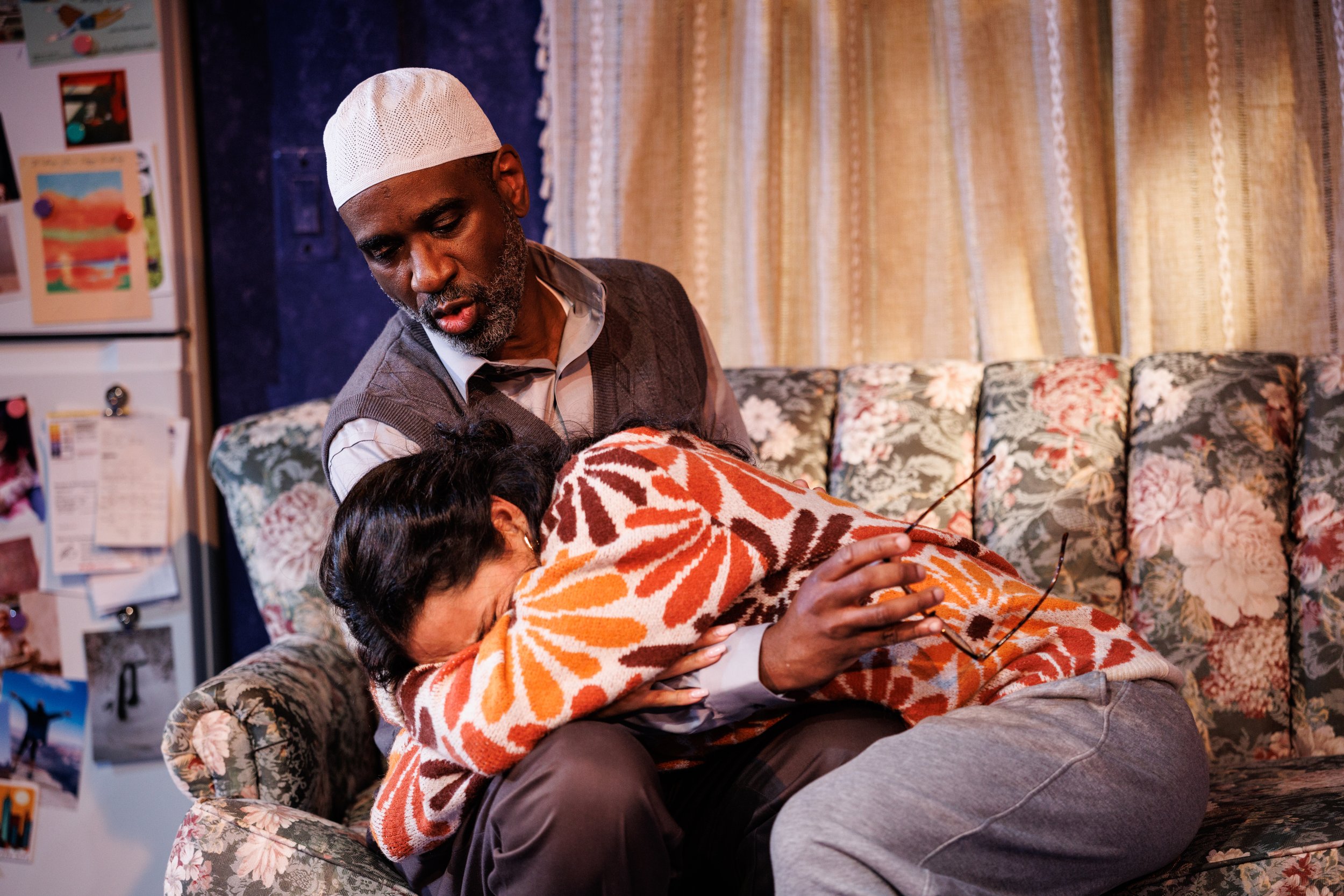
Credit: Maria Baranova
For a guy who seems to walk between the raindrops, Chris is humble—and as intelligent as he is likeable.
I wonder if, had he not told me how deeply he studied Guirgis, it still would have been immediately clear that The Surgeon and Her Daughters comes from a student of the playwright who blew up the Off-Broadway scene twenty years ago with Jesus Hopped the A Train and Our Lady of 125th Street.
Surgeon is unquestionably a byproduct of Guirgis’ work: big, muscular writing full of joy, sorrow, and profanity; intimate portraits of ethnic, inner-city, first-generation Americans scrambling to get by.
Brian D. Coats, as the title surgeon, is the calm at the center of the storm with a centered, weathered performance. Yadira Guevara as Cecilia and Kana Seiki as Ashley are dynamic as the eponymous daughters. They feel genuinely like sisters as they flop around the apartment in their PJs—until their doomed mother Mariana (Lisa Fernandez) returns from a one-night stand and announces she has been dragged out of retirement by the Army and must return to active duty one last time.
There are some extraneous moments and bits of dialogue—Johnny Sanchez’s Mister O’Halleron almost need not exist in terms of plot—but the scenes are so fun you hardly notice until thinking it over later.
The grief-filled tension of the second act is a lot for the hardworking cast to carry as they make choices that aren’t always relatable. I found myself siding with Kana Seiki’s adopted Ashley, who cannot fathom why Cecilia would invite a total stranger into their home during the worst moment of their lives.
Still, this is a burly family drama that pulls no punches and showcases the great promise of a new American playwright.
The Surgeon and Her Daughters is running through December 20 at Theatre 154 on Christopher Street in the West Village.