The Best Party in Brooklyn Is Also Theater
At Canciones, you don’t sit quietly in the dark and watch a family drama unfold. You drink beer on the porch, help make tamales, get pulled into conversations about grief and family lore, and slowly realize you’ve stopped thinking of the performers as actors at all.
Typically, arriving at someone’s home whom I’ve never met is not a confident endeavor for me. I’m good at exuding ebullience. It’s an act I’ve been working on for decades. In actuality, I’m hyper analyzing every interaction.
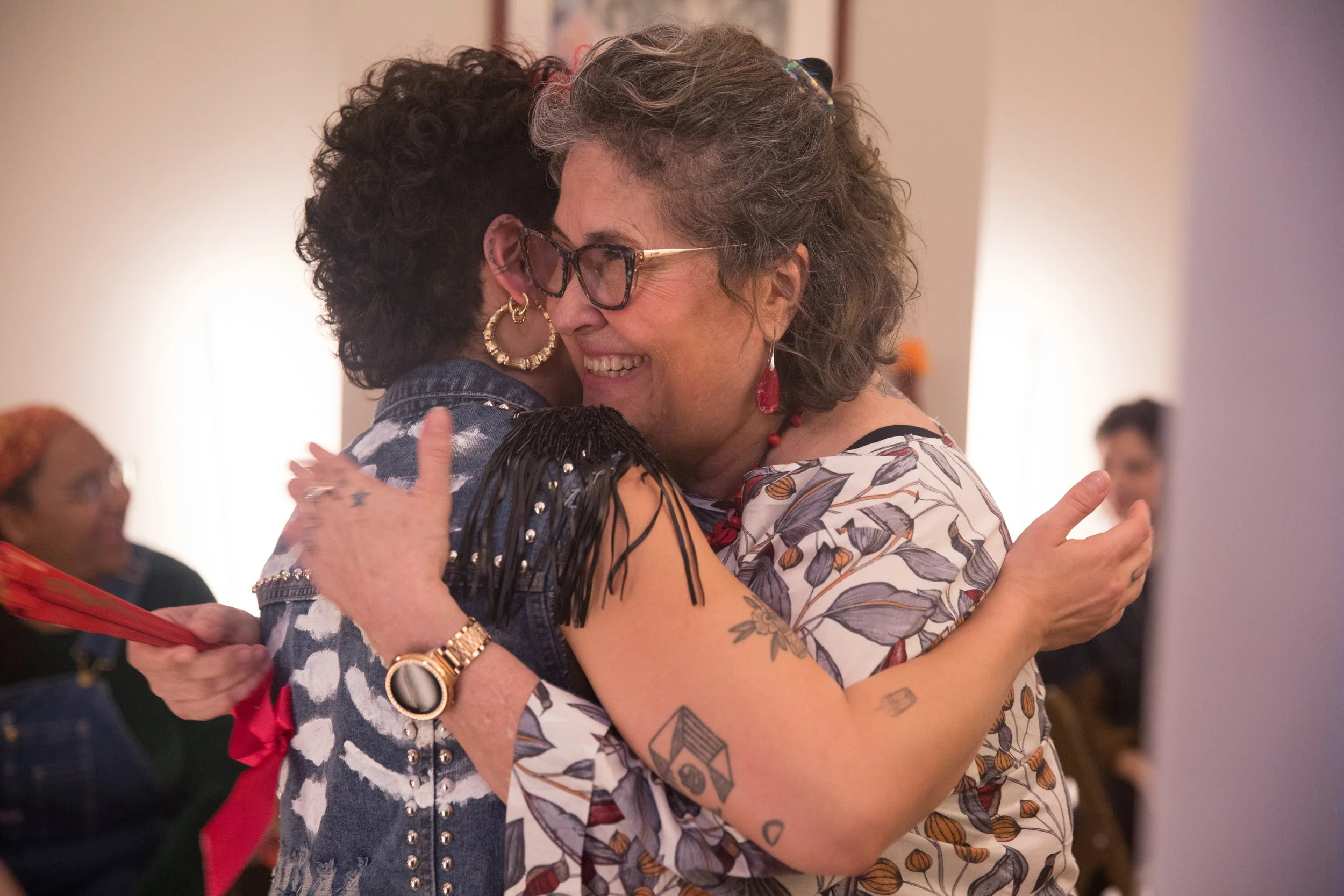
Therefore, I was shocked, pleasantly so, when I felt a complete absence of awkwardness upon entering the home where Canciones would take place. I expected a degree of stiffness between actors and guests. I expected the self-consciousness that can sometimes plague immersive theater. Instead, there was immediate warmth. “Hey, you made it!” type enthusiasm. Genuine excitement. The kind that instantly lowers your shoulders. It’s from this point that the superb acting really begins, and it bears mentioning. My enthusiastic, “hi, how are you?” is met with a warm and genuine, “we’re so glad to have you, welcome!” There’s no moment where I ask to hang my coat and somebody doesn’t hear me, and I start sweating. The cast is attentive and curious. Little details in our first interaction that make me feel cared about were paramount to having me buy into this entire experience.
As more people arrive, the house begins to fill with side conversations and the familiar choreography of a family party. People catching up on the couch. People standing in the kitchen yelling over one another. Someone prepping food. Someone opening beers. Someone shouting instructions from another room. “There’s drinks out back in the cooler, water, beer, help yourself.” Small phrases like that, things we hear at every family barbecue or birthday party, really anchored me in. I step out onto the back porch, grab a Tecate, crack it open, and take a cold sip. This is going to be a great night.
The space itself is open and full of plants and small details (purposeful or not) that make it feel lived in: plastic bins full of nondescript papers, magnets on the fridge, a sewing machine, storage boxes in the basement. As a woman in her 30s, a lot of my entrance was spent agonizing over how much counter space the kitchen had and how immaculately clean the floors and appliances were. Oh, Lord. I see what you’ve done for other homeowners…
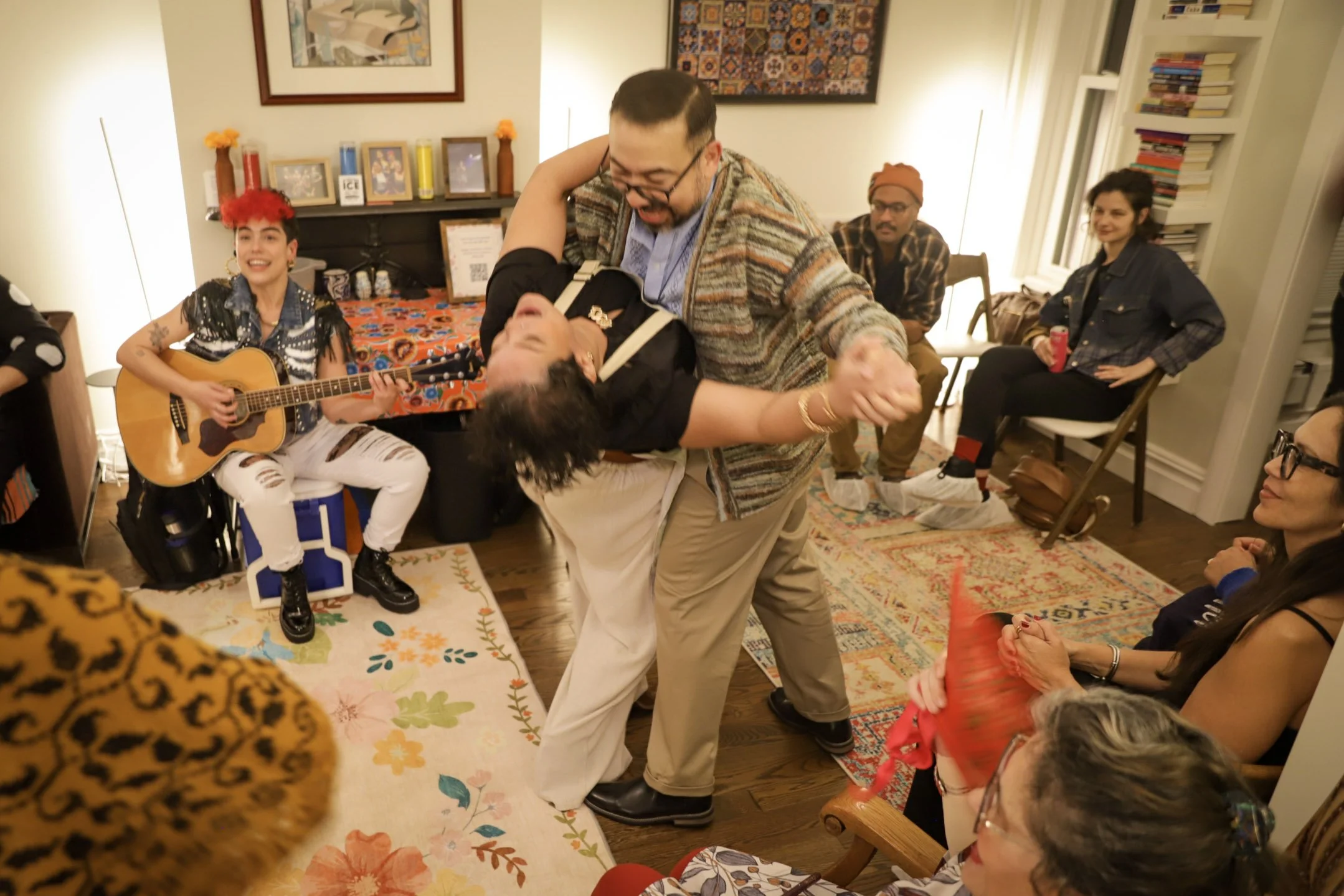
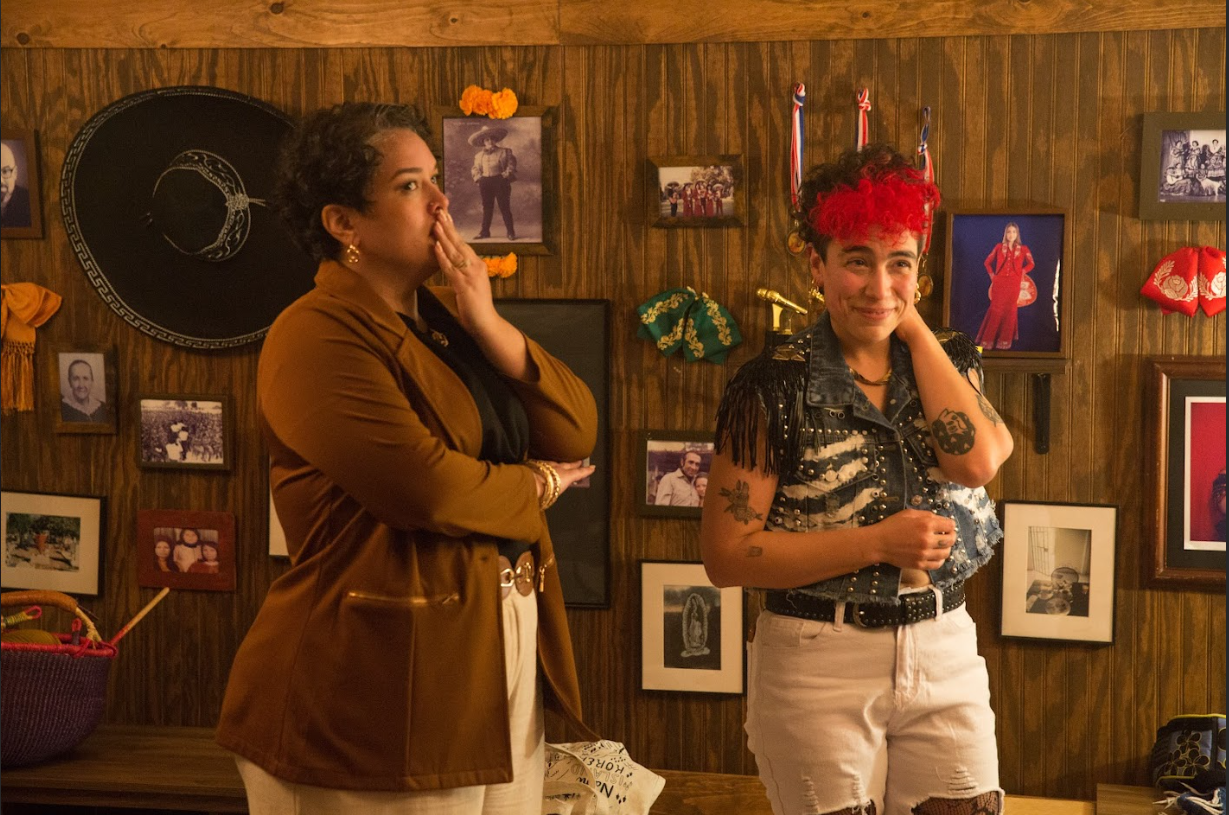
It’s not long at all before I’m invited into the basement for a jam session. Wood paneling on the walls where family photos hang, more storage boxes. Ricky (Sammy Rivas), a cousin of the family, begins riffing on the guitar and encourages guests to reach into the basket on the floor and choose an instrument. He’s comfortable, curious, and funny as he asks questions of his guests and improvs on their actions. He plays some Clapton before Ely (Cristina Contrereas) shouts down the basement stairs that only family music is allowed because they are, after all, a mariachi family. Ricky makes a funny reference to being high. We all laugh. Likely because it’s just so familiar. Being slightly high or drunk with your cousins or friends in the basement and an adult calls you upstairs, and you turn to your posse to make sure everyone is just as buzzed or stoned as you? It’s so astutely universal. It’s the ubiquitous signal of a good night ahead.
What makes Canciones so successful is that it doesn’t merely immerse you in a story line. It immerses you in the social chemistry of a family. The actors continuously engage with guests in ways that feel startlingly real. At one point, Ely discusses grief with me after speaking about the death of Kati and Ely’s brother. She listens carefully to every word I say and responds thoughtfully with her own experiences and insights. It feels less like improv and more like an actual conversation with somebody’s aunt at a party. Outside on the porch, Nina (Mayelah Barrera), Jenn (EJ Zimmerman), and Ricky quietly talk shit and recount family drama in a way that feels so natural and recognizable that you almost forget you’re watching performers at all. There’s also a running wink-wink acknowledgment that Ely absolutely needs to control everything at all times, the kind of long-established family truth everyone knows and lovingly mocks.
Just like at a real family gathering, there’s no shortage of space to go and people to speak with. In the kitchen, Ely recruits audience members to help make tamales, instructing us on how to spread masa. It’s one of the smartest immersive choices of the evening because it transforms guests from passive observers into contributors to the party itself.
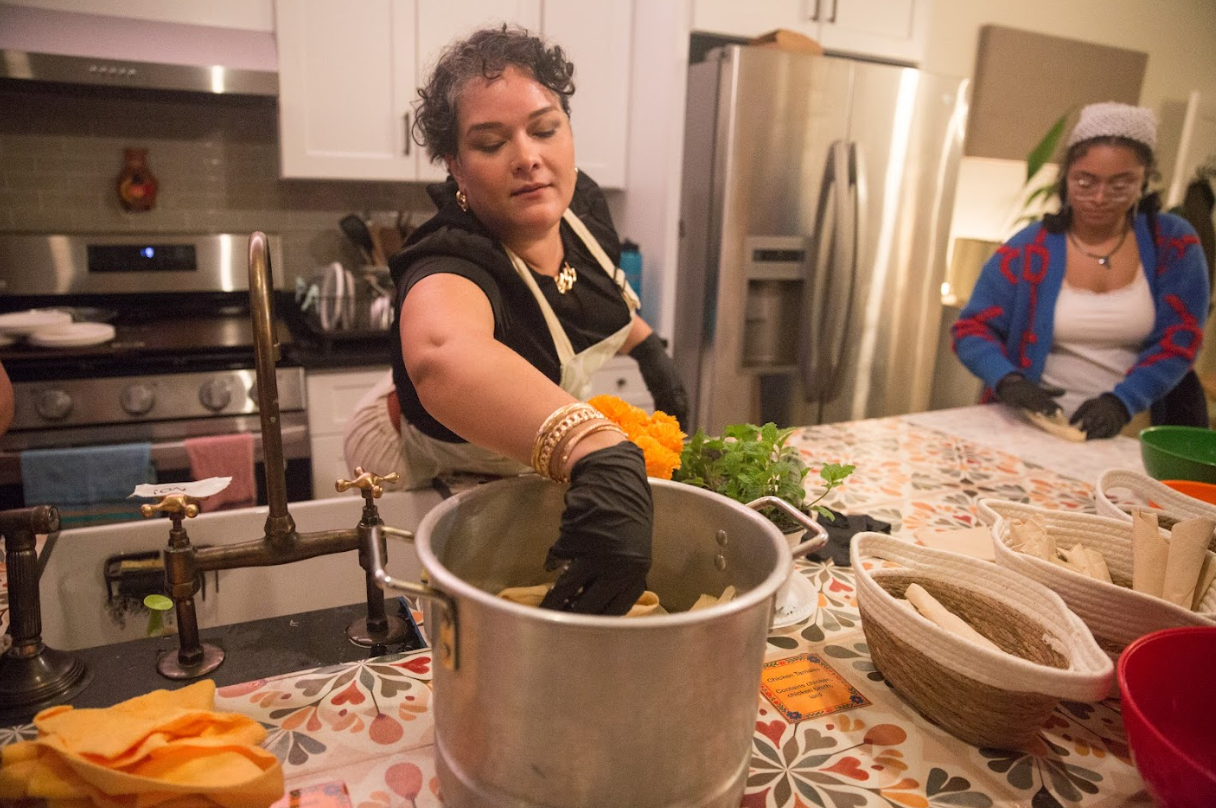
There’s something weirdly intimate about standing shoulder to shoulder with strangers learning how to fold tamales while people yell back and forth between rooms. Eventually, the tamales are actually served alongside chips and salsa while conversations and arguments continue unfolding around you.
What makes the escalating conflict especially effective is how believable its rhythm feels. Nobody suddenly launches into a screaming monologue. Instead, tension accumulates the way it does at actual family parties: through increasingly personal jabs, loaded looks, awkward silences, and comments that become pointed.
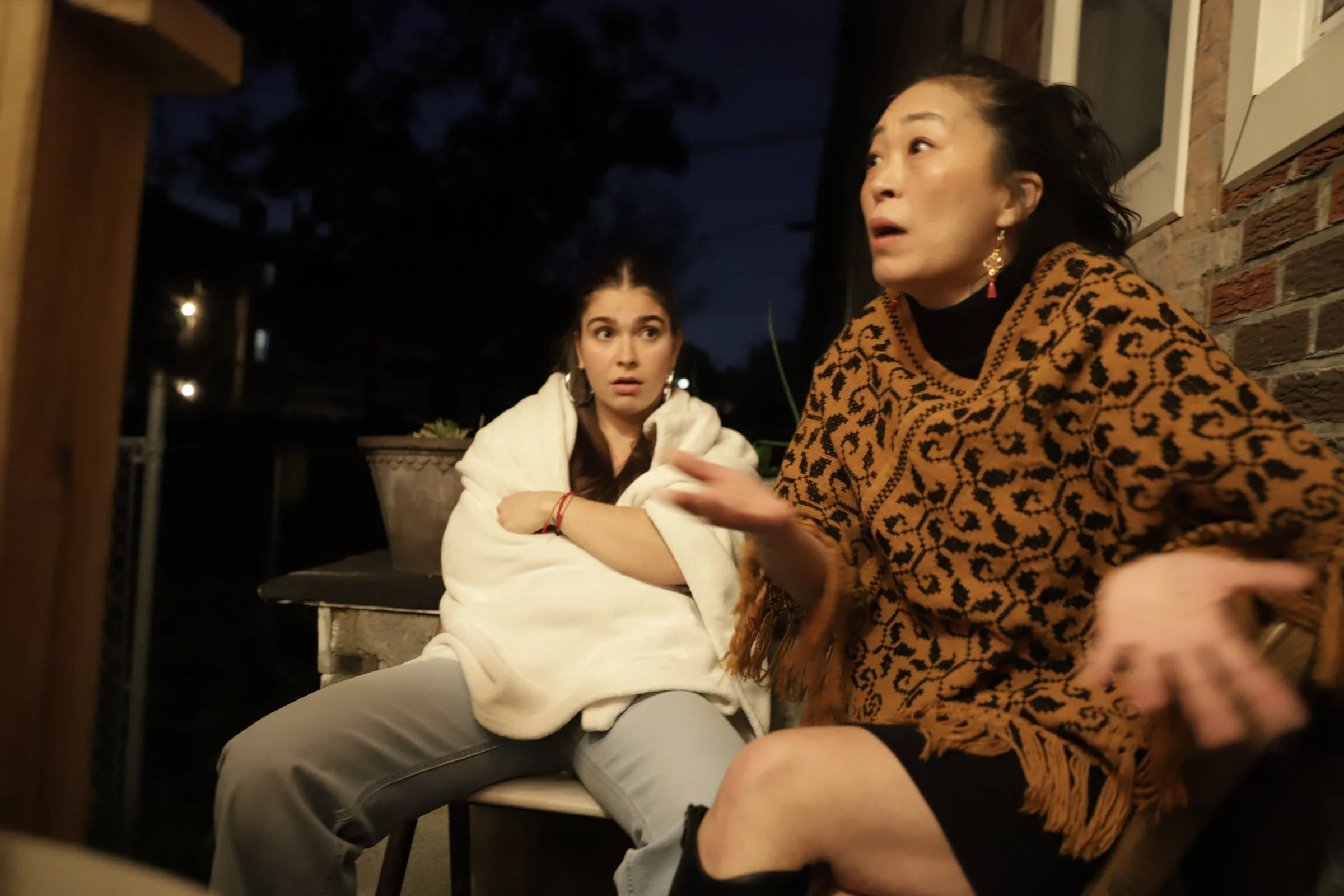
Ely, especially, is fascinating to watch. She continues hosting while unraveling. She’ll begin a perfectly warm conversation with guests about grief or family traditions while simultaneously side-eyeing her sister, Kati, across the room. She’s listening to you, genuinely listening, while also very clearly keeping track of whatever her sister is doing at all times.
At one point, Ely and Kati launch into a heated disagreement, each recounting their own version of old family events in the way relatives always do, with total confidence that they alone remember things correctly. Kati looks toward me for reassurance as if to say, can you believe her? Unfortunately, I cannot help because I’m incredibly focused on my tamal. It’s freaking delicious. I’m paying attention. I’m listening, but if Ely had hurled a chair across the room, I still would not have stopped eating that tamal.
By the time the louder confrontations arrive, they feel earned because the production has so carefully recreated the emotional choreography of real family conflict. Everyone keeps trying to maintain the party while old resentments quietly leak through the seams.
And then there’s the music.
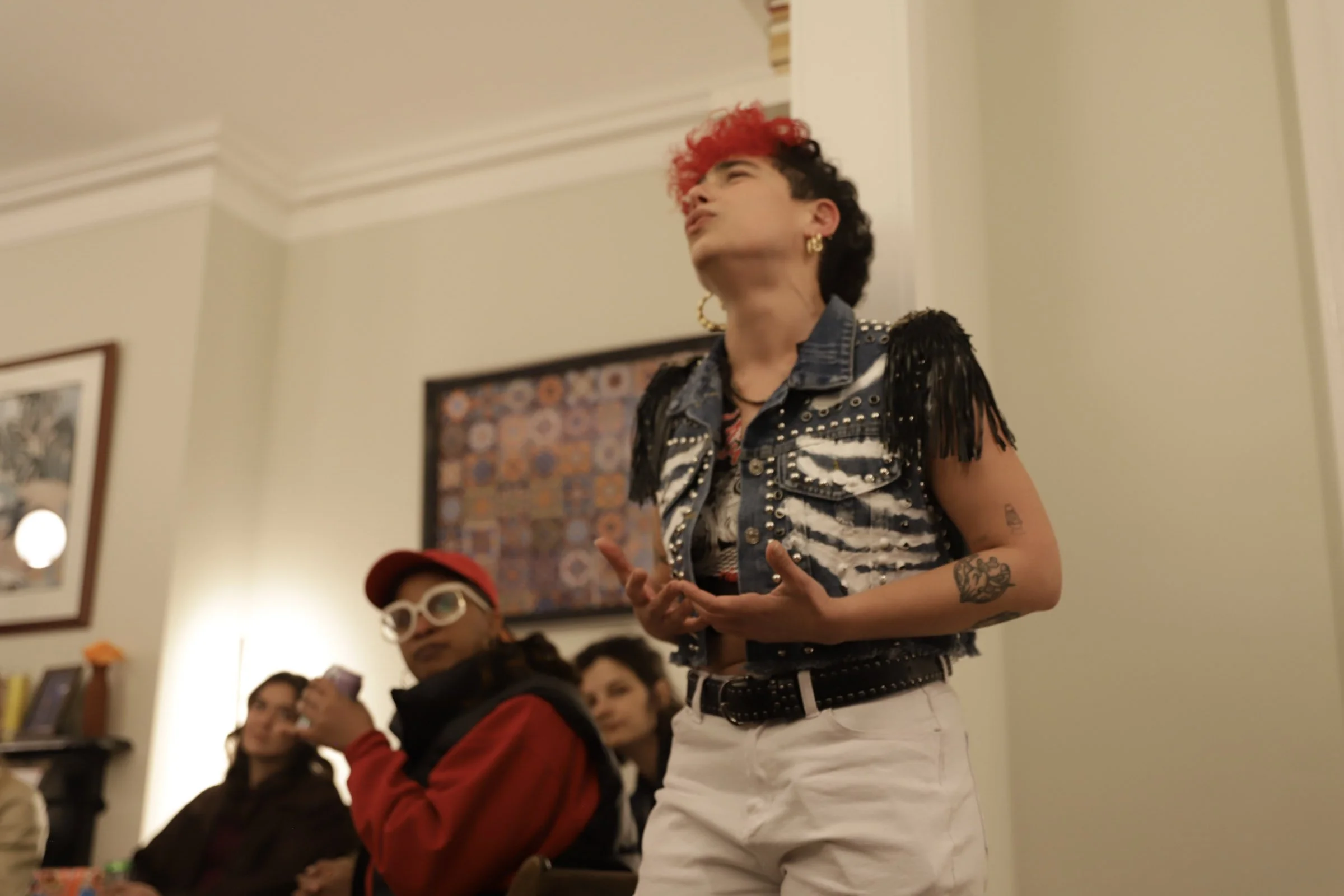
There is so much soul, life, and feeling in these performances. Of course performers on Broadway give their all every night, but hearing this kind of music inside someone’s home completely changes its emotional effect. The grit in the voices. The expressions on their faces. The proximity. Nothing feels polished in the sterile sense of the word. The songs feel lived in.
Sara Ornelas (playing Kati), in particular, completely commands the room. Her singing is full-bodied and powerful in a way that pins everyone into silence. The entire room seems unable to take their eyes off her. At several points, I found myself unexpectedly emotional. The music in Canciones does not function as entertainment alone. It functions as inheritance, grief, and memory.
As is the case with immersive theater, we piece together the conflicts by roaming around and listening to various accounts from different family members. Of the sub-conflicts, you’ll almost certainly recognize one from your own family. Nina is torn between wanting to stay close to her family or move to California for college. Maestra (Johanna Carlisle-Zepeda), the mother of Kati and Ely, is at a tender advancing age where she wants to sing, celebrate, and fully live while her daughter (Ely) thinks she needs to take it easy. Kati and Ely engage in the age-old argument of who does more, who does less, and who sacrificed what for the family. The larger conflict regarding the family’s music and legacy was slightly harder for me to follow, but the beauty of such an intimate performance is that you can literally walk up to a character and ask for clarification. “You said something about a charro. What is that exactly?” The major conflict was along the lines of Kati wants to allow a new Latinx Museum to acquire mariachi heirlooms from the family. Ely does not. Each makes their respective arguments throughout the evening.
One of my favorite moments of the night came during a casual conversation with another guest named Alex. “How do you know the family?” she asks me. I would later learn that Alex is a professor, and really enjoys opportunities to lean into acting.
“I…watch their dog for them,” I manage to conjure, proud of the only moment of improv I’ve ever attempted.
“Oh, they have a dog?”
“No. It died.”
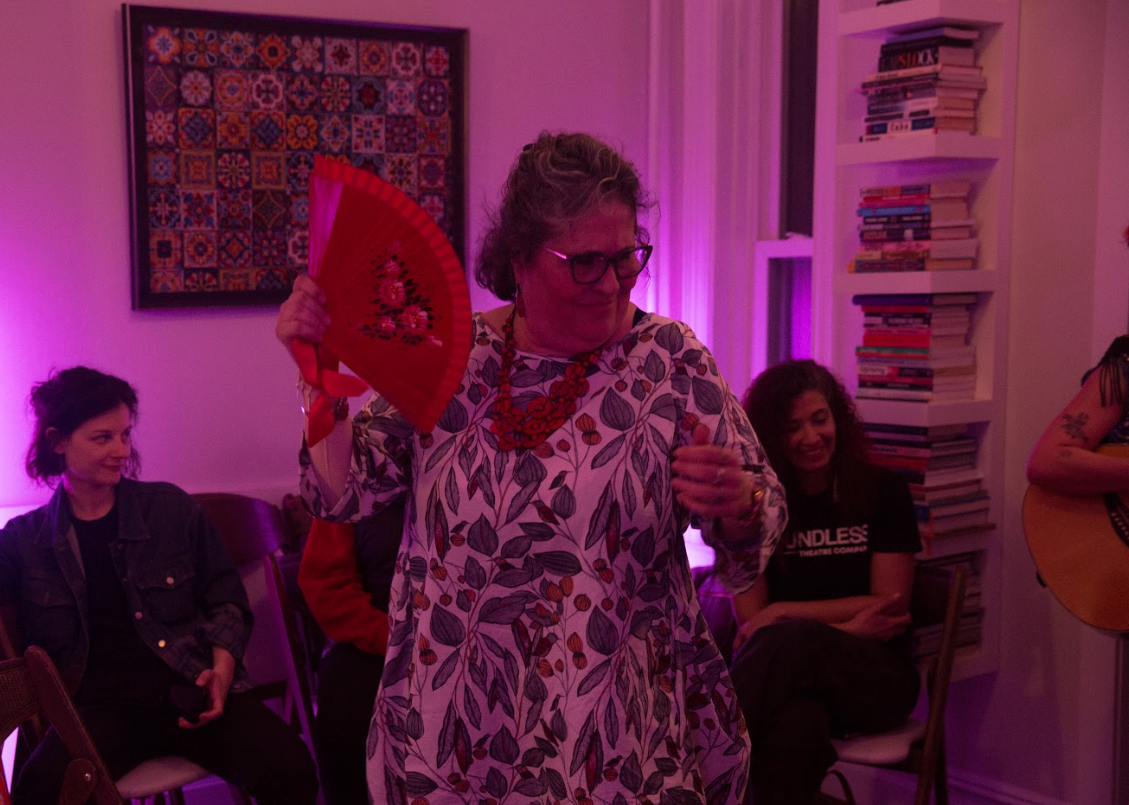
This breaks us into laughter and suddenly we’re talking like actual party guests. There’s a bowl of conversation prompts nearby, and with the beer flowing, music drifting through the rooms, and people laughing over one another, I find myself genuinely opening up to strangers and them to me.
The evening ends in music. For the final songs, the entire room sings together after being given lyrics to the songs. And it sounds beautiful. It feels beautiful. The coolest ending to a house party you could possibly imagine.
When I finally stepped outside at the end of the night, it was strangely difficult to leave. It felt like leaving a real family gathering. There’s something deeply restorative about being around family and friends, eating, laughing, yelling over one another, hearing music spill through the walls, and feeling comfortable enough to relax into yourself. Especially now. Canciones manages to recreate that feeling with astonishing specificity and warmth.