Chooch Toddlers, Chicken Cutlets, and the Women We Miss
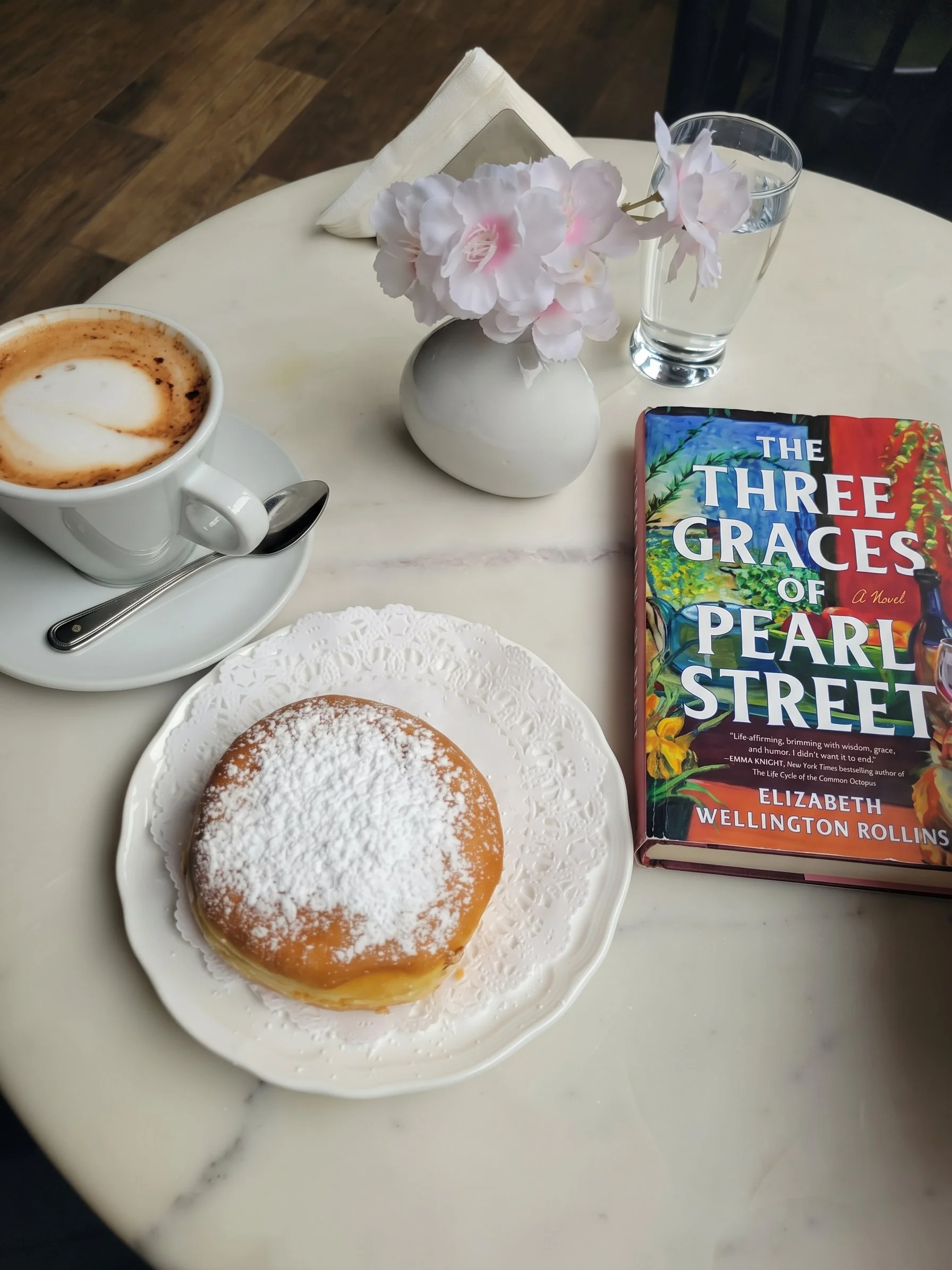
Somewhere between the loss of our grandmothers and the rise of people walking around with enough hair gel to waterproof a basement, real Italian-American culture started slipping away. The Three Graces of Pearl Street isn't a perfect novel, but in its fierce, spitfire matriarchs, it captures the vanishing soul of a generation that built everything around feeding the people they loved.
Elizabeth Wellington Rollins writes about three generations of Italian-American women, the things we inherit, and the things we lose along the way.
There is a particular breed of Italian grandmother who will spend six hours making you dinner, insist you eat until your pants no longer fit, and then threaten to call the police on the butcher who overcharged her for the meat.
She loves her family, her neighbors, the Catholic Church, and a good sale. She has survived immigration, marriage, motherhood, and God knows what else. She is not afraid of anyone, particularly men, and she has very little patience for stupidity. She knows how much a pound of veal should cost, and if you think you're going to pull a fast one on her, you've got another thing coming.
I know these women. I grew up around them. And I miss them terribly.
Elizabeth Wellington Rollins's The Three Graces of Pearl Street follows three generations of Italian-American women: 97-year-old Graziella, her daughter Grace, and her granddaughter Ella. Somewhere in the background is Maria, Graziella's mother, who came to New York from Italy at just ten years old.
Graziella is the undisputed star of the show. She's brusque, stubborn, opinionated, and largely uninterested in accommodating anyone else's nonsense. When someone suggests she wear Velcro shoes, she informs them that she is not a "chooch toddler."
I laughed out loud. My great-grandmother would have said something similar, although probably with considerably more profanity.
From what little I remember, she was a spitfire. A fiery temper, a sharp tongue, an affection for her community, and absolutely no fear of men. My grandmother was different. She was timid and quiet, although she shared that particular Italian talent for having extremely strong opinions about things that, to the untrained eye, might seem inconsequential.
Like chicken cutlets.
You might think there are several acceptable ways to prepare a chicken cutlet. You would be wrong.
One of the things Rollins does beautifully is write about food. Not in that tiresome, romanticized way where every tomato is sun-ripened and every meal is an ode to the Mediterranean. She understands that food is a language. There is love in the recipes, in the preparation, in the insistence that you eat more. There is also pride, stubbornness, memory, and the occasional accusation that someone has ruined dinner by using the wrong breadcrumbs.
It's in these moments that the book really shines.
And frankly, I think we need more stories like this.
Somewhere along the way, Italian Americans seem to have confused preserving our culture with preserving the most obnoxious possible interpretation of it. We've got people walking around with enough gel in their hair to waterproof a basement, passionately insisting that calamari is pronounced "galamad," as though the entire Italian peninsula has been getting it wrong for centuries.
Meanwhile, the actual substance of the culture is disappearing, if not pretty much gone.
The sense of community. The customs. The particular way these women understood their responsibilities to other people. The wisdom that came from hardship, the resilience, the self-sacrifice, and the knowledge that you could be generous without being a sucker.
These women built lives around other people. Their families, their neighbors, their churches. They fed people, helped people, worried about people, and occasionally told people exactly where they could go.
I don't mean to romanticize it. I'm sure plenty of them would have preferred a little less sacrifice and a little more time to themselves. But there was something meaningful about that way of life, and I wonder how much of it we've traded away without realizing.
The Three Graces of Pearl Street asks us to think about these things, even when it doesn't necessarily intend to.
Now, before I start weeping into a bowl of rigatoni, we need to discuss the actual writing.
Because I liked this book. I really did.
But Jesus Christ, did it need to explain everything?
I don't think the novel entirely knows what it wants to be. It has the makings of a multigenerational immigrant saga, a contemporary family drama, and a meditation on aging and mortality. All worthwhile subjects, but the story sometimes seems unsure which direction to pursue.
Grace, for example, is a woman approaching an empty nest, navigating menopause, getting divorced, and coming to terms with her sexuality. That's an enormous amount of material to work with, and yet she often feels less like a fully realized woman than a collection of middle-aged life events.
And the hot flashes. My God, the hot flashes.
I understand she's going through menopause. I understood it the first several times. At a certain point, I wanted to offer her a portable fan and ask if we could please discuss something else.
The bigger issue, though, is the narration's tendency to explain what we've just read.
Grace does something. Fine. I understand.
But then we're told why Grace did it. And what Grace was thinking when she did it. And why Grace's particular history led her to think that way.
I feel like I'm being walked through a PowerPoint presentation about a woman who just went to the grocery store.
Not every thought needs to be unpacked. Not every action needs an accompanying psychological evaluation. Sometimes a character can say something, look out a window, and leave the rest to us.
I would have loved more dialogue, more thoughtful interiority, and more confidence in the reader's ability to understand these women without having their motivations spoon-fed to us.
There are also side plots and details that don't do much to move the story forward. I'm all for the mundane in fiction. Much of life is mundane, and sometimes those are the moments that tell us the most about a person. But the mundane needs to reveal something. Otherwise, we're just spending an afternoon running errands with fictional people.
And yet.
Despite all of this, I finished the book and cried.
Then I went to bed and cried some more.
It wasn't necessarily a particular scene that undid me. It was the realization that I would never really know the women who came before me.
My great-grandmother came from a world I can barely imagine. My grandmother grew up in the Bronx, in an Italian-American community that must have looked and felt so different from the one I know today.
What did their neighborhoods smell like in the summer? Who were their friends? Where did they go when they wanted to have fun? What did they do when they were young and stupid and convinced they knew everything?
I know them as mothers and grandmothers. As women who cooked, worried, prayed, and had opinions about everything.
But who were they before all of that?
I wish I could sit down with my grandmother and ask her about the most fun she ever had. Not about the hardships or the sacrifices. I know there were plenty of those.
I want the gossip.
I want to hear about the boys she liked, the trouble she got into, the nights she stayed out too late, and the things she never told her parents.
I want to know what made her feel alive.
And I think that's part of what made this book so moving for me. Graziella is 97, and the women around her are spending what time they have left with her. There's an awareness that this time is finite, that an entire life is slowly drawing to a close, and that so much of what makes a person who they are can disappear with them.
I also found myself thinking about my own life.
I'm constantly busy. I work full time, I'm trying to run two companies, and most days I feel like there are approximately forty-seven things I should be doing at any given moment.
And I wonder whether I'm missing something.
Would I be happier spending a Saturday making a good ragù, listening to music, and cooking for my friends and family? Taking my time. Being present. Doing something simply because I enjoy doing it, rather than because it might lead to something else.
Or have we, as women, evolved beyond the lives our grandmothers led? Are our ambitions and independence the very things they would have wanted for us?
I don't know.
Maybe the answer isn't one or the other. Maybe we can build things and pursue our ambitions without treating every waking moment as an opportunity for productivity.
Maybe a pot of sauce simmering on the stove is an accomplishment, too.
What I do know is that I would give an awful lot to spend one more afternoon in my grandmother's kitchen. To hear her voice, watch her move around the stove, and listen to her tell me that I'm doing something wrong.
I wouldn't even argue.
Well, probably not.
The Three Graces of Pearl Street is not a perfect book. It needed a firmer editorial hand, more developed characters, and considerably less explaining. But it is an enjoyable, funny, and ultimately moving story about a kind of woman we rarely see at the center of contemporary fiction.
And if it makes you think about the women who came before you, the lives they lived, and the things you wish you'd asked them while you still had the chance, then I think it's accomplished something worthwhile.
I finished it wishing I could call my grandmother.