
The Brooklyn Museum Built a Manga Lover’s Dream Universe
Original ink work from ONE PIECE, line-by-line artist notes, capsule toy machines, and a full-blown Kinokuniya library in the middle of the room. Art of Manga isn't just an exhibit, it's a high-energy love letter to the medium.
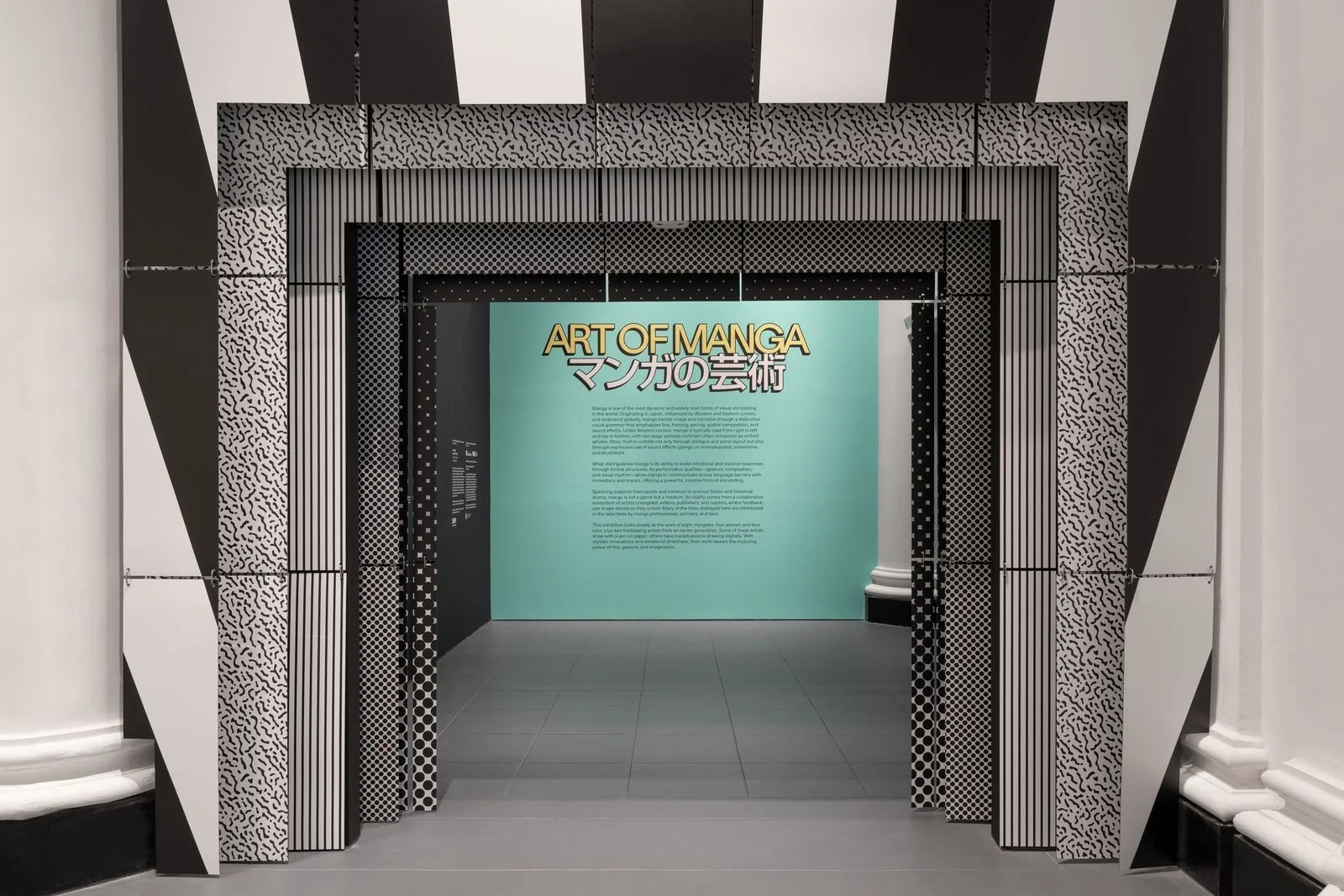
Courtesy: Brooklyn Museum
Fuck YES, Brooklyn Museum. YES!
A ridiculous amount of kudos to Alejandro Stein, Adriana Barcenas, and Meghan Moran for Art of Manga, because this exhibition is so lovingly and meticulously done that I just kept finding tiny things to be excited about long after I had decided I loved it.
Like, obviously, the art is incredible.
There are HUNDREDS of original manga drawings, including work from Inuyasha, JoJo’s Bizarre Adventure, ONE PIECE, and a whole range of artists and generations I wasn’t even aware of. Seeing manga drawings in person is fantastic because you can get close enough to see the ink, little corrections, textures, and all the tiny decisions that disappear once something has been printed and reproduced a million times. They are beautiful and remind you of the human beings behind every stroke and eraser mark, which feels especially important today as more and more artists are literally erased by AI.
But honestly? What I cannot stop talking about is everything else.
Because whoever put this exhibition together did not just understand manga as an art form: they understood the PEOPLE who love manga.
That is a different ball game.
The whole exhibition feels huge. You will be looking at this relatively small, incredibly detailed black-and-white drawing, and right behind it, decaled across the wall, is the same character, but twenty feet tall. Entire walls become panels. Images run around corners. Things are bright, loud, intricate, and perfect.
Manga already plays with scale, pacing, and where your eye is supposed to go. So instead of forcing all of that into the usual quiet, white-wall museum language, the Brooklyn Museum basically lets manga take over the room.
Which is exactly what it should do.
And then there is this little frog.
You guys: this frog.
His name is Beshi, and I love him.
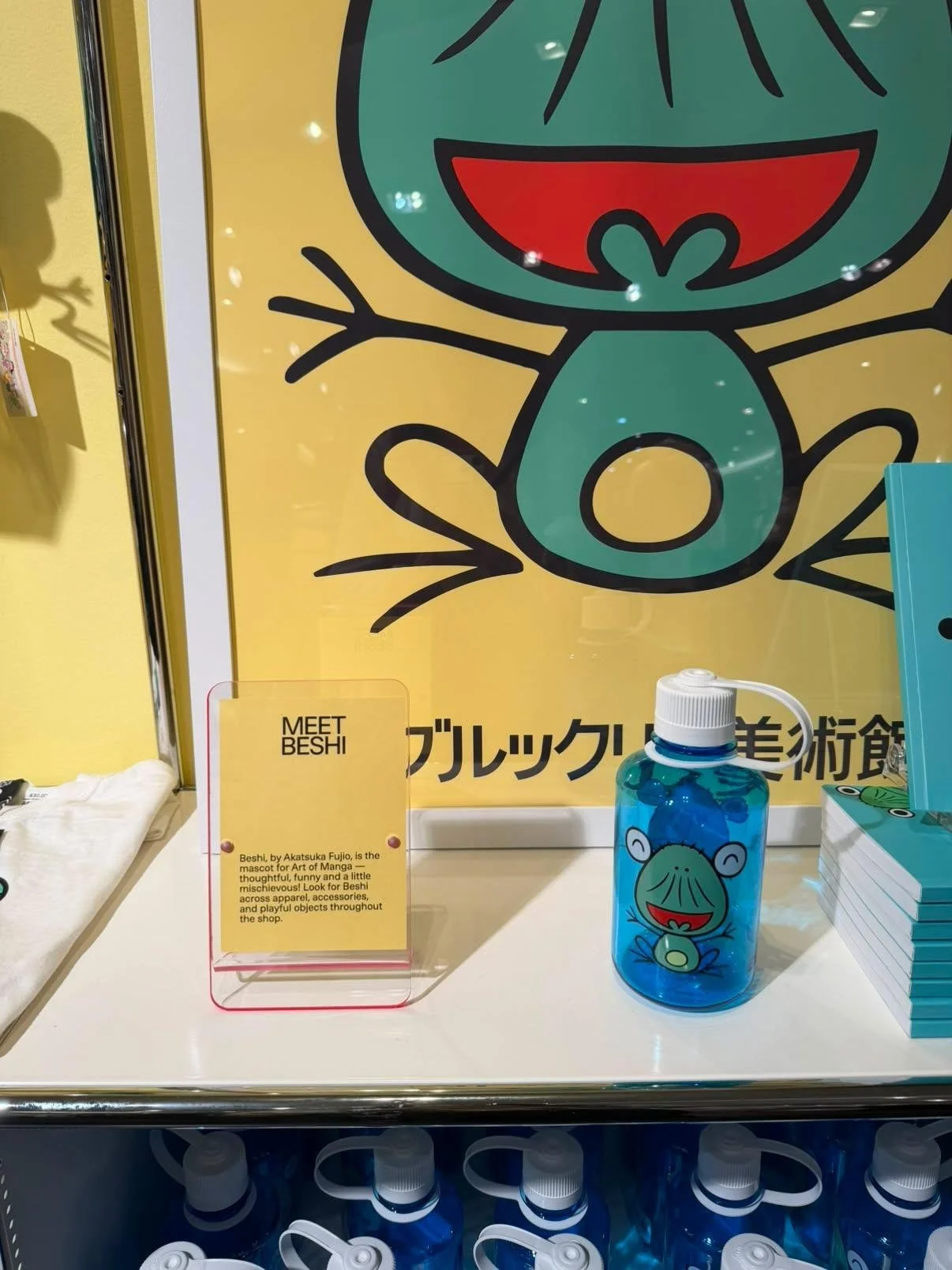
Beshi sweatshirts. Beshi water bottles. Beshi on everything. Courtesy: Alina Gatrell for Tawk of New Tawk
Beshi pops up throughout the exhibition telling you where to go next, teaching you how to read something, explaining little pieces of context, or sometimes just... peeking out from behind something. He is so cute and so helpful, making you feel like a manga character following him on his little adventure through the exhibition.
And yes, obviously the point of museum signage is to give you information, but why give me a boring little arrow when you could have a frog do it?
This is what I mean about how much care went into this. It is everywhere.
They teach you how manga is actually read (right to left), give you translations (both language AND context), and blow up details so you can actually see the work the artist put into each image instead of expecting you to absorb everything from one small page behind glass.
And then, right in the center of the exhibition, THEY BUILT A MANGA LIBRARY.
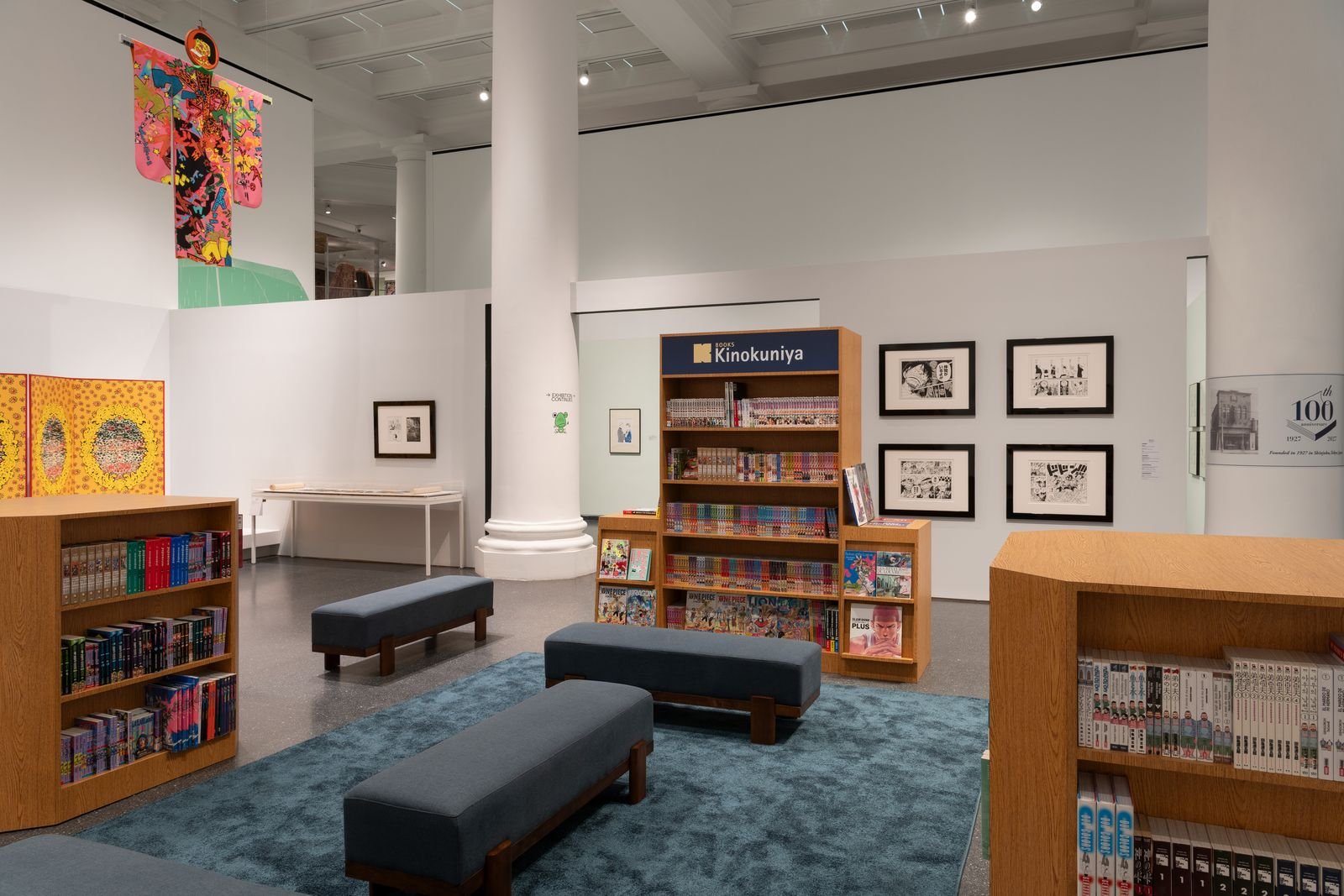
The Brooklyn Museum put an actual MANGA library in the exhibit with over 1,000 volumes donated by Books Kinokuniya. Courtesy: Brooklyn Museum
An actual one.
Books Kinokuniya donated roughly 1,000 manga volumes for the Reading Room!!!
There is seating, posters about the bookshop’s history, and bookshelves packed full of manga. You can pick up a book and read it. You can actually experience the medium as it was meant to be experienced, right in the middle of this giant celebration of it. Then, you can keep going and see all the ways manga has grown and shifted in both style and culture. (Check out the LGBTQ+ section, it’s gorgeous!)
This probably shouldn’t have felt revolutionary to me, but it really did.
Accessibility does not have to mean making something as basic as possible. It can mean giving me enough visuals, sound, context, and VIBE to understand why the thing in front of me is brilliant.
Translations help.
Context helps.
Scale helps.
Letting me sit down and read manga helps.
A tiny frog helps.
And they carry this commitment WAY past the point where they technically needed to.
I always find myself a little excited to go to a museum gift shop to see how the museum interprets the work it is presenting alongside current consumer trends. Sometimes I love a piece or a moment so much that I want to take it home. Maybe buy a book about the artist. Maybe have a little magnet on my fridge reminding me every day of the feelings I felt when I was there.
And as you leave the exhibition, you are dropped into an entire little manga/Japanese culture shop!
There are even more books, posters, prints, toys, clothes, characters, and exhibition merchandise, all kinds of stuff. Apparently, they are still bringing new things in constantly! Even the register is set inside this little Japanese-style shop structure.
They did not need to do that!
That thought kept occurring to me through this whole thing.
They didn’t have to redesign and rebuild half of the store. They didn’t have to keep the experience going once you had already walked out of the exhibition.
Even after I purchased my cute little frog magnet from the Japanese shop hut and left the museum store entirely, THERE WERE GASHAPON MACHINES!!!!!
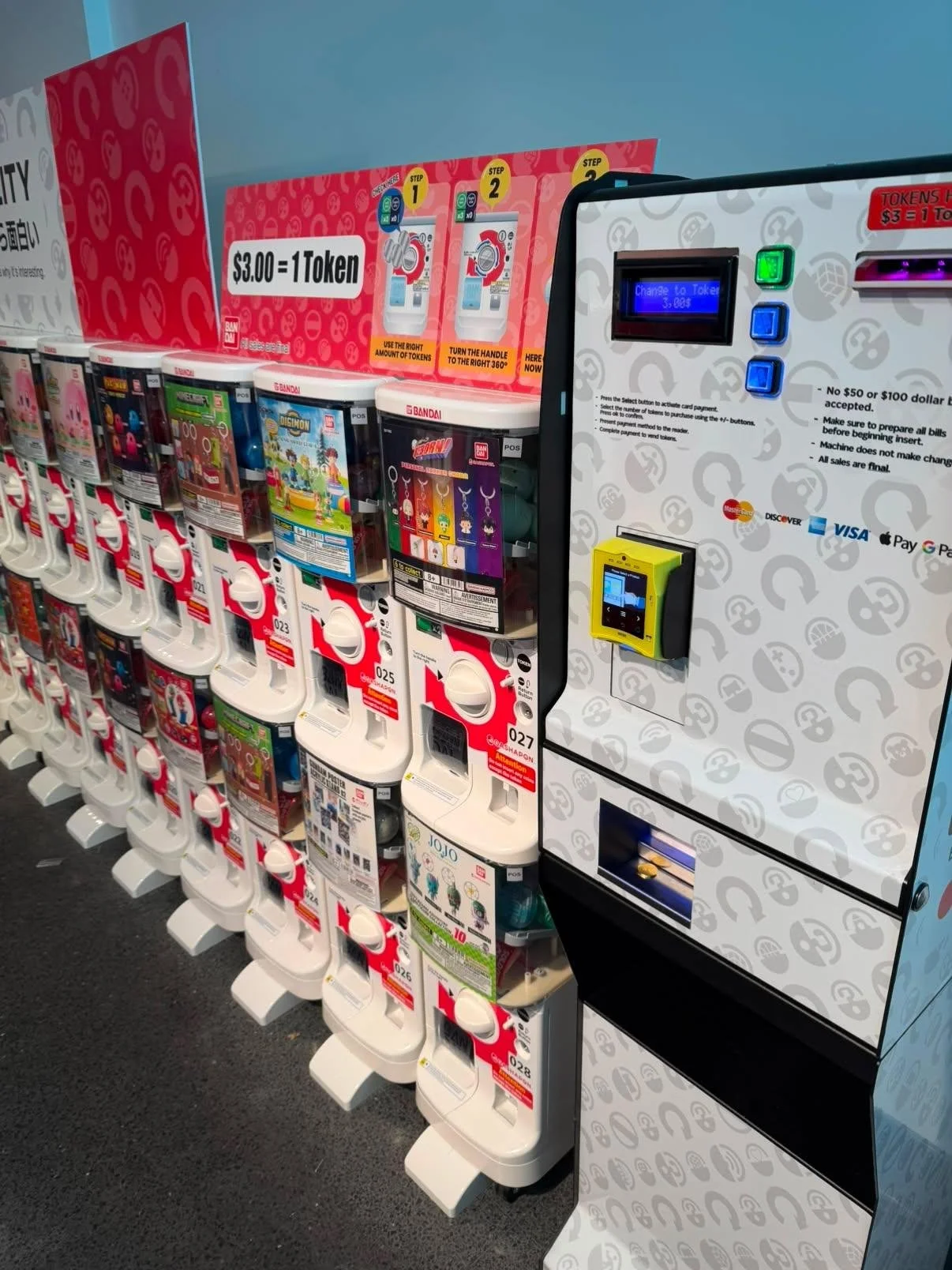
There were Gashapon machines!! // Courtesy: Alina Gatrell, Tawk of New Yawk
Basically, an entire Japanese capsule toy area where you can get tokens, turn the knobs, and receive some completely unnecessary tiny object that you will immediately treasure forever.
And it is PERFECT here.
Because manga is not just “fine art.”
It is books, toys, posters, characters, little charms, things you put on your bag, and entire stores full of stuff you absolutely do not need. It’s commercial, popular, silly, heartbreaking, joy-inducing, ridiculous, and incredibly serious art.
And I think this is where my larger point about museums comes in.
The thing with museums, especially huge, established institutions like these, is that the art is going to be good.
It is museum-quality art.
That is why it is... in a museum.
Maybe it is there to make you think. Maybe you are supposed to love it, hate it, question it, or stand there for ten minutes going, “What the fuck am I looking at?”
Whatever.
But you know somebody has decided this thing is important enough to preserve, study, and put in front of you.
So for me, a museum’s job, besides just hanging the art up so people can see it, is creating spaces, rooms, and environments where the viewer can actually ABSORB it.
Not just the basic visual of the piece.
Give me the sounds of where it came from.
Give me the history of its maker.
Give me footage of its cultural roots.
Give me the music it inspired.
Give me the technology that made it possible.
Give me whatever you can reasonably fit into that space that helps me understand not just what I am looking at, but the WORLD that made it.
Anyone can hang a piece of art.
A museum is here to tell you the story.
And Art of Manga fills every nook and cranny with that story. It shows you Japanese printing presses and the strides that made manga easier to print and distribute. It talks about the roots of Japanese art. It gives you Beshi!
Then it keeps going all the way through to a capsule arcade.
And I honest-to-God felt like I was in Tokyo again!
If you're looking for more Japanese culture nights in the city, check out our piece on Japan Society’s Kanpai Nights.
Not because they built some fake version of Japan inside the Brooklyn Museum, but because they understood that manga does not exist in a vacuum.
It lives inside this enormous world of art, printing, storytelling, commerce, characters, collecting, reading, shopping, fandom, and tiny plastic nonsense that fills people with joy.
That is what makes Art of Manga feel so special. They let manga be manga.
So go!
Get ridiculously close to the drawings. Look at the lines. Look at what happens when one tiny panel becomes an entire wall. Follow the frog. Sit in the library. Read something. Go into the shop. Waste a couple of bucks on a capsule toy.
You are allowed to have fun at an art museum.
So, in short:
Huge. Tiny. Brilliant. Stupid. Meticulous. Commercial. Emotional. Completely over the top.
And occasionally narrated by a frog.
Honestly? It feels less like an exhibition about manga and more like a love letter to it.
Exhibition Info:
Art of Manga is on view at the Brooklyn Museum through January 31, 2027, at 200 Eastern Parkway, Brooklyn, NY.
The exhibition was curated by Nicole Coolidge Rousmaniere, with the Brooklyn presentation overseen by Joan Cummins, Pauline Vermare, and Yara Doumani. Exhibition design by Alejandro Stein and Adriana Barcenas, with graphic design by Meghan Moran.
Special thanks to the Brooklyn Museum, the Art of Manga team, and everyone who put so much obvious care into bringing this enormous little world to Brooklyn. And thanks to Books Kinokuniya for helping make that glorious manga Reading Room possible.
On view: October 3, 2026–January 31, 2027
Where: Brooklyn Museum, 200 Eastern Parkway, Brooklyn, NY